
| To remember |
|---|
| Football Manager 26 confirms the international management date after the 2026 World Cup qualifiers, with a release aimed for April 2026. |
| The developers announce an update cadence every 2 to 3 weeks starting from mid-January. |
| Additional game modes are coming, with a dedicated announcement planned later. |
| The studio focuses its efforts on interface speed, navigation, and immersion (passing maps, media). |
| Major licenses and the integration of women’s football mark a turning point for the simulation. |
| A 26.1.1 patch has already fixed more than 300 items (contracts, AI, UI). |
| Released on November 4, 2025, the video game targets a complete rebalancing across all compatible platforms. |
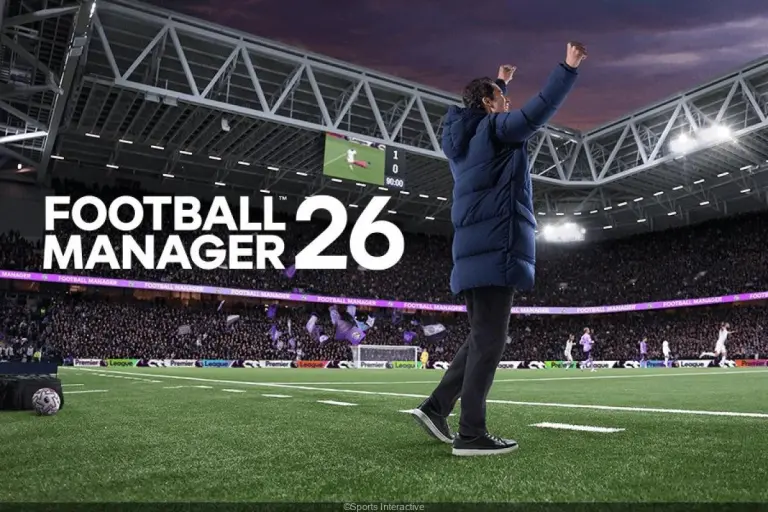
In a context where anticipation was high, the Sports Interactive team finally delivers a clear trajectory. The studio specifies the international management date for Football Manager 26 after the end of the 2026 World Cup qualifiers, while promising new game modes. This announcement comes after a launch deemed rough by part of the community, despite strong new features like the Unity engine, expanded licenses, and the arrival of women’s football.
The schedule is getting denser. First, a return of updates every two to three weeks starting mid-January. Then, targeted fixes on interface and navigation. Finally, an expansion of content with increased immersion features, including passing maps and media tweaks. For fans of football simulation, the objective is clear: stabilize, streamline, then broaden the experience, to firmly establish FM26 as the most ambitious transitional installment of the series.
Football Manager 26: developers’ announcement and international management date
Sports Interactive confirms a structuring milestone. The international management will arrive via a free update after the end of the 2026 World Cup qualifiers. Since these qualifiers conclude in March 2026, an April rollout window is favored by the studio. This decision aligns the module with sporting reality, while allowing time to complete interface and AI adjustments.
The message addressed to the community is clear. The studio resumes a paced rhythm from mid-January, with deliveries spaced about 2 to 3 weeks apart. Each batch will target UI speed, navigation clarity, and immersion. Passing maps, highly requested, are nearly finalized. Meanwhile, media tweaks and stability optimizations are planned.
A schedule finally set
After the holidays, production resumes in a steady flow. A product milestone will therefore arrive every two to three weeks to fix, test, then expand. This sustained pace reassures, as it signifies a measurable long-term commitment. It also aligns players’ expectations with the actual roadmap.
This milestone does not come from nowhere. FM26 has already received major patches, one of which reintroduced “Shouts” and sped up critical screens. Patch 26.1.1 notably tweaked more than 300 elements related to contracts, AI, and interface. This correction base enables the announced enrichment phase.
Why international management took time
The chosen window is explained by two factors. On one hand, the module requires deep integration of calendars and national team selections. On the other hand, harmonization with licenses and official visual assets takes time. The studio confirmed that some tournament elements will be added after the module launch, allowing delivery of the essentials earlier.
This choice is pragmatic. It avoids tying up teams for too long and responds to the pressing demand from the community. It also simplifies prioritizing other projects related to UI and media.
What’s coming concretely
The studio highlights four short-term work blocks. They touch the product’s core and engagement systems. They intertwine to give the project more clarity.
- UI and navigation optimizations to reduce daily frictions.
- Immersion improvements (passing maps, media presentation, overlays).
- Deployment of the International Management module after the qualifiers.
- Addition of further game modes with a dedicated announcement.
In the background, one observation stands out. To regain the series’ momentum, FM26 needs a solid technical foundation and a clear content vision. This roadmap lays down both.
FM26 in 2025-2026: updates, fixes, and official roadmap
The installment released on November 4, 2025 relies on a Unity engine and a broad range of platforms, from Windows to macOS, recent consoles, mobile devices, and services like Apple Arcade. This expansion added complexity but also opens new horizons for performance and rendering. The downside was a lukewarm launch, with an adoption curve lower than the previous episode.
To address this, the studio has already delivered several fixes. For example, patch 26.1.1 touched more than 300 key points. Contracts were made more consistent. Recruitment AI gained nuance. The interface was lightened on heavy views. This base stabilizes the foundation before densifying the content.
Performance and interface at the heart of the effort
Players’ main frustration focused on responsiveness. Consequently, current work prioritizes UI speed and reducing unnecessary transitions. Screens open faster, pagination is better handled, and caches avoid costly reloads.
Navigation also undergoes a subtle overhaul. Ergonomic elements improve workflows, notably for lineup selection, scouting, and staff management. Passing maps will fine-tune visualizing the team’s structure. They will provide a clear reading of progression circuits and congestion zones.
Engine, platforms, and licenses
The adoption of the Unity engine paves the way for cleaner rendering across all platforms. Moreover, multiplatform optimization should smooth releases on consoles and mobiles. On the licensing side, FM26 marks a historic step with major affiliations, including on flagship competitions.
Women’s football integrates into the FM ecosystem. Clubs and careers become transversal. This continuity strengthens realism and encourages hybrid manager pathways. It also creates adjustment needs on progression and balancing.
Deployment pace and transparency
The return to a biweekly or triweekly cycle from mid-January provides a framework of trust. Teams will publish detailed patch notes. Then, community blog posts will clarify priorities and key decisions.
This moral contract with players is essential. It helps frame expectations and adjust feedback faster. It also anchors the promise of continuous improvement.
| Update | Window | Main focus | Status |
|---|---|---|---|
| 26.1.1 | December | Contracts, AI, UI (300+ tweaks) | Deployed |
| Mid-January cycle | January | UI speed, navigation, media | Planned |
| Late January cycle | January-February | Passing maps, stability | Planned |
| International Management | April 2026 | Complete module, official assets later | To deliver |
| Additional game modes | 2026 | New experiences, dedicated announcement | Teased |
The coherence of the schedule and precision of workstreams restore direction. This roadmap establishes priorities and provides a clear framework for the coming months.
New FM26 game modes: what developers are preparing and what they are ruling out
The studio confirmed the arrival of additional game modes. However, no details have been officially disclosed yet. A separate announcement is promised, leaving the field open to speculation. The challenge is clear: offer shorter, more social, or more narrative game loops to broaden the audience without diluting depth.
In the series’ history, several formats have inspired the community. From online drafts to scripted challenges, effective derivatives share three qualities. They are immediately understandable. They close in short sessions. They value a specific skill. FM26 can draw from them, provided it preserves tactical richness and scouting.
What seems plausible
A seasonal challenge mode, paced by specific objectives, seems logical. It frames sessions and makes performance sharing easy. A timed “rebuild” mode focused on the transfer window would also be relevant. It emphasizes negotiation, data analysis, and budget management.
A “club project” format over 18 months could suit busy profiles. It would chain key windows (preseason, transfer window, final sprint) with scoring focused on efficiency. Finally, an “instant” solo mode to test a tactical idea in 20 minutes would quickly find its audience.
What is less likely
Purely arcade modes would clash with the simulation DNA. A sprint of spectacular actions without depth would not fit FM’s foundation. A “flash career” mode without scouting, data, and staff would lose the product’s soul. The studio understands this. It aims for more direct loops but protects tactical density and granularity.
Likewise, competitive experiences without anti-cheat safeguards would be risky. Priority must go to matchmaking, fair-play measures, and abuse prevention. A healthy environment brings players back.
Expected effects on retention
Short modes serve as an entry point. They reduce barriers for newcomers, while offering a break for veterans between career sessions. They fuel word of mouth, producing shareable moments in video or captures.
Additionally, they create regular “meeting points.” A clear challenge schedule maintains the habit. Finally, they allow exposing new features of the installment in small doses, whether passing maps, midfield agreements, or new pressing options.
A fictional club can illustrate the interest. “Racing Belleville” engages in a 30-minute transfer challenge. The analyst offers two profiles of 8 forwards with contrasting passing maps. The staff divides the budget between a “plug-and-play” starter and a prospect. The challenge finishes quickly but mobilizes all FM layers. That’s the balance to aim for.
In sum, the extension through game modes will be credible if it stays true to the DNA. Density above all, accessibility by design.
International Management in Football Manager 26: impact on simulation and licenses
The “International Management” module fills a gap. It will allow managing a national team in an environment aligned with real calendars. Planning becomes a discipline in its own right. FIFA windows, call-ups, club-country balance, all interlock.
The studio clarifies that certain official tournament assets will arrive after the first delivery. This phased approach speeds up the availability of the game’s core. It allows time to finalize overlays and adjust the experience, without freezing the development teams.
What the module changes concretely
Expanded squads, injury management, and form refereeing are central. For example, a coach evaluates load from day -10 to day -1 on key players. Training is adjusted to limit risks. Then, match plans adapted to short windows are designed, where every minute counts.
Passing maps will help read quick relations. A club-country backbone keeps automatisms, but a new trio requires precise roles and limited missions. The tool makes this diagnosis visual and fast. It’s ideal for condensed call-ups.
Illustrative practical case
Consider a friendly-to-tournament cycle for a progressing team. The staff calls up 26 players, including four versatile ones. Data reveals a weakness in short distribution. Consequently, the coach calls a creative full-back and a comfortable-footed goalkeeper. Two days later, the passing map confirms ball progression improvement on the right side.
In the tournament, recovery windows are tight. The coach distributes minutes for match 2 since qualification is almost secured. The load is managed to arrive fresh in the quarterfinals. The module values this attention to detail.
Licenses and immersion
The acquisition of major licenses enhances authenticity. Names, overlays, and official structures create a credible frame. Even if some visual elements arrive later, the gameplay foundation is there. Immersion relies on clear screens, form reports, and better-paced staff meetings.
This module will rekindle virtual coaches’ appetite. It also helps clubs anticipate breaks and manage fatigue. The club-country bridge enriches the whole simulation.
With International Management, FM26 expands its scope without abandoning its roots. It establishes a strategic layer that was missing from the puzzle.
Expert tips to optimize FM26 after the international update and new features
The upcoming content waves invite save preparation. First, back up locally and on the cloud. Then, switch to the stable public branch after each major fix. Finally, note performance gaps by theme (matches, scouting, transfers). This log eases feedback and tuning.
Work on the UI calls for screen hygiene. Reduce non-essential widgets. Create customized views for scouting and tactics. Then, use shortcuts and filters. This trio speeds up daily tasks and reveals patterns previously unnoticed.
Using the new passing maps
Before each match, isolate three questions. Where do progressions start? Who connects the zones? Where does the opponent cut? Then, align the roles of the 6 and 8 according to density. A supporting 6 can shift to a defensive midfielder if the first opposing line is aggressive. Once in the match, check coherence at halftime.
After the game, compare the expected map to the produced one. If gaps persist, first act on roles, then on structure. Reverse the order only if injury or sending off forces you. This method limits unnecessary adjustments.
Anticipating International Management
Prepare a selection pool early in your club career. Tag high-performing nationals. Monitor their load and injuries. Then, create a long-term list per position. When international management becomes active, the base is ready and decisions are fairer.
For a break cycle, plan a short microcycle. Day 1: tests and reduced circuits. Day 2: set up A/B schemes. Day 3: set-piece strategy. In matches, limit complex instructions outside pressing and transitions. Common time is too short for heavy automatisms.
Enjoying the new game modes
When the additional game modes launch, set a learning goal per session. For example, work on wage management in a transfer challenge. Or test asymmetrical animation in express mode. These short frameworks serve as laboratories. They reduce trial cost and favor progression.
Finally, integrate women’s football into your routines. Profiles and dynamics sometimes differ. Adapt scouting, endurance criteria, and rotation. This cross-functionality enriches your overall reading of the video game.
These habits make each update useful. They turn new features into tangible competitive advantages.
When does international management release in Football Manager 26?
The International Management module arrives after the end of the 2026 World Cup qualifiers. The targeted window is April 2026, with some official elements added later.
What is the update rhythm announced by the developers?
The studio resumes a rhythm of about one update every 2 to 3 weeks starting mid-January. Each batch targets the UI, navigation, and immersion.
What new game modes are planned in FM26?
Additional modes are confirmed, but no details have been revealed yet. A specific announcement is planned to present these new features.
Does FM26 integrate major licenses and women’s football?
Yes. The 2026 installment marks a step forward with expanded licenses and integration of women’s football, designed to coexist with existing careers.
What do passing maps provide?
They visualize progression circuits and connections between players. They help correct formations and prepare more precise match plans.