
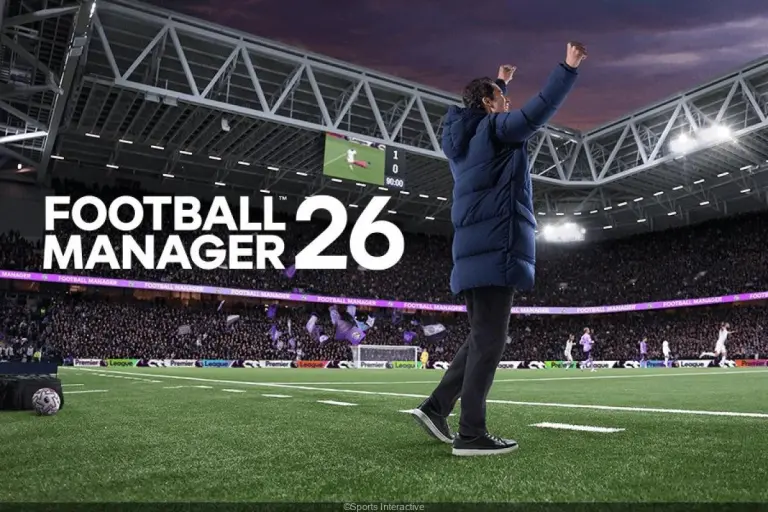
| Key Points on Football Manager 26 |
|---|
| Precise roadmap with quarterly milestones, community testing, and clear priorities. |
| Improved interface focused on ergonomics, visual data, and fast access. |
| Enhanced international management: detailed call-ups, realistic calendar, dedicated staff. |
| More responsive game strategy thanks to refined opponent AI and match engine. |
| Continuous update with live fixes, thematic novelties, and multi-platform compatibility. |
| Smoother user experience: contextual presentations, integrated help centers, tutorials. |
| Strengthened ecosystem with modding tools, cross-save, and more stable multiplayer formats. |
The studio behind Football Manager 26 unveiled an ambitious roadmap targeting two major axes: an improved interface serving efficiency and deeper international management. This path translates into a paced schedule, tests immersing the community in the process, and a clear vision of priorities. The announced milestones tackle both daily details and structural projects to elevate the entire simulation game.
Within this framework, the publisher aims to reduce friction, clarify decisions, and deepen interactions. Key menus are reorganized around frequent actions, while data reading gains clarity. Meanwhile, the national team selection is no longer an aside. It becomes a strategic aspect with realistic scheduling trade-offs and dedicated staff tools. The ambition is clear: to transform the user experience without distorting the tactical DNA.
Beyond visible novelties, the ongoing update aims for balance. It corrects AI behaviors, refines pressing, and harmonizes match transitions. This iterative approach favors stability while allowing significant additions when the context permits. The announced direction promises a more nuanced football simulation, but also smoother sessions.
Football Manager 26 Roadmap: Priorities, Milestones, and Concrete Impacts
The Football Manager 26 roadmap structures deliveries by quarters with measurable objectives. It combines targeted revamps and systemic projects to avoid disruptions. This articulation eases deliverables’ understanding and reduces blind spots.
The first highlight concerns the improved interface. Critical menus are reorganized around recurring actions: lineup, recruitment, training. Thus, back-and-forths decrease and ergonomics gain coherence.
Next, international management benefits from in-depth treatment. FIFA windows, player wear, and summer tours align better with reality. Selectors get tools similar to those of a club, adapted to specific constraints.
The studio also adds community test cycles. They target thematic “sprints”: match engine, transfer market, tutorials. Feedback guides adjustments and prioritizes fixes for the next update.
To illustrate these steps, imagine the fictional club Stade de Belleville. Its analyst accesses pressing tables and heat maps faster. Then, the staff reacts earlier to drops in form or lateral imbalances.
The roadmap also distinguishes quality-of-life releases. Contextual tooltips explain advanced indicators. Additionally, savable search filters speed up multi-league scouting.
Network milestones strengthen multiplayer. Live synchronizations are stabilized and latency monitored. These details weigh in private leagues, where every gained minute smooths competition.
In recruitment, priorities focus on potential readability and salary coherence. Alerts flag budget misalignments before signing. Over a season, these precautions save vital margins.
Finally, final objectives set the pace for major novelties. The studio prefers to activate them when implementation is solid. This caution protects stability without hindering innovation.
Key Phases and Expected Results
The phases detail the “what” and the “why.” Each deliverable comes with a targeted impact: time savings, analytical precision, immersion. This granularity keeps the roadmap readable.
| Phase | Focus | Expected Impact |
|---|---|---|
| Q1 | Revamp of tactical menus, scouting filters | Faster navigation, clearer game strategy decisions |
| Q2 | International management, realistic calendar | Better immersion and squad rotation control |
| Q3 | Match engine and opponent AI | Smoother transitions, adjusted behaviors |
| Q4 | Multiplayer, stability, mod tools | More stable sessions and expanded ecosystem |
This roadmap offers a pragmatic direction. It aims for a denser simulation game, but also more readable day-to-day.
Improved Interface and User Experience: Speed, Visual Data, and Faster Decisions
The improved interface of Football Manager 26 tackles friction points. Crucial pages come closer, frequent actions are pinned, and indicators gain visual emphasis. Result: fewer clicks, more clarity.
Tables are better prioritized by importance. Alerts display adjustable thresholds, useful for customizing vigilance. This flexibility suits cautious profiles as well as attacking managers.
Tactical Center and Contextual Navigation
The tactical center now groups pressing, width, block, and key roles. A preview simulates expected effects against the next opponent. Thus, game strategy adjusts without unnecessary back-and-forth.
On the match page, event tiles can be read at a glance. They combine xG, attack zones, and highlights. Corrections become immediate when a flank is overwhelmed.
In the example of Stade de Belleville, the analyst refines pressing triggers based on a heat map. Moreover, a quick report signals fatigue after the 70th minute. The staff plans earlier substitution management.
Accessibility, Reading Profiles, and Performance
Accessibility options evolve. Font sizes, dynamic contrast, and abbreviation reminders help all audiences. Loading times for heavy pages are also reduced.
Savable profiles keep favorite views: “matchday,” “transfer market,” “training.” Then, each profile activates a dedicated widget set. Context changes are experienced fluidly.
Educational tooltips explain advanced metrics. Alternation between concise text and mini-charts supports continuous learning. The user experience gains autonomy thanks to these pop-ups.
Recruitment and Scouting Data
The scouting module benefits from a more intuitive multi-criteria ranking. Attributes are compared by project: immediate, rotation, potential. Medical risks are flagged early to secure the wage bill.
Virtual agents introduce market signals. They steer toward dossiers consistent with the salary structure. Thus, unreasonable bidding is avoided.
Interactions with management become clearer. Budget requests rely on quantified scenarios. Decisions anchor in evidence rather than intuition.
This refocused interface produces faster gestures and safer readings. It supports continuous decision-making at the pace of a demanding season.
Redesigned International Management: Selections, FIFA Windows, and Dedicated Staff
The international management of Football Manager 26 gains richness. Call-ups rely on detailed criteria: form, workload, tactical compatibility. Injuries and fatigue are managed on more credible horizons.
FIFA windows better frame availability. Friendlies no longer disrupt end-of-cycle if qualification is the goal. Sporting priority guides opponent choices.
Expanded Staff, Micro-cycles, and Trade-offs
A staff dedicated to selections emerges. Video analysts, attending physician, and logistics coordinator form a decisive triangle. Micro-cycles become precise despite short gatherings.
Management of club-selection overlaps professionalizes. Communication channels estimate workload, then validate target minutes. This transparency limits tensions with clubs.
In a credible narrative arc, the fictional coach Nadia K. accepts the Morocco U23 selection while keeping Belleville. She modulates pressing in blocks of 15 minutes. Thus, her youngsters stay lucid at the tournament’s end.
Realistic Calendar and Major Tournaments
The international calendar better reflects peaks and troughs. Qualifiers are spaced to give clubs breathing room. Summer competitions consider acclimatization and travel.
Continental tournaments receive detailed opponent reports. Trends are highlighted: direct play, central density, set pieces. These signals facilitate bold match plans.
An express training module summarizes three axes: recovery, cohesion, automation. Consequently, a short gathering no longer dilutes work. It targets concrete gains.
Strategic Call-ups and Shared Responsibility
The call-up page classifies profiles by future role: starter, super-sub, prospect. Position duels are resolved with comparative metrics. An injury risk slider adjusts the safety margin.
Clubs provide a tolerated usage for key players. This moral contract explains minutes played according to context. The relationship remains healthy, even under pressure.
The media add a political dimension. Questions address diaspora, binary choices, and youth integration. Discourse becomes a tool, not just a screen.
This revamp restores meaning to selection. It transforms national team management into a responsible and competitive laboratory.
Game Strategy and Match Engine: Opponent AI, xG, and Controlled Pressing
The Football Manager 26 match engine consolidates space reading. Transitions offer clearer trajectories. Fullbacks better manage height according to opponent pressing.
AI reacts more finely to overloads. It modulates the block, slows down, or stretches. This adaptability adds depth to tense encounters.
Adaptive Tactics and Contingency Plans
Tactics propose one-click variants. Cautious, neutral, or aggressive variants remain coherent with your identity. A pre-match report signals risks of turnover per zone.
xG tracking integrates into live coaching. Alerts advise width or tempo adjustments. The coach maintains control, while gaining time.
Set Pieces and Exploitable Micro-details
Set pieces gain customization. Dedicated screens display schemes and rivaled dominant threat. Opponent-history reinforces strategic memory.
Stade de Belleville illustrates a case study. Against a low defense, the team alternates switches of play and third-man runs. Chances become higher quality than numerous.
Data Reading and Operational Coaching
A indicators table highlights successful pressing ratio, high recovery, and density in the box. Combined, these measures tell a clear match story. Choices gain precision.
- Stepped pressing: triggers on lateral passes or weakly oriented controls.
- Situational width: stretch then attack space between center-back and fullback.
- Controlled highlights: five minutes of intensity, then breath management.
- Reversed flanks: inside forwards and attacking fullbacks coordinated.
- Cold transitions: retain, draw out, penetrate after imbalance.
These principles turn theory into concrete routine. Coaches test, then lock in what works.
The simulated football remains unpredictable. However, clarity of tools reduces perceived randomness. Success feels more deserved.
This match engine strengthens the link between idea and execution. It supports a measurable, coherent, and living game strategy.
Update, Ecosystem, and Multiplayer: Continuity, Mods, and Competitive Formats
The ongoing update of Football Manager 26 is organized in waves. Fixes, data adjustments, and small novelties punctuate the months. Patch notes explain choices and trade-offs.
An in-game feedback channel captures weak signals. Emerging trends are observed, then addressed. This loop improves overall stability.
Compatibility and Cross-save
Cross-save smooths the career between PC and consoles. Saves travel without friction. Mobile sessions now complement long tactical evenings.
Performance remains a pillar. Loading benefits from targeted optimizations. Modest configurations gain from smart visual options.
Controlled Modding, Expanded Creativity
Mod tools gain clarity. Interface templates, graphic packs, and competition adjustments find a framework. Technical guardrails protect stability.
Community creators offer skins adapted to the desired user experience. Minimalist data reading or television-like immersion, everyone chooses their pace. The game opens without scattering.
Multiplayer, Private Leagues, and E-sport Formats
Private leagues benefit from secure saves and faster reconnections. Synchronous-asynchronous pauses reduce waiting. Draft nights go smoother.
Competitive formats emerge. Budget or training handicaps create unexpected stories. Streams highlight these constraints live.
The publisher also releases organization kits. Typical schedules, anti-abuse rules, and fair-play dashboards help administrators. Tournaments gain credibility.
A hypothetical partnership with a semi-pro league illustrates potential. Players switch between their career and a weekly cup. Tactical skill takes precedence over one-night luck.
Ultimately, this ecosystem serves an adaptable, creative, and community-based simulation game. It encourages sustainability while leaving room for new ideas.
What does the improved interface of Football Manager 26 offer?
It speeds up navigation, clarifies data, and refocuses key actions. The unified tactical center and contextual widgets reduce back-and-forth and assist quick decisions.
How does international management evolve?
Call-ups rely on finer criteria, FIFA windows are better integrated, and the selection staff expands. Club-selection exchanges regulate players’ workload.
Does the match engine change the game strategy?
Yes. Opponent AI adapts better, xG aligns with real creation, and pressing balances. Plans become more readable and effective.
Are there novelties planned in multiplayer?
Multiplayer gains stability, reconnections are more reliable, and competitive formats are encouraged. Tools structure private leagues and e-sport events.
Will the update be regular?
Yes. Waves of fixes and iterative additions are planned. Patch notes prioritize stability while integrating notable improvements.