
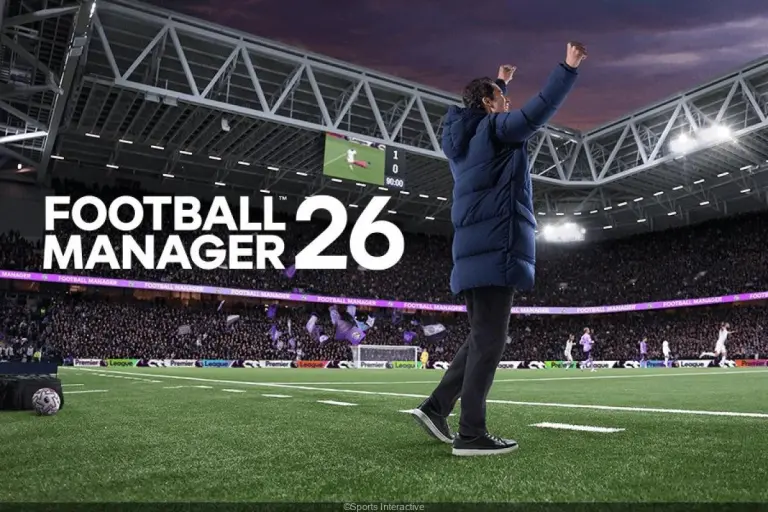
The release of Football Manager 26 has created a rare split within its historic community. After the cancellation of the previous edition and a prolonged wait, the video game has returned with a major overhaul and a clear aim towards modernization. Yet, the launch highlighted painful compromises. The fans now assess the current state of the title based on successive updates, confronting promises with results. Between genuine innovations, persistent bugs, and limited features, the debate intensifies. Opinions fluctuate between admiration for certain new features and disappointment at absences deemed fundamental for a football management game.
This contrasting landscape reveals a central issue: the studio’s ability to listen to community feedback and iterate quickly without degrading overall balance. Fixes have advanced on stability and interface, but gaps continue to fuel controversy. Meanwhile, successful careers still emerge, proof that the simulation core remains powerful. In this context, the exchange between creators, modders, and players stands as the true engine of transition. The question is no longer whether the work is ambitious. It is about measuring, point by point, what works today, what still blocks, and what could finally transform the experience into a completed season.
| Key Takeaways |
|---|
| The debate on the current state opposes useful innovations and losses of analytical benchmarks. |
| Updates fix crashes and adjust AI, but readability remains improvable. |
| The most annoying bugs occur in matches and in the transfer market. |
| Tactical and preparation new features offer real depth. |
| Community feedback guides the roadmap and accelerates fixes. |
| Concrete solutions exist via settings, mods, and saving methods. |
Officially released, does “Football Manager 26” keep its promises after several updates ?
The promise of a fresh start served as the foundation for the launch of Football Manager 26. After two years of waiting, the ambition to modernize the interface and integrate new licenses contrasted with the legacy of previous versions. However, the first weeks highlighted cuts in live analysis, such as the disappearance of heat maps and passing networks during matches. These choices were perceived as a regression by data-focused fans.
In response, the first updates targeted stability and ergonomics. Menus are smoother, especially on modest setups. Yet, a feeling of lack remains. The current state of the title is therefore paradoxical: it progresses technically but disrupts analytic habits that made its reputation.
The debate has grown on forums, with a structuring red thread: renovate without demolishing the tactical base. Scouting-oriented players praise new search filters, judged more relevant. Others regret the heaviness of certain team screens, with overlapping columns still present at unusual resolutions. The more spacious art direction improves navigation, while accessibility for newcomers is reinforced.
To illustrate, a fictional manager named Aïcha took on a challenge with a club threatened by relegation. She adopted new session plans, structured clear roles, and relied on more measured pressing. Her season revived thanks to post-patch training adjustments, with a decrease in muscle injuries. However, her match analysis was slowed down by the absence of heat maps, yet key to identifying weaknesses on the flanks.
In this context, the publisher acknowledged frustrations and detailed a public roadmap. Priorities focus on telemetry, online match network stability, and a gradual return of analytical tools. The announcement is reassuring, but players expect concrete results in matches, especially on the consistency of long-range shots and aerial duels.
Implicitly, a conviction emerges: the simulation core remains solid, but it requires analytical instruments worthy of its depth. This tightrope defines the current worksite and conditions lasting adhesion.
The debate on the current state and developers’ vision
The creators defended a course: simplify to make the experience more readable, then reinject advanced layers. This strategy can succeed if the schedule holds its promises. It also requires clear communication on priorities. Fans demand dates and a precise scope to plan their long careers.
At the same time, the team highlighted community feedback to sort out urgencies. The most voted feedback concerns the readability of live statistics, player collisions, and the realism of set pieces. This framing guarantees targeted action. The pace remains to be maintained.
Ultimately, the current state inspires a provisional conclusion: the skeleton holds, but the analysis ecosystem must return to the center. Without these tools, the experience loses part of its competitive flavor.
Despite two years of waiting, bugs and fixes structure the debate on the current state
Bugs reported at launch affected several layers: stability, match engine, and UI. Some crashes on massive team changes have been fixed. Other malfunctions persist, such as marking inconsistencies at the end of matches. This situation fuels a lively debate between competitive players and long-term project builders.
In the transfer market, overly aggressive offers from wealthy clubs unbalanced the championships. The updates reduced these gaps, but extreme cases persist in the final days of the transfer window. Salary simulation improves without yet achieving perfect logic in lower leagues.
Regarding performance, micro-stutters in 3D have been reduced by a graphics patch. However, some generic stadiums still cause frame drops. A cache rebuilt after each update limits these effects. Yet, repeating the process irritates fans eager for immediate smoothness.
To map the current state, a simple table helps visualize the evolution of priorities and impacts.
| Patch | Main Fixes | Perceived Impact |
|---|---|---|
| 1.01 | Loading crashes, corrupted saves | Improved stability, cautious confidence |
| 1.02 | AI transfers, injury intensity | More credible transfer window, better balanced squads |
| 1.03 | Defensive animations, aerial duels | Fewer gross errors, but still some misses |
| 1.04 | 3D and interface optimizations | Increased fluidity, readability still improvable |
In practice, Aïcha set up rotating saves to secure her progress. She also limited heavy graphic mods before each patch. These choices reduced crashes and improved match experience. Thus, simple routines can stabilize a still unsettled environment.
Modding communities also played a key role. Skins reintroduce statistical widgets, bypassing the lack of heat maps. The publisher praised these initiatives while recalling the goal to integrate official solutions. This informal cooperation energizes the transition.
Tools to track and understand fixes
To stay updated, several sources are essential. The official site publishes patch notes. Community forums summarize real effects on a wide variety of games. Finally, video creators compare the engine before and after each update. These formats help decide when to restart a major career.
Additionally, a weekly watch avoids surprises. It allows adjusting seasonal goals as soon as a patch modifies intensity or AI. This discipline pays off on demanding saves.
Overall, balance clarifies over weeks. However, dark spots remain in matches. The pace of fixes and precision of feedback will decide the final pace of this worksite.
Football Manager 26 : football management new features, depth or overlap ?
The new features of Football Manager 26 target a clear triptych: tactics, training, immersion. The new preparation screen condenses objectives, workload, and individual focus. This overhaul reduces unnecessary micromanagement. It clarifies weekly decisions. On tactics, more granular instructions manage contextual pressing. This strengthens the readability of intentions.
Conversely, live analysis lost familiar anchors. Heat maps and passing networks are missed by data-oriented coaches. The publisher promises a gradual return of diagnostic tools. Meanwhile, the match report provides useful clues. It traces trends, even if the level of detail remains lower than before.
Expanded licenses increase immersion, especially for new competitions. Pre-match screens gain narration with more visual form metrics. However, some tutorials do not sufficiently explain new pressing sliders. Expert videos fill this gap and offer concrete cases.
Aïcha tested a modular 4-3-3. She configured higher pressing only after losing possession in the final third. Her box-to-box midfielder was assigned a hybrid role to cover the half-space. Results were confirmed against low-block opponents. However, too slow a retreat left gaps against quick transitions. She corrected by reducing vertical amplitude.
This type of iteration illustrates the richness of the engine. Each adjustment impacts the structure. Experienced fans find a stimulating ground. Nevertheless, the lack of visual tools slows analysis. Downloads of skins and analytic packs partially fill this void.
Finally, physical preparation gained finesse. The sequence of intense sessions and recovery is more finely tuned by roles. This granularity makes planning more credible on a dense calendar. It also reduces fatigue injuries, with noticeable effects on consistency.
Decoding the real impact of new features
To judge depth, one must test over a full season. Form curves validate the relevance of new sliders. Injury data shows a decrease on well-managed squads. Thus, the overhaul yields gains in the medium term. It rewards coherent plans.
The debate remains open on priority hierarchy. Should live analysis be restored first or should off-the-ball AI be further advanced? The community leans towards a rapid return of tools. The studio will have to reconcile these expectations with its development plan. The patch tempo will decide.
In the end, modernization brings real value. But it expresses itself fully with a robust analytic ecosystem. This point conditions purists’ adhesion.
Community feedback and roadmap : how fans guide priorities
Community feedback has become the team’s compass. Fans vote, argue, and suggest solutions. The most structured feedback comes from dynamic leagues, data editors, and skin creators. This diversity of profiles enriches the discussion. It allows prioritizing urgencies with fine granularity.
In specialized Discord channels, A/B tests compare the effects of a patch on pressing. Community dashboards track anomalies and their frequency. This quasi-scientific approach raises the level of the debate. It also helps developers prioritize without losing time.
Exchanges have already influenced fixes. The reduction of unrealistic long shots stems from video compilations and detailed reports. The revision of refereeing scenarios followed the same pattern. This improvement loop illustrates the efficiency of transparent cooperation between studio and players.
Aïcha participates in a group testing role changes for inverted fullbacks. Her team publishes ready-to-use settings packs. These prototypes accelerate the adoption of good practices. They also prevent frequent misunderstandings about the novelty.
More broadly, the roadmap gains readability when objectives are quantified. The community requests targets: residual crash percentages, 3D performance thresholds, timelines for live tool returns. Such metrics ease public evaluation. They establish a climate of trust.
The studio created clear contact points: bug form, prioritized feedback channel, and Q&A sessions. These formats streamline communication and reduce blind spots. They also encourage reasoned feedback rather than mere complaints.
Good practices for useful feedback
Simple rules maximize feedback impact. It’s necessary to describe the context, provide a replay, specify the version and mods. It’s also advisable to propose an expected result. This structure turns frustration into exploitable data.
- Standardize the bug description with a common template.
- Isolate the problem by disabling mods and retesting.
- Document with screenshots, replays, and concise logs.
- Prioritize impact on gameplay over aesthetics.
- Track status in a public dashboard.
With this method, information flow gains precision. Fixes follow more quickly. The cycle self-reinforces to the benefit of all.
Practical advice to enjoy Football Manager 26 right now
Despite dark spots, it is possible to optimize the experience. Careful settings and stable habits transform daily gameplay. This approach allows savoring the engine’s depth while circumventing irritants.
Start with hardware diagnosis. It is useful to recalculate the number of simulated leagues based on the processor. It is also necessary to lock the frame rate in the 3D engine. These two actions stabilize performance. They reduce micro-stutters in matches.
On tactics, it’s better to test new features in blocks. One change at a time facilitates analysis. Then adjust according to assistant feedback and post-match data. This progressive pace produces visible gains over three to five games.
Rotating saves limit losses. Keep three slots and alternate weekly. A secondary cloud protects against isolated corruptions. This simple routine saved Aïcha’s career after a rare crash during a busy transfer window.
Reliable mods provide cautious solutions. A sober skin restores key statistical widgets. A logo pack makes the interface more readable without weighing down the rendering. Updated databases enrich emerging championships. However, compatibility after each patch must be checked.
Finally, internal club communication reinforces coherence. A shared training load calendar prevents fatigue peaks. Minute targets for youth secure their progress. This governance stabilizes results over time.
Quick list of recommended settings
- Limit playable leagues according to CPU and prioritize visible leagues only.
- Set V-Sync or an FPS cap for the 3D engine.
- Alternate three saves and activate backup cloud.
- Choose a lightweight analytic skin compatible with the version.
- Test one instruction at a time before each series of five matches.
With these landmarks, the current state of the title becomes manageable. Enjoyment returns through mastery and method. The updates do the rest over the weeks.
In short, concrete solutions already exist. They maximize new features and limit annoying bugs. They leave the door open to continuous progress at the pace of fixes.
Why is the debate around Football Manager 26 so intense ?
Because it opposes legitimate expectations : modernizing the interface and preserving analysis tools. Fans accept new features, but they want to keep the benchmarks that made the football management game strong.
Which updates improved the experience the most ?
Patches 1.02 and 1.03 clarified transfer AI and reduced excesses in matches. Save stability and 3D optimizations also improved fluidity.
Are blocking bugs solved ?
Most major crashes have been fixed. Inconsistencies remain in matches and on some stadiums, but they decrease patch after patch.
Are the tactical new features worth it ?
Yes, contextual instructions and finer preparation bring real depth. They gain efficiency with additional analytic tools.
How to help improve the current state of the game ?
By providing structured community feedback : context, version, replay, and expected result. This framework speeds up fixes and guides the roadmap.