
| Key Points to Remember |
|---|
| Football Manager 26 officially integrates the NWSL with full licenses: photos, logos, and jerseys. |
| The switch to the Unity engine enhances immersion and elevates matchdays. |
| The first season featuring women’s football in FM evolves with adapted team management tools. |
| The interface update simplifies tactical navigation, transfers, and training. |
| The NWSL competition opens up new career paths and a fresh fanbase. |
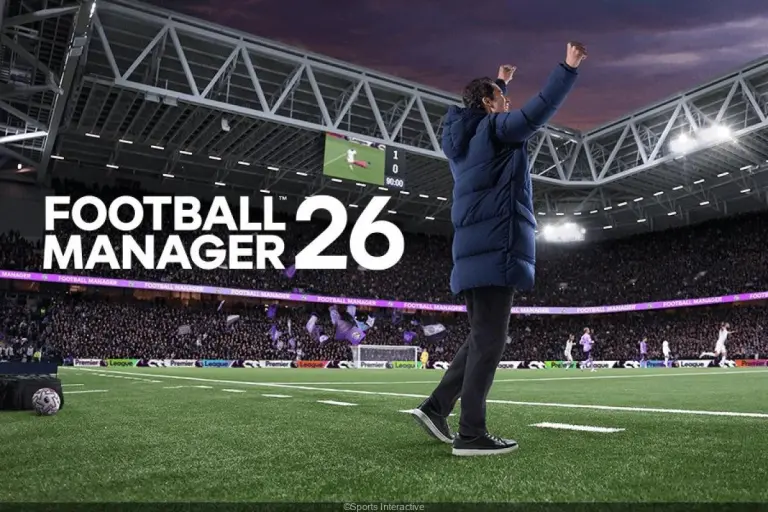
Football Manager 26 reaches a symbolic milestone by welcoming the NWSL, the first fully licensed league for women’s football in the series. The announcement comes with a significant technical upgrade thanks to the Unity engine, promising more natural animations and an enhanced match presentation. The schedule, atmosphere, and tactical depth gain realism, while navigation is smoother with a secondary bar and integrated search. For the sports simulation, the challenge goes beyond merely adding clubs: it represents a cultural shift.
The release, confirmed on all platforms, aligns with a clear strategy. Official licenses and authentic visuals establish a strong framework so that every manager’s experience feels genuine. Sports Interactive executives, the league, and the players’ union emphasize faithful representation of the athletes. The message is clear: this integration must create value for players, clubs, and fans. With a new season starting in the United States, FM26 offers a doorway to a growing championship, already supported by an international audience.
Football Manager 26 and the NWSL: licenses, authenticity, and total immersion
The presence of the NWSL under full license in Football Manager 26 sends a strong signal. Official logos, jerseys, and photos give teams an identifiable face. Players see their image valued in a management game with global reach, which strengthens the credibility of the project devoted to women’s football. This integration avoids visual approximations and allows for dynamic stories that respect the league’s context.
On Sports Interactive’s side, the strategy has been steadily embraced over several years. The declared goal was to introduce women’s football “properly,” by combining major licenses with meticulous work on databases. Comments from league officials and the players’ association underline the same ambition. International visibility matters, but the core remains the accuracy of the sports model. This consistency also deepens the attachment of already engaged fans.
Licenses and perceived value
A discerning audience expects concrete details. In FM26, the authenticity of graphic elements reduces the symbolic distance between the pitch and the screen. Club brand values are reflected through every interface. A franchise that changes visual identity appears immediately in menus. Team marketing campaigns thus gain an additional showcase, consistent with official materials.
From the players’ perspective, recognition comes from correct names and visuals. The league gains exposure in markets where it was less publicized. This dynamic attracts new types of managers. Some come for the North American competition, others to explore a still lesser-known league. This mix fuels varied careers, with more creative club projects.
Community impact and career stories
The series community loves to share journeys. The NWSL opens original narrative arcs: managing a young locker room, building a tactical identity, or developing an emerging academy. Content creators will multiply challenges. For example, building a dynasty in Portland, resisting pressure on a transcontinental away trip, or making a mark on the continental stage with a controlled squad.
A popular challenge might involve working on individual progression. The gap between athletic and technical profiles shrinks thanks to targeted training. Routines analyze progress week after week. Managers can track fitness curves and adjust workloads according to weekly objectives. This approach encourages more nuanced playing styles.
Example of a club project
Imagine a club with an offensive DNA. The performance unit helps maintain pace over time. Wings become an asset, with wide players involved in defensive recovery. Set-piece animation becomes a local specialty. Opponents adapt, but the staff vary the routines. The crowd, attracted by the boldness, fills the stadium. Fiction meets plausibility, and immersion does the rest.
This section marks a milestone: the NWSL is not just a simple license addition, it is a new narrative playground where the precision of details fuels the joy of managing.
Unity, interface, and matchday: the visual leap that changes sports simulation
The switch to the Unity engine touches all sensitive points of the match experience. Animations appear more natural, and contacts feel less scripted. A pre-match camera closer to the pitch increases tension. Visual details in warm-ups, team entries, and crowd atmosphere add a useful layer of realism. Purists will note improved lighting.
The interface also benefits from an ergonomic update. A secondary navigation bar, back/forward buttons, and contextual search speed up tactical sequences. Preparing plan A, B, and C requires fewer clicks. Key information can be spotted at a glance, even during a tight match. Screen density reads better.
Atmosphere, cameras, and NWSL pace
The NWSL has its own atmosphere specificities. Stadiums vary in capacity and acoustics, impacting the reading of key moments. New cameras better convey pressing, transitions, and off-ball runs. A lower coverage helps evaluate distances. In game, this changes perception of a 3-5-2 advancing out of trap, or a 4-3-3 wing-oriented formation.
This visual rendering combines with more readable statistics. Passing maps, recovery zones, and heatmaps gain precision. Coaches can adjust without waiting for halftime. Substitutions become more targeted thanks to live information. Overall coherence promotes smarter decisions.
PC and console optimization, cross-save, and modding
Unity also brings better optimization. Load times shrink on PC and consoles. The experience remains stable over long sessions. Saves shared across platforms facilitate the manager’s life. Resuming a game started at home on another device becomes automatic. Modding tools gain robustness, reassuring communities.
This technical base elevates the NWSL. A faithful rendering values players and clubs. The audience embraces the spectacle, and the sports simulation gains credibility.
For further insight, a video search targets the first NWSL match analyses in FM26. Creators dissect camera angles, animation scripts, and transitions.
Ultimately, the engine and interface align FM26 with a modern visual standard, where the NWSL finds a stage suited to its scale.
Tactics, scouting, and team management: adapting your project to the NWSL competition
Entering the NWSL requires a clear strategic framework. The management game values coherent projects, anchored in the championship’s reality. The volume of travel, athletic intensity, and schedule density structure decisions. A complete staff becomes essential to stabilize workload. Training methods must align with weekly objectives.
Recruitment is thought through versatility and complementarity. The profile of a durable fullback, capable of repeating runs, gains importance. A reliable defensive midfielder relieves the backline. Creative profiles express themselves in half-spaces if width is properly occupied. Everything depends on the pre-defined game plan.
Effective tactical weapons in the NWSL
Several structures stand out depending on the group and opponent. Here are proven basics to adjust:
- 4-3-3 wide to fix wings, press high, and stretch the lines.
- 3-5-2 to control the axis, densify midfield, and free the wing-backs.
- 4-2-3-1 to speed up transitions and highlight a mobile playmaker.
- 4-4-2 diamond to lock the axis and create short triangles.
Each system must consider recovery time. The idea is not to run more, but to run better. Rotation protects freshness and maintains intensity. A structure change after the hour mark can surprise, especially against a tiring block.
Scouting, data, and injury prevention
The recruitment unit must blend data and field observation. Reports intersect with simple indicators. Explosiveness, ability to repeat sprints, and game vision become key criteria. Injury prevention involves meticulous management of load and sleep quality. Returns to training must be planned. A warning on neutral fatigue is no trivial matter.
Adversity scenarios help stress-test the plan. A back-to-back with long travel requires an alternation strategy. Position hierarchies must be clear. Young talents learn in a protected environment. The team maintains a backbone that reassures in tense moments.
Overview of clubs and key assets
To find your way in the competition, this table highlights generic strengths useful to integrate into a game plan. It does not replace a scout report but provides an initial direction.
| Club (NWSL) | City | Key asset in FM26 career |
|---|---|---|
| Portland Thorns FC | Portland | Crowd culture and strong atmosphere for match immersion |
| Seattle Reign FC | Seattle | Fast transitions and creative profiles useful in 4-3-3 |
| Gotham FC | New York/New Jersey | Media exposure and commercial growth potential |
| San Diego Wave FC | San Diego | Dynamic project, ideal for an ambitious new season |
| Orlando Pride | Orlando | Targeted recruitment and gradual development |
This initial tactical framework lays the foundations. The next installment will shed light on how careers and transfers transform with the NWSL.
Career, transfers, and FM26 update: a new season designed to last
With Football Manager 26, career coherence improves. The interface update brings useful clarity to busy periods. Decisions are made faster without losing depth. Transfers benefit from clearer screens and better-integrated search tools. The advanced filter activates with one click. Priority targets remain visible during negotiations.
In an NWSL career, the key lies in anticipation. A player’s value can evolve quickly based on performances and current events. A competent staff secures margins. The medical service ensures continuity. The data unit isolates weak signals. The schedule is prepared in blocks, with clear goals for each phase. This segmentation reduces uncertainties and reassures the locker room.
Planning a transfer window
Two weeks before opening, priorities must be locked in. Primary targets receive maximum information levels. Bench depth remains a fixed point. An unexpected departure triggers a plan B. Offers are made in a precise order, according to probability and impact. Negotiations follow a defined framework. No one concedes the last detail.
Once the window opens, pace quickens. Medical returns feed into choices. A loan can secure an exposed position. Young players gain playing time in designated phases. The bench remains strategic to handle matchday load. Early rotation prevents accidents at the hour mark.
Modernized interface and management tools
The secondary navigation bar, back/forward buttons, and instant search enhance flow. Tactics are edited on a more open screen. Responsibilities can be delegated without losing control. Opponent reports integrate better into pre-match routines. This ergonomics serves decision-making, especially when stakes rise.
Online, stability boosts the appeal of multiplayer sessions. Shared saves maintain pace when the group scatters. On console, visual coherence brings the living room version closer to PC. Players go through longer seasons. The NWSL gains lasting visibility there.
Video tutorials and streams promote fast learning. Newcomers to women’s football can get their bearings in a few sessions. Experts already refine their methods, especially on the data side.
This career dynamic shows a clear ambition: to sustain the pleasure of managing, regardless of the club chosen.
A window onto 2026: audience, streaming, and opportunities for women’s football in FM26
The release of FM26 after a transition year places the NWSL in the spotlight. Streams dedicated to women’s football multiply. “Road to glory” series establish themselves on platforms. A club builds its reputation through managers’ stories. The audience discovers varied playing styles. Immersion operates thanks to the coherence of tools.
On the community level, seasonal challenges structure engagement. A thematic month dedicated to fast transitions, another to set-pieces. Creators share graphic packs and tactical notebooks. Discussions on the attack/defense balance intensify. Everyone proposes variants that adapt to current profiles. The NWSL benefits from this effervescence.
Esports, private leagues, and storytelling
Private online competitions add extra soul. Short formats involve NWSL clubs with specific constraints. A capped budget, mandatory rotation, a limited number of tactical changes. Managers learn to prioritize the quality of key moments. Streams highlight high-pressure decisions.
Storytelling remains the backbone. A fictional character can embody a demanding club project. A coach trained in data joins an ambitious franchise. Decisions are justified through graphics and match sequences. Viewers understand the logic behind choices. Buy-in happens naturally.
Marketing levers and league-game partnership
League officials had announced a desire to reach fans where they are. This strategy is visible in FM26. The sports simulation acts as a relay for national campaigns. Clubs convert game interest into real attendance. Cross-promotions could emerge. A ticket discount code for active managers would be coherent.
On the media side, the argument of authenticity weighs in. Official visuals support short formats. Matchday clips serve social networks. Content recurrence feeds the algorithm. A virtuous loop settles between game, clubs, and fans. Visibility will further increase when career stories reach their peak.
Focus on project sustainability
The challenge remains to endure. A well-paced editorial calendar avoids weariness. Regular updates stabilize long sessions. Transparent patch notes reassure the community. The NWSL inherits a robust ecosystem. Clubs find a lasting showcase. Players gain exposure and recognition.
This 2026 outlook highlights the essentials: FM26 does not just add licenses, it builds a framework where the NWSL can thrive over time.
Is the NWSL fully licensed in Football Manager 26?
Yes. NWSL clubs are fully integrated with complete licenses, including official photos, logos, and jerseys, for maximum immersion and authenticity.
What does the Unity engine bring to FM26 matches?
Unity improves animations, lighting, and matchday staging. Closer cameras and overall stability enhance tactical reading.
Does the FM26 interface change team management?
Yes. A secondary navigation bar, back/forward buttons, and integrated search make managing tactics, transfers, and training faster.
Can you start a complete NWSL career at launch?
Yes. The league is playable from the start, with a competitive framework designed for progression, scouting, and rotation throughout a new season.
Is FM26 available on multiple platforms?
Yes. The game releases on all supported platforms and offers an optimized experience, from PC to consoles, with cross-save features.