
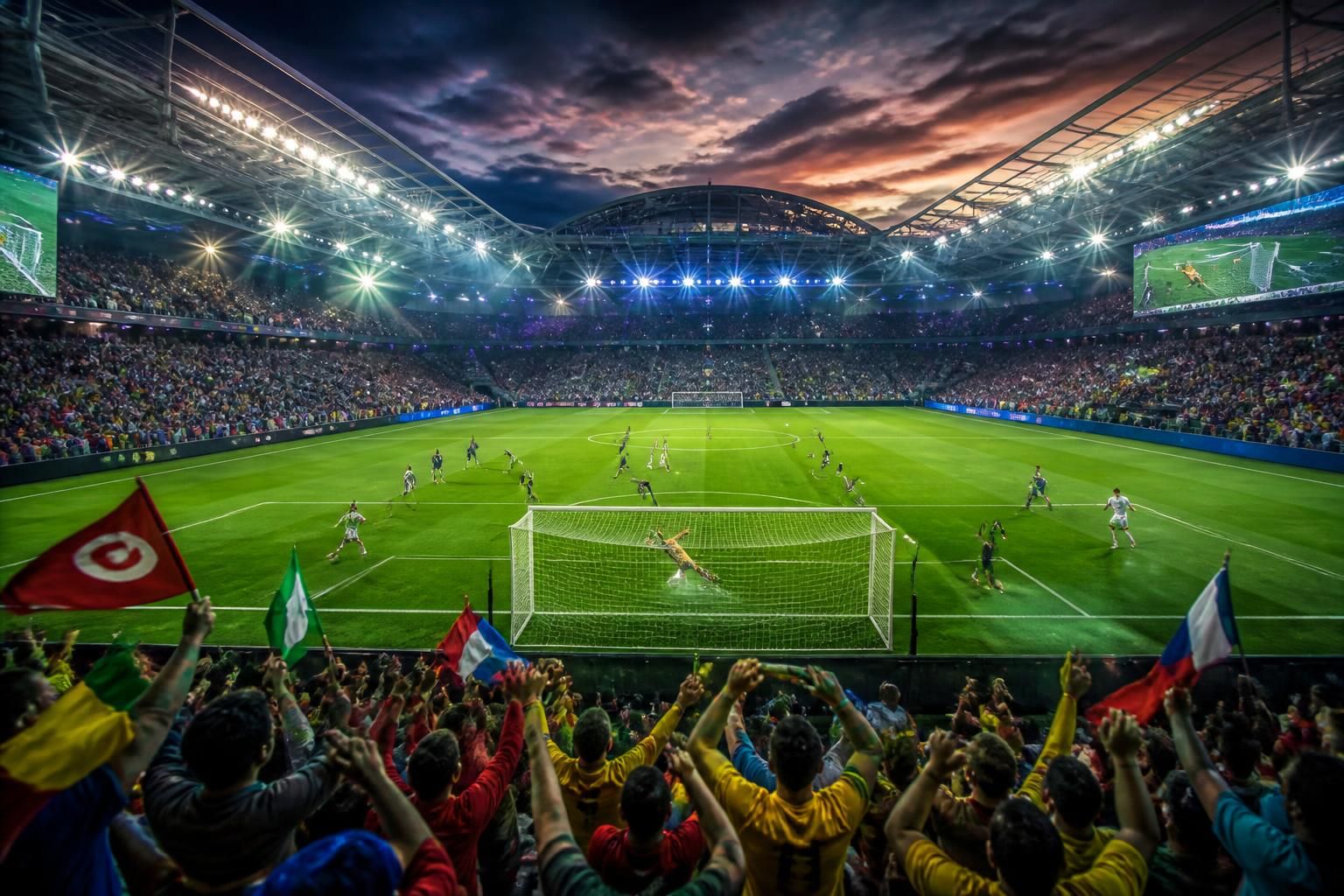
In Brief
- EA FC Pro 2026 is the official EA SPORTS eSport circuit around EA SPORTS FC, structured in qualifying stages followed by an international final tournament, featuring professional players.
- The World Championship is played in a competitive 1v1 format, with a strong emphasis on defensive consistency, tempo management, and set pieces.
- Rewards generally combine cash prizes, visibility (live broadcasting), and circuit points, making qualification as strategic as the match itself.
- A comprehensive guide should cover the journey (registration, conditions, rules), the meta (styles, formations), and preparation (training, video analysis, competition hygiene).
- Mastery of “off-the-ball” game strategies (pressure, coverage, transitions) remains the most decisive factor at the highest level.
The EA FC Pro 2026 World Championship continues the professionalization of eSport in virtual football, with an ecosystem blending official competitions, partner scenes, and tiered qualification. The general public often discovers it during the final stages, but the core takes place much earlier: eligibility, schedule, format, match rules, team selection, stress management, and reading the current meta. A video game competition at this level is not just about “being strong with the controller”: patch anticipation, opponent analysis, and the ability to reproduce a performance under pressure make the difference.
This comprehensive guide lays out concrete landmarks to follow and understand EA FC Pro 2026: how the international tournament works, the qualifying stages, what professional players look for in their game strategies, and how to read a match as a tactical encounter. The goal is simple: to provide the keys to watch the scene as a sport, not as a series of spectacular actions.
EA FC Pro 2026 World Championship: format, rules, and markers for following the competition
EA FC Pro 2026 refers to a structured competitive circuit, generally organized around qualifying events and a final phase crowning a world champion. The most widespread format at the top remains 1v1, as it isolates individual performance and limits team variables, while keeping a clear reading for the public.
During broadcasts, some reference points systematically recur: standard match duration, tiebreak rules (overtime, penalty shootouts according to regulations), and zero tolerance for unsportsmanlike conduct. Organizers also enforce a technical framework (platforms, competitive settings, controls) to reduce disparities caused by equipment.
To follow a match, the eye can focus on three zones: the first pass (risk of losing the ball in the central area), penalty area defense (tackle timing and coverage), and transition after recovery. This is where most tight games are won, even when the score seems “logical.”
What the “world” level changes: pace, risk, and detail management
At this stage, mechanical gaps exist, but the difference mostly comes down to low-margin decisions: delaying rather than forcing a pass, accepting to play back, or seeking a useful foul during a dangerous transition. The pace is less “showy” than in the mainstream game, as mastery is the priority.
A typical example: a player leading 1-0 does not necessarily immediately seek a second goal. He locks down ball losses in the center, plays wide, and waits for the opponent’s error on a rushed pass out. The match reads like risk management rather than a shots contest.
EA FC Pro 2026 Qualification: typical path, access conditions, and common pitfalls
Qualification for a World Championship generally involves a sequence of stages where consistency counts as much as peak performance. Professional players organize themselves like a sports calendar: volume periods (playing many matches), tactical work periods, then sharpening before decisive rounds.
The most frequent pitfalls come from mental management and context: underestimating an “unknown” opponent, stubbornly sticking to a game plan that does not work, or losing focus after conceding a goal from a corner. Qualification paths reward profiles able to stay stable over a series, not only those delivering a perfect match.
Preparation checklist before a qualifying stage
Useful preparation is rarely visible on screen but often decides the day. Most underperformances come from a neglected detail: lack of warm-up, unstable settings, or a game plan too ambitious for the pressure of the moment.
- Stabilize two complementary formations (plan A / plan B) and know when to switch.
- Repeat 10 to 15 minutes of set-piece drills before starting a competitive session.
- Define a simple rule after conceding a goal (return to a “safe” sequence of 2 minutes).
- Limit risky actions in the center at the start of the match to “take” the opponent’s measure.
- Note only one priority error to correct after each match, not an endless list.
A quickly improving player is not the one who changes everything each week but the one who corrects one clear weakness at a time and makes it reliable under pressure.
Game strategies in EA FC Pro 2026: meta, defensive styles, and offensive recipes
At the EA FC Pro 2026 level, game strategies are primarily a grammar: how to defend the penalty area, how to press without getting sucked in, how to attack without exposing oneself to the counterattack. The meta varies with game balancing, but the principles remain stable: limit central losses, force the defense out, then attack the freed zone.
Professional players also seek repeatable automatisms. An “inspired” attack can work once, but it does not hold over an international tournament, where the repetition of situations and live adaptation are constant.
Defending like a pro player: simple priorities, costly mistakes
Effective defense starts with patience. The frontal duel is often a trap: the opponent waits for the tackle too early to create the passing angle or the feint that opens the box. The best profiles first protect the dangerous zone, then trigger at the right moment.
The most costly mistakes: sending a central defender out without coverage, forcing a pass in the center under pressure, and “chasing” the ball instead of cutting the passing lane. A solid defense also provides more offensive freedom, because the fear of the transition gradually disappears.
Creating chances without exposing: short circuits, switches, calls
In attack, the goal is not to accumulate shots but to produce a clean shot: angle, foot, balance, and timing. Sequences common at the highest level rely on short circuits to fix opponents, then a quick switch to attack the weak side.
A textbook case: attract pressure on one side, play back, switch, then seek a pass in the half-space as the block slides. Over a series, this kind of plan mentally weighs on the opponent, who ends up over-anticipating and opening a gap.
Comparison table: reading an EA FC Pro match (concrete indicators to monitor)
In a World Championship, some indicators provide a more reliable reading than raw possession. They explain why a player “dominates” without necessarily shooting much, or why another scores on few chances.
| Measurable Indicator | What it reveals in competition | Common alert threshold | Typical adjustment action |
|---|---|---|---|
| Ball losses in the center (midfield zone) | Direct risk of counterattack and “free” shots | 3 or more losses in 20 minutes | Play more often back, shorter passes |
| Shots conceded in the penalty area | Quality of opponent’s chances | 5 shots or more in 90 minutes | More compact block, delay instead of tackle |
| Successful defensive duels (tackles/interceptions) | Defensive timing and line reading | Less than 50% success | Less engagement, more coverage of passes |
| Goals conceded from set pieces | Preparation and mastery of routines | 1 goal conceded = immediate warning | Change marking, vary goalkeeper’s exit |
This table also helps the spectator: a tight match is better understood when the camera does not show everything, and structural mistakes are discreet.
EA FC Pro 2026 Rewards: what a player really wins at the World Championship
Rewards are not limited to the cash prize, even if money remains a central marker. At a World Championship, visibility weighs almost as much: live broadcast, credibility for joining a structure, and attractiveness to partners.
The point often misunderstood by the public: a good result “converts” over the entire season. A player who performs at an international tournament can secure invitations, get better training conditions, and stabilize their competitive calendar, which feeds subsequent performance.
What an eSport organization looks for beyond ranking
Teams do not recruit solely based on a top ranking. They observe the ability to maintain a level, discipline in matches, and resilience when the initial plan fails. A player who loses but remains consistent in choices can be more “recruitable” than a spectacular but unstable profile.
Among pros, one term often comes up: “cleanliness.” It means a faultless performance where avoidable mistakes are absent, with mature management of weak moments, precisely what the world stage exposes.
Privacy, cookies, and broadcasting: what platforms concretely do during an eSport live
When a match is followed live, part of the experience depends on platforms and their settings. Online services use cookies and data to deliver and maintain services, monitor outages, protect against spam, fraud, and abuse, and measure audience engagement to improve quality.
By accepting “all,” some platforms also indicate using this data to develop new services, measure advertising effectiveness, and personalize content and ads according to settings. By refusing, these additional uses do not apply, with more contextual content and advertising (page viewed, active session, general location).
For fine adjustment, access to management tools is often offered via a dedicated control page, with “more options” and a link to privacy tools accessible anytime.
What do we say about it?
The EA FC Pro 2026 World Championship is better understood when viewed as a risk management sport, not as a demonstration of gestures. The best professional players first win on penalty area defense, discipline in buildup, and set pieces, because these are the zones that resist pressure the least. To follow the video game competition without getting lost, the good reflex is to watch ball losses in the center and shots conceded in the box, more telling than possession. Practically, “qualification” is prepared like a cycle: simple game plan, repeated routines, and mental stability over a series of matches.
EA FC Pro 2026, is it the same as FUT mode or classic online competitions?
No. EA FC Pro 2026 refers to a structured eSport framework, with rules, competitive parameters, and a qualification logic towards major events. FUT can serve as a training ground and squad selection depending on formats, but pro performance mainly relies on tactical discipline, match reading, and repetition under pressure.
Which skills help progress the most aiming for qualification?
The fastest improvement often comes from three areas: reducing ball losses in the center, defending the penalty area without diving in, and practicing set-piece routines. At a mechanically comparable level, these details turn tight matches into wins over a series, which is especially important in a qualification path.
How to analyze a World Championship match when starting as a spectator?
Focusing on simple clues helps: number of shots conceded in the box, frequency of counters after central loss, and effectiveness on corners/free kicks. An “invisible” domination is seen when a player forces the other to play long passes or to the sides without entry to the center. The story of the match is often there.
Are rewards only money for the winner?
Cash prize matters, but visibility weighs heavily: broadcasting, credibility, opportunities with teams and partners, and sometimes easier access to some events. A big result at the World Championship can stabilize a whole season because it improves training conditions and the player’s attractiveness on the eSport scene.