
| Key Points |
|---|
| Release Date : November 4 on Apple Arcade |
| Platforms : iPhone, iPad, Mac, Apple TV, Apple Vision Pro (Arcade Originals) |
| New Features : Premier League License, women’s football, optimized Unity engine |
| Subscription : $6.99 USD/month, one month trial, family sharing (up to 6 people) |
| Promise : Build a dynasty through smoother and more authentic football management |
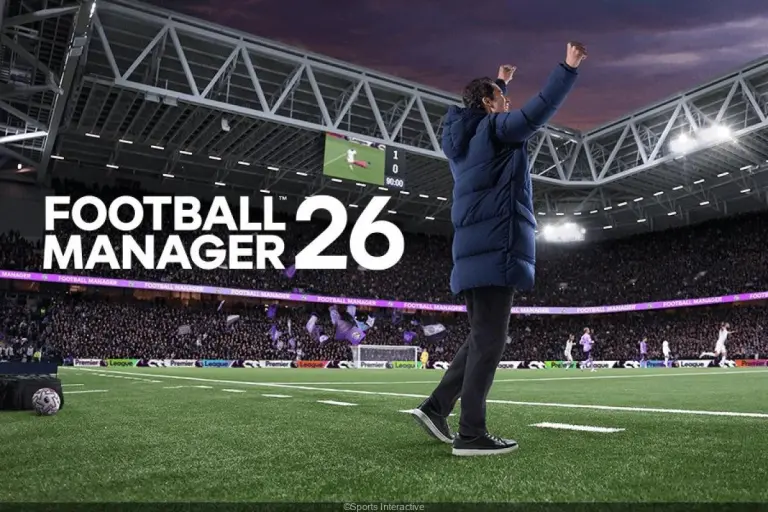
At the heart of a season where the mobile games market intensifies, Football Manager 26 Touch returns to Apple Arcade with a clear goal: to offer a fast, precise, and deeply tactical football simulation. From the release date of November 4, this edition emphasizes building a dynasty by focusing on concrete decisions: finely negotiated transfers, adaptive playing systems, and a club culture designed over multiple seasons. Thanks to a modernized visual engine and a redesigned interface, everything gains clarity on both iPhone and Mac. The result is most felt during matches, where each tactical adjustment produces a readable and coherent effect.
This comeback comes with major assets. On one hand, the fully licensed Premier League strengthens the authenticity of squads, jerseys, and schedules. On the other, the arrival of women’s football finally opens an additional strategic expression field, with its rivalries, player profiles, and specific challenges. Moreover, distribution via subscription facilitates access: one month trial, a single price, and the freedom to switch games across all compatible devices. For both curious players and experts, this simple framework eliminates friction and refocuses attention on the only thing that counts: winning today while preparing for tomorrow.
Football Manager 26 Touch on Apple Arcade: building a dynasty with demanding football management
The central promise of Football Manager 26 Touch is clear: victory is no longer enough, you must build a dynasty. On Apple Arcade, every career becomes a story of transmission, tactical culture, and ego management. To achieve this, the path goes through daily decisions that, accumulated, transform a club into a benchmark. A concrete example: starting with a mid-table team and choosing to anchor the project on youth development rather than flashy spending. Quickly, the wage policy stabilizes, young players earn minutes, and consistency follows. This logic, sober yet ambitious, embodies the series’ DNA.
A fictional character, coach Lenoir, illustrates this trajectory. Initially appointed at AS Port-Marine, he inherits a heterogeneous squad and a limited budget. Rather than multiplying bets, he identifies three levers: a simple game structure, coordinated pressing, and targeted recruitment in two key positions. Thanks to measurable objectives, the team gains coherence without sacrificing entertainment. Very quickly, results trigger a virtuous circle: partners follow, supporters embrace the narrative, and prospects agree to sign. Thus, a legacy is born that goes beyond the names on the team sheet.
Tactics and decisions that shape a lasting record
On the tactical level, the 26 edition encourages micro-adjustments. In a match, a well-executed lateral switch or the reassignment of an outside playmaker changes the tempo. However, the real impact is observed over time: a coherent philosophy retains player profiles who thrive within it. Then, synergy becomes a performance multiplier. For example, organizing a fluid 4-3-3 around a mobile pivot facilitates counter-pressing while freeing the opposite winger. This detail creates a visual signature but also an identity feared by opponents.
The long term, however, requires discipline. Associating a succession plan with critical positions prevents hollow cycles. Moreover, linking individual goals to collective objectives fosters buy-in. A defined framework motivates veterans to pass on knowledge, while prospects accept rotation. From then on, the club gains resilience, including during injury periods or schedule congestion. Ultimately, continuity often beats improvisation.
From the transfer window to youth development: a value chain without weak links
Recruitment is the other pillar. The most robust approach relies on complementary profiles rather than names. Furthermore, methodical scouting limits casting errors. It then becomes possible to target a versatile fullback to support a bolder winger or a relay midfielder able to cover two roles. By combining data, observations, and budget constraints, arrivals stabilize the tactical matrix instead of disrupting it.
Youth development, finally, translates vision into heritage. A well-managed academy creates common technical standards and reduces opportunity costs. Above all, it strengthens locker room pride, as young players become cultural landmarks. When the moment comes, they embody continuity, like a captain coming from the center. That sometimes weighs more than any buy-back clause. In short, titles follow when every level of the club speaks the same language.
Under the surface, this aspect confirms a reality: to win often, you have to win together. That is the foundation of a true dynasty.
Major new features of FM26 Touch: Licensed Premier League, women’s football, and Unity engine
This edition stands out by three structuring contributions. First, the licensed Premier League brings added authenticity: official crests, flawless jerseys, and faithful schedules. Secondly, the integration of women’s football changes the game, as it opens unprecedented managerial trajectories. Finally, the switch to an optimized Unity engine improves animations and offers smoother movements. On Apple Arcade, these elements combine with a redesigned interface for touchscreens and remote control, streamlining interactions both during matches and in menus.
In terms of licenses, the benefit goes beyond cosmetics. Official rights improve the coherence of squads, stadiums, and rivalries. Thus, match preparation gains precision: opponent tendencies, preferred sequences, and pressing cues better reflect reality. Consequently, each game plan takes on a more credible dimension. This immersion effect doubles in interest when players go through multiple seasons, as the universe remains stable and demanding.
Women’s football, a new field for sports strategy
The arrival of women’s football enriches the sports strategy in several ways. On one hand, physical and technical profiles offer different match rhythms, inviting a rethink of workload and micro-cycles. On the other, the market dynamics differ, especially in contracts, scouting, and progression. It then becomes relevant to adapt data analysis and medical priorities. Over a three-season cycle, clubs that embrace these specifics often gain a lead.
In practice, two axes dominate. First, resource planning demands clear bridges between the men’s and women’s divisions: shared analysis staff, standardized pressing routines, and shared recovery protocols. Second, communication creates cohesion: a common project gives meaning to tactical choices, even when results fluctuate. In the long run, club identity is reinforced because the diversity of paths feeds collective demand.
Unity and redesigned interface: readability and impact of matches
The Unity engine mainly brings smooth animations and clarity of trajectories. On iPad, the rendering makes transition phases more readable: a poorly covered gap is detected faster, and marking returns can be followed at a glance. Moreover, the interface reorganizes essential information: contextual statistics, heatmaps, and pertinent suggestions. This hierarchy speeds up decision-making without diluting expertise. In matches, a badly set cursor can be costly; a clean interface limits such errors.
Technology fades away when it facilitates intuition. On this point, FM26 Touch keeps its promise: it directs attention to what matters and leaves room to innovate tactically. That’s where the difference is made over a long season.
However, these new features do not change the basic philosophy: the best idea remains the one you can repeat under pressure. The game thus encourages robust and verifiable plans, not fragile bets. This consistency reassures by strengthening the learning curve and making players want to start a game differently again.
Apple Arcade: price, compatible devices, and mobile gaming comfort
Practically, Apple Arcade simplifies access. The subscription is priced at $6.99 USD per month, with a one-month trial for new subscribers. Furthermore, the service is integrated into Apple One plans (Individual, Family, Premier), which helps optimize the budget if other Apple services are used. Thanks to family sharing, up to six members enjoy the catalog, including Football Manager 26 Touch, without in-app purchases or ads. This framework makes the experience predictable and healthy, especially for long sessions.
Regarding compatibility, titles labeled Arcade Originals launch on iPhone, iPad, Mac, Apple TV, and Apple Vision Pro. The experience adjusts based on the device: comfortable touch on iPad, precise keyboard/trackpad and multitasking on Mac, and remote control or gamepad on Apple TV. Then, cross-device resume allows playing on the go and continuing on the big screen. This continuum strengthens the strategic dimension, as it becomes easy to analyze calmly before a key match.
| Device | Main advantage for FM26 Touch |
|---|---|
| iPad | Clear and readable touch interface for in-match phases |
| Mac | Detailed analysis with keyboard/trackpad and multitasking |
| iPhone | Quick data consultation and fast adjustments |
| Apple TV | Overview on a large screen, ideal for cup nights |
| Apple Vision Pro | Tables and stats anchored in space for immersive monitoring |
The catalog is also expanding with known licenses. Around the FM26 Touch launch, the selection welcomes MySims and Toca Boca Jr Classics (available November 6), as well as recent sports titles like NBA 2K26 Arcade Edition and NFL Retro Bowl ’26. This diversity creates a gaming habit that benefits the manager career: between two transfer windows, another game lightens the mind. Then, the return to football simulation happens with more lucidity.
To optimize daily comfort, a simple setting suffices: limit non-essential notifications on match days and schedule training sessions in fixed slots. Above all, stabilizing the framework avoids the temptation to overreact to every setback. Ultimately, it is this regularity that leads to solid pathways.
Advanced sports strategy: tactical methodology and science of details on mobile gaming
Sports strategy in Football Manager 26 Touch relies on a clear triptych: principles, landmarks, and routines. First, principles define the team’s logic: clean build-up, attacking half-spaces, or trapping the channels. Then, landmarks set thresholds: pressing intensity, block height, and effective width depending on the opponent. Finally, routines ensure reliable repetition: set pieces, counter-press triggers, and substitution timing. On mobile gaming, these blocks must remain readable, as reactivity is key during matches.
A robust plan can be articulated like this: compact midfield block, pressing oriented on the lateral pass, and fast transitions targeting space behind the advanced fullback. Moreover, a versatile bench provides levers: a midfielder capable of dropping into defense, a winger who can finish centrally, and an inverted fullback to densify the inside. Thanks to these options, the team breathes without breaking its framework. Over time, this minimal flexibility protects the structure.
Tactics adapted to FM26 Touch’s pace
The Touch format speeds up decisions. It becomes useful to pre-record two variants: an aggressive version to overturn a score, and a cautious version to close central space in the last ten minutes. Then, the key is to prevent chain reactions. A fullback’s forward run must coordinate with the coverage of the defensive midfielder. Otherwise, defensive transition becomes perilous. A simple rule helps: for every freedom granted, provide a clear safeguard.
Set pieces remain the most controllable source of goals. In this area, working on two combinations often suffices: one at the near post to draw defenders, the other with a screen at the back post. Conversely, varying takers prevents the opponent from anticipating. From then on, the xG statistic on corners makes sense: if it stagnates, positioning may hide a running or timing problem.
Micro-management and reading moments
Micro-management wins tight matches. A diamond switch over ten minutes can break the opponent’s pressing and free support between the lines. Also, card management avoids mental inferiority: repositioning a booked fullback or bringing in a calmer midfielder preserves balance. Finally, substitutions benefit from planned scenarios: leading by one goal, trailing, or defending a strategic draw.
- Pre-match: define a single priority (build-up out, transition control, or wing fixation).
- During: monitor two key metrics (losses in the middle third, aerial duel win ratio).
- After: isolate a problematic sequence and work on it in training.
These routines create automatisms. They reduce randomness and stabilize performance. In the end, the strategy holds because it simplifies choices under pressure.
This approach suits players alternating short sessions and long evenings. The method remains the same, whatever the device. Very quickly, the team speaks a common language and identity asserts itself.
Concrete scenarios to shape a coaching dynasty: case studies and action plans
Turning a club into a benchmark involves simple and repeated choices. To illustrate, three proven scenarios help steer a career from the first week. Each has risks, benefits, and success indicators. Combined with the innovations of Football Manager 26 Touch, a lasting trajectory takes shape. The central idea remains the same: maintain the thread despite calendar shocks.
Scenario 1: revive a mid-table Premier League club
Objective: stabilize the defensive sector and raise the quality of early build-ups. Action plan: target a goalkeeper good with the ball at feet, sign a defender capable of breaking lines, and promote a relay midfielder from the academy. Also, standardize a 4-3-3 with measured counter-pressing, with rotations planned every three matches. Then, set a minute threshold for youngsters to avoid rush. Expected results: reduction in shots conceded, increase in high recoveries, and progression in forward pass rate. In the medium term, this base attracts offensive profiles that complete the puzzle.
Scenario 2: build a project in women’s football
Objective: establish a clear style and develop locker room leaders. Recruitment targets versatile players capable of performing two roles without quality loss. Then, emphasis is on injury prevention as match succession requires fine planning. Additionally, local scouting often offers undervalued opportunities, especially in hybrid positions. Indicators: team block consistency, success in offensive transitions, and progression of starters. Over two seasons, the club gains credibility and attracts talents who raise standards.
Scenario 3: the academy as spine
Objective: establish a common identity from U18 to first team. Method: duplicate tactical plan A and plan B throughout the club, set minute thresholds per position, and standardize evaluations. Also, assign a mentor to each promising prospect to accelerate decision maturity. Targeted results: net positive transfer balance after two seasons, while remaining competitive. Then, the club’s DNA attracts compatible players who require little adaptation. Ultimately, the model becomes self-sustaining, with virtuous cycles where the sale of a starter finances two internal promotions.
To structure these scenarios, a clear calendar helps: squad audit the first week, transfer targetting the second, and routines installation the third. Then, a monthly check confronts figures with the plan. If a lasting gap exists, the strategy is adjusted by small touches, never in a hurry. This is how a dynasty consolidates: through the repetition of solid ideas and acceptance of cycles.
In the end, the entity surpasses individuals. That is the most reliable sign that the club has changed scale.
What is the release date of Football Manager 26 Touch on Apple Arcade?
The release took place on November 4, with immediate availability in the Apple Arcade subscription on iPhone, iPad, Mac, Apple TV, and Apple Vision Pro for Arcade Originals titles.
What are the main new features of the 26 edition?
The officially licensed Premier League, the arrival of women’s football, an optimized Unity engine for smoother animations, and a redesigned interface adapted to Apple devices.
What is the price of Apple Arcade and is there a trial?
The subscription costs $6.99 USD per month with a one-month trial for new subscribers. Apple Arcade is also included in several Apple One plans, with family sharing.
Is the game suitable for short sessions on mobile?
Yes. FM26 Touch was designed for quick decisions, clear interfaces, and manageable matches in short sessions, without sacrificing tactical depth.
Can you build a dynasty playing only on iPhone?
Yes. Saves continue across devices and the mobile ergonomics allow managing tactics, transfers, and youth development. Consistency of method matters more than the device used.