
| Key points to master Football Manager 2026 |
|---|
| Analyze the squad before the tactics: start from the actual qualities to build robust game tactics. |
| Stabilize the center: an optimal formation relies on complementary central pairs. |
| Segment player recruitment: short term, safe bets, high potential, and smart loans. |
| Manage player development: measurable objectives, mentoring and weekly monitoring. |
| Automate set pieces: 8 to 10 “free” goals per season with adapted routines. |
| Read match analysis: adjust pressing, width and tempo according to lost zones. |
| Sanctuarize the momentum: clear rotation, readable hierarchy, realistic goals. |
| Master transfers: smart clauses, conditional bonuses, and early resale. |
| Exploit new features: women’s leagues, data tools and technical improvements of Football Manager 2026. |
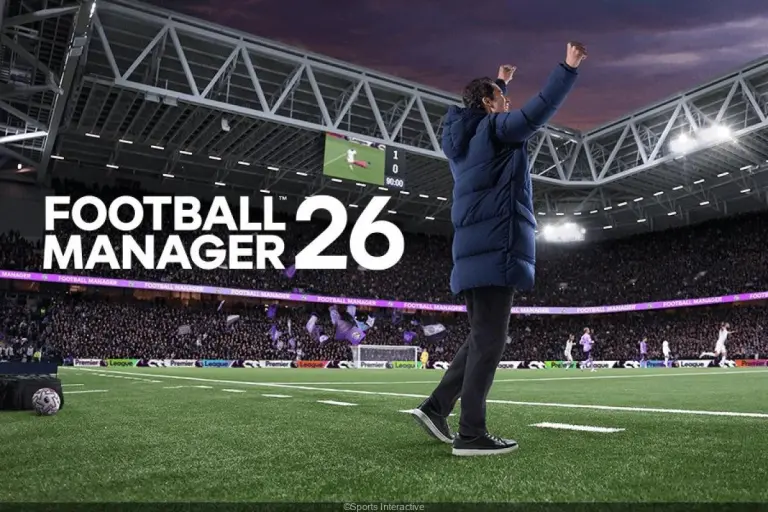
The new installment Football Manager 2026 fixes last season’s criticisms, enriches analysis tools, and integrates women’s leagues. This depth reshuffles the cards. From now on, winning strategies rely as much on data reading as on bench instinct. Well-managed clubs align coherent decisions from recruitment to match day, while protecting internal momentum.
The thread of this article follows the trajectory of a fictional club, AS Port-d’Acier. Its goal is clear: dominate the game over three seasons. A rigorous sporting director, extended staff, and simple processes set the pace. Because the difference lies in the details, each section below offers concrete instructions, measurable benchmarks, and examples adapted to modern constraints, from a busy schedule to more competitive transfers.
Football Manager 2026: winning strategies and tactical identity to dominate the game
The key does not lie in a magical “meta.” In Football Manager 2026, identity is built from the squad. AS Port-d’Acier starts by mapping strengths, weaknesses, and synergies. Then, the optimal formation comes from this diagnosis, not the other way around.
A reliable central axis structures everything. A dominant aerial goalkeeper relieves high pressing. A pivot or a false nine dictates the block height. Thus, the coherence of game tactics depends on the alignment of roles, lines, and tempo.
From the locker room to the pitch: calibrate the optimal formation
The club tests two models. A fluid 4-2-3-1 to face low blocks. An aggressive 4-3-3 to press weak build-ups. Each scheme is deployed in plan A/B depending on the opponent. This flexibility protects against inspiration breakdowns.
Mentality is not just a gauge. It reflects risk management in key zones. Against a dangerous inside winger, reducing defensive width avoids isolating the fullback. Conversely, widening the attack fixes opposing center backs and opens the gap for the number 10.
Roles, pressing and key moments
The six-eight duo controls the tempo. A ball-winning midfielder and a mezzala cover transitions and imbalances. On the wings, a support winger balances an attacking winger. Thus, the team keeps five attacking lanes available, while maintaining cautious coverage.
Pressing is based on triggers. Short opponent goal kicks? Higher line and lateral traps. Repeated long balls? Mid-block and second ball. This granularity avoids physical wear and multiplies recoveries in the final third.
Set pieces are a multiplier. Two offensive routines at the near post, one at the far post, and a short one to feint. Defensively, mixed marking limits screens. Several matches unlock on these details.
- Plan A: 4-2-3-1, medium width, high tempo, counter-pressing.
- Plan B: 4-3-3, wide width, targeted pressing, quick attacks.
- Management: tactical break at 30’ if xG below 0.4 and shots conceded >6.
- End of match: pivot goal kicks, fullbacks supporting, tempo slowed at +1 goal.
In practice, AS Port-d’Acier gains consistency. Fewer rushed shots, more high-value actions. Domination comes from a system readable by all, not from numerical magic.
Player recruitment and smart transfers: data architecture and hidden market
The player recruitment policy segments needs. Short term to fill a gap. Medium term to increase asset value. Long term for a five-year base. Thanks to advanced reports, the club sees beyond the stars.
The market offers inefficiencies. Geographic release clauses, loans with conditional obligations, and performance bonuses limit risk. On Football Manager 2026, clubs negotiate harder, but transfers remain winning with pay-for-performance scenarios.
Multi-team scouting pipeline
Women’s leagues introduce an unprecedented talent pool. AS Port-d’Acier aligns two pipelines. One for the male team. The other for the female team. Both share data and methods, not target profiles.
Each target receives a composite score. Weight for age, previous xG/xA, injury history, and linguistic adaptability. Field reports validate context. Thus, risk is framed before the first offer.
| Indicator | Target threshold | Where to check in FM26 |
|---|---|---|
| xG per shot | > 0.12 | Analyst report, Shots tab |
| Progressive passes/90 | > 7.0 | Team reports, Passes view |
| Successful pressures/90 | > 4.5 | Analysis center, pressing |
| Availability (injuries) | < 8% absent | Medical history |
| Salary impact | < 10% payroll | Finances, budget |
A concrete example illustrates the method. AS Port-d’Acier targets a left fullback in the top women’s division. Her xA/90 exceeds 0.20, and her speed is in the top 10%. A loan with a purchase option indexed on minutes secures the operation. The value curve follows.
On the men’s side, a 28-year-old pivot is recruited via resale clause. His aerial strength adds a threat on set pieces. Offensive routines capitalize on this quality. The impact costs less than a premium striker.
Negotiate cautiously
Counter-offers are prepared in advance. A salary cap per position avoids breakdowns. Bonuses are performance-oriented. Goals, starts, and fitness maintenance. The locker room accepts a clear structure better than costly exceptions.
Finally, resale is planned. Two years before contract end, a decision is made. Extension with clause, or transfer. This rigor protects cash flow and keeps the team competitive. Transfers become a lever, not a lottery.
At the end of the first transfer window, AS Port-d’Acier shows increased squad value and stable payroll. It’s the basis of sustainable team management.
Player development and individualized training: from potential to performance
Player development makes the difference over three seasons. Measurable progress is based on precise objectives. Maximum speed, endurance, decision-making, and technique under pressure. Each axis maps to a match role.
The staff defines cycles. Three weeks of targeted load, one week of maintenance. Young players are mentored by key figures with model personalities. Thus, the club’s DNA is passed beyond team talks.
Role-based programs and ramp-up
A playmaker receives a technical and vision mix. Sharp passes, oriented control, and quick triggering. Cup matches provide manageable playing time. Confidence follows, as do stats.
A hybrid fullback alternates support and attack. The plan alternates repeated sprints and crosses. Video tracking isolates improvement zones. Repetition transforms theory into automatism.
The loan remains a powerful accelerator. “Guaranteed” loans with role promise ensure minutes. Weekly analysis checks actual use. In case of discrepancy, a recall clause protects the plan.
The video room complements the pitch. Heat maps and momentum guide individual tweaks. A winger coming inside too early receives an objective to cross after overlap. Ball losses drop, xAs rise.
Coordination with medical and nutrition
Injury risk is managed. Intense loads are spaced out, especially after travel. Virtual GPS caps illuminate the fatigue fresco. A key player is subbed early when exposure rises. This caution saves a month of the season.
On Football Manager 2026, personalization improves. The interface clarifies links between training, fitness, and performance. Early alerts prevent ruptures. The club capitalizes on this vigilance.
After six months, AS Port-d’Acier fields four players with a clear increase in value. Progress is visible both on the pitch and in reports. It is a self-sustaining curve.
Match analysis and live adjustments: turning signals into decisions
Match analysis is the engine of winning adjustments. Before kickoff, a report targets opponent weaknesses. Weak build-up on the right, slow left fullback, or excessive central density. The game plan sharpens.
On the bench, reading trends comes first. A high xG without goals indicates either shots too wide or a goalkeeper in great form. Changing attack zone or varying speed may suffice. Patience remains a weapon.
Key moments and micro-adjustments
At the 30th minute, a technical break refocuses. If recoveries are too low, the block rises slightly. If losses are axial, the play widens and fullbacks are engaged. This method breaks down the match into manageable sequences.
Defensive aerial duels reveal imbalances. Switching fullback profiles can relieve pressure. A support winger on the strong side offers an additional outlet. Possession becomes cleaner.
Set pieces flip scenarios. Against tight marking, a run feint frees the near post. Late in the match, a short routine preserves the ball while remaining threatening. Details pay off handsomely.
Half-time is the moment for switches. A position switches from support to attack to surprise. A false nine drops deep to attract a center back and free the inside winger. Pressing targets the goalkeeper to force long kicks.
A case study illustrates the approach. Down 0-1, AS Port-d’Acier slows tempo, draws pressing, then strikes behind. Two targeted long balls later, the equalizer arrives. The bench had read the opponent’s excess aggression.
Post-match, momentum charts and passing maps guide the next session. Excessive density on the left calls for a rotation of the midfield triangle. The learning-action loop closes. The cycle improves.
Over the course of matches, these micro-gains accumulate. Consistency replaces the “flash.” This is how one ends up dominating the game methodically.
Team management, locker room dynamics and finances: lasting through the season
Team management consolidates performance. A clear hierarchy, realistic goals, and constant communication create a stable framework. Promises are rare but kept. The group knows where it is going.
Each week, a meeting sets three messages. Who starts, who is rested, and who must prove themselves. This transparency soothes. Minutes are anticipated, frustrations contained, and intensity manageable.
Salary policy and sporting governance
The position grid avoids escalation. Bonuses reward results, not reputation. Leaders receive mentoring roles. The locker room regulates itself smoothly. Decisions become predictable and respected.
Financial health guides transfer cycles. A safety margin protects against hazards. Competition revenues are reinvested in staff and analysis. Purchases are justified by measurable impact, not desire.
Women’s leagues offer a strategic opportunity. The club harmonizes image, attracts sponsors, and shares best performance practices. Scale benefits are seen in physical preparation and data.
The schedule demands rotations. A proprietary algorithm distributes minutes according to load, opponent, and fitness. Young players receive dedicated windows. Average level is maintained, fatigue decreases.
A quarterly roadmap keeps the course. Point objectives, xG progression, and consolidation of set piece routines. Coordinated indicators prevent breakdowns. The club stays one step ahead.
- Communication: concise pre-match message, individual post-match feedback.
- Rotation: 20% changes after two high intensity matches.
- Discipline: clear scale for delays and avoidable cards.
- Performance: data review on Monday, pitch from Tuesday.
In the end, stability wins. The group lives better, performance follows. It is the basis of winning strategies in the era of expanded squads on Football Manager 2026.
What optimal formation to choose to start in Football Manager 2026?
Start from your squad. Test a fluid 4-2-3-1 to break down low blocks and a more direct 4-3-3 to press. Align roles and profiles (pivot vs false nine, mezzala vs ball-winning midfielder), then adjust width and tempo according to the opponent.
How to succeed in transfers without exploding the payroll?
Segment your targets (short, medium, long term) and favor deals modulated by performance. Resale clauses, appearance bonuses, and loans with conditional options reduce risk and protect locker room balance.
Which indicators to follow in match analysis?
Monitor the xG ratio, origin of ball losses, average height of recoveries, and opponent pass density. These benchmarks guide micro-adjustments of pressing, width, and tempo.
How to accelerate player development?
Set quantified objectives by role, organize mentoring with seniors, and alternate load and maintenance cycles. Guaranteed loans with recall clauses remain a major lever.
Do women’s leagues change club strategy?
Yes. They open a talent pool and staff synergies. By aligning methods, data and sponsors, the club creates economies of scale while respecting each squad’s specificities.