
| Key Essentials to Remember to Take Advantage of the Integrated Editor |
|---|
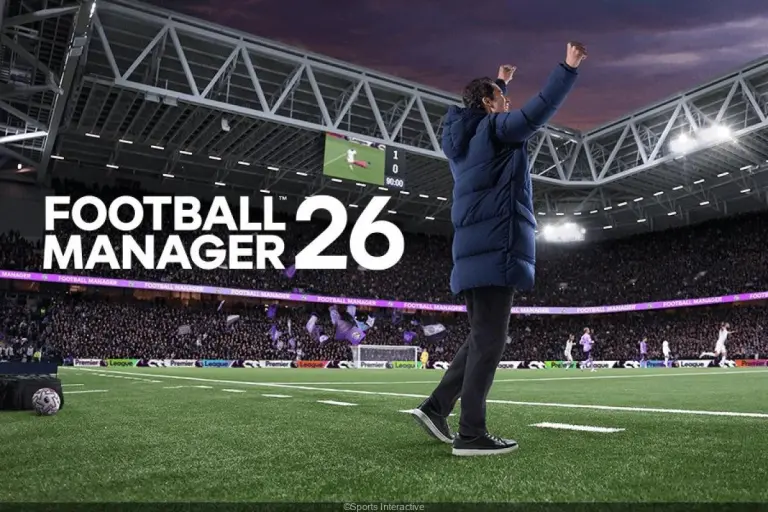
| Football Manager 26 gains power through a faster and more structured integrated editor |
| Create incremental saves and separate editing profiles to optimize stability |
| Balance CA/PA, reputation, and playing time rather than inflating isolated ratings |
| Reserve structural changes for the Pre-Game Editor, keep in-game for targeted adjustments |
| Limit match impact to preserve the gaming experience and difficulty |
| Proceed in small batches and test after each series of changes for sustainable improvement |
More than just an accessory, the embedded editing tool of Football Manager 26 changes the way to approach the career. By combining fine customization, quick tests, and control of key parameters, it becomes possible to optimize the balance between realism and fun. However, its power requires method and transparency, under penalty of diluting the competition. A golden rule then stands: intervene little, but well, with clear and measurable objectives. This roadmap helps preserve immersion and satisfaction in the long term.
In this spirit, the integrated editor serves both team management and the coherence of championships. It helps test a game strategy, check a local database, or correct a contractual anomaly. Throughout the sections, the examples rely on a fictional coach, Lina Moreau, who takes over an ambitious but fragile club. Concrete cases show how to progress without resorting to ease, while capitalizing on operational tips and practical safeguards.
Football Manager 26: Configuring the Integrated Editor to Optimize the Gaming Experience
Save Hygiene and Editing Scope
From the first session, a solid routine secures the gaming experience. A scheme of incremental saves by season quarter limits losses. Then, separating a “sandbox” file dedicated to testing from the main editing avoids contamination.
Defining the intervention scope comes next. For example, Lina Moreau only acts on staff training attributes and minor contractual adjustments. Thus, competitions remain intact and the game strategy retains its value.
Profiles, Filters, and Numeric Benchmarks
Creating editing profiles speeds up recurring tasks. A “Contracts” profile displays clauses, bonuses, squad status, and expected minutes. Another “Development” lists CA/PA, personality, and preferred media.
Smart filters save time. For example, filtering U19 players with high potential but low determination reveals priority mentoring targets. Additionally, recording numeric benchmarks ensures consistency between clubs and divisions.
Safety Checklist Before Each Session
A quick check reduces risks and reinforces good habits. This list applies regardless of the extent of modifications.
- Fresh save named (date + editing theme)
- Local copy of file if cloud or network unstable
- Changes grouped by logical batches (contracts, attributes, finances)
- Simulation test over one week of calendar
- Change log, useful for rollback
With this discipline, improvement becomes cumulative and measurable. Lina tracks her batches of changes and can correlate each effect to the pitch.
Limit Match Influence
The integrated editor provides access to sensitive sliders. Using them in a match only makes sense to fix a clear bug. Otherwise, sporting interest decreases.
Setting rules before the season maintains difficulty. For example, no touching morale or fitness during a match, but allowing fixing a bugged injury.
Automatic Saves and Performance
Enabling auto-save at reduced intervals secures long sessions. Meanwhile, closing heavy applications and clearing cache reduces crash risks.
In Football Manager 26, load can spike during large batches. Breaking down into micro-series remains the best workaround.
Transition to Database Customization
Once the framework is set, targeted adjustments become more precise. The next section addresses customization of data and the impact on team management.
Testing tempo accelerates with filters and benchmarks. Reliability follows the same curve.
FM26: Database Customization and Advanced Team Management
Balancing Attributes, Potential, and Reputation
Changing an isolated rating creates inconsistencies. It’s better to align key attributes, CA/PA, and reputation. For example, a winger boosted in pace without progression in anticipation will lose tactical relevance.
Lina first adjusts club reputation after promotion. This lever promotes attractiveness and clarifies objectives. Thus, team management breathes and negotiations become credible.
Youth, Mentoring, and Trajectories
The CA/PA pair sets the ceiling and the present. For a U18 with high PA but fragile mentality, a mentoring pair can compensate. Moreover, a slight increase in professionalism on successful management reflects a plausible scenario.
It remains essential to stay sober. A step too large breaks organic progression. Optimization lies in the details.
Staff, Workloads, and Training Units
Staff skills impact as much as player attributes. Improving role distribution smooths workload. Progress follows, especially if units are balanced.
Lina changes two analyst contracts to better cover the opponent. Then, she adds a technical coach for finishing. Effects appear after three training cycles.
Contracts, Clauses, and Promised Playing Time
Playing time expectations must stay consistent with status. Otherwise, conflicts arise. With the integrated editor, converting “Key Player” to “Important Player” prevents tensions if rotation changes.
Bonus clauses must also match the division. Overpaying a goals bonus in D2 breaks the economy. A standard scale per level protects the wage balance.
Testing Without Distorting
After each batch, a one-month simulation validates effects. Injuries, fatigue, and morale serve as indicators. If a gap occurs, reverting adjustments avoids a downward slope.
This short loop guarantees progressive improvement. The team keeps an identity and the game strategy remains readable.
For deeper insight, a video guide helps visualize the balance logic. The important thing remains to contextualize each tip to the squad.
Quick Study: Lina’s Right Wing
Her promising winger lacks stamina. Rather than increasing the attribute abruptly, the staff adapts planning. A slight professionalism adjustment and a progressive workload goal suffice.
After eight weeks, contribution explodes. The game wasn’t “broken,” it was refined, which strengthens the gaming experience.
Game Strategy and Tactics: Using the Editor in Real Time Without Cheating
Building Credible Training Scenarios
Real-time mode allows emulating contexts. Slightly increasing tactical familiarity after a mini-camp can make sense. However, the effect must remain proportional to the workload.
Lina sets a micro-cohesion boost after an intensive camp. A test over two matches checks impact. If the streak reverses, the slider goes back.
Adapting Match Variables Without Breaking Difficulty
Changing weather or pitch quality to reproduce a rainy derby can enrich preparation. Conversely, optimizing fitness during a match falsifies the stakes.
A simple rule applies. All match changes must be declarative and reversible off-competition, to preserve tension.
Refining Roles Rather Than Increasing Ratings
When a system struggles, the integrated editor can adjust a role’s affinity. Changing a box-to-box midfielder to attack with slight trait adjustment reflects focused video work.
This approach feeds tactics without cheating attributes. Progress is explained by training and clarity of the game plan.
Micro-Adjustments Tested in Blocks
Proceeding in two-week blocks avoids over-adjustments. A “pressing” block can include slight endurance increase, sprint volume, and line revisions.
If xG improves without injury spikes, the block is validated. Otherwise, revert slider. The framework remains scientific.
Equity Benchmarks to Keep
Maintaining public limits, even solo, strengthens commitment. For example, no touching potential, finances, or ongoing injuries during a match.
With these benchmarks, optimization keeps a sporting framework. Wins carry weight; losses teach.
An illustrated tactical tutorial clarifies the place of micro-adjustments. The concept of blocks enables a reproducible approach.
Gateway to Regulations and Finance
Habits taken here facilitate what follows. Rules and budgets benefit from being treated with the same sobriety. The next section addresses these levers.
Keeping a clear line protects the gaming experience and maintains interest over time.
Pre-Game Editor vs Integrated Editor: Winning Workflow for FM26
What to Do Before the Game
The Pre-Game Editor serves structures. Creating or correcting competitions, reforming a pyramid, or adjusting initial club reputation is done upstream.
Building standard scales for salaries and bonuses provides a common foundation. The game thus starts with a healthy and stable base.
What to Adjust During the Game
The integrated editor takes over for micro-adjustments: specific contracts, fixing a status, or measured trait adjustment. These actions remain traceable and reversible.
For Lina, the tool serves to align playing time promises with sporting reality. Locker room balance improves without breaking competition.
6-Step Procedure
- Define the precise and measurable objective of the session
- Create a named save and a working batch
- Apply changes in coherent groups
- Simulate two weeks and note indicators
- Validate, reduce, or cancel according to observed effect
- Record the log and plan the next batch
This short cycle prevents drift and favors incremental improvement. The club gains clarity.
Troubleshooting: Crashes, Transfers and Best Practices
If a crash occurs during a live transfer, reverting to the previous save and splitting the operation often helps. Making transfers off match days and avoiding large batches limits risks.
Verifying file integrity via the distribution platform and disabling skin cache during intensive editing sessions can also stabilize Football Manager 26. The Pre-Game Editor remains preferable for heavy reconstructions.
Case Study: The Montreval Comeback
Fictional club, Montreval aims for the elite in three seasons. The Pre-Game Editor adjusted bonus structures and a coherent post-promotion reputation. Then, in-game calibrated statuses and training loads according to results.
Result: a stable squad, controlled wage bill, and more readable tactics. Optimization was done without artifice, by iteration.
Final Anchor Point
The Pre-Game / in-game duo creates a robust workflow. Ambition then marries sporting integrity, which strengthens the gaming experience.
The shared tips offer a duplicable framework, adaptable to any championship.
Toolbox of Tactics and Measurable Optimization Methods
Key Indicators to Steer Strategy
Measuring is mastering. xG for and against, clear chance ratio, and recovery zones offer a precise tableau. Linking these figures to each editing batch, progress becomes visible.
Lina also tracks real playing time versus promised. This data weighs on locker room dynamics and guides contractual adjustments.
Customization of Sessions and Data-Linked Roles
Customization of sessions follows weak signals. If ball loss occurs between fullback and playmaker, short circuit work is mandatory. A slight trait adjustment strengthens synergy.
Rather than blindly increasing attributes, anchoring each change in observation reduces bias. The game strategy gains consistency.
Ethical Framework and Gaming Enjoyment
Publishing, even for oneself, an editing charter strengthens commitment. For example, no increasing potential, strict limits on morale, and zero intervention during an official match.
This framework protects satisfaction. Each victory is explained by work, not shortcuts.
Rapid Iteration Tips
Working in thematic sprints smooths the process. A “high pressing” sprint can last three weeks, then give way to a “build-up play” sprint.
Between each sprint, return to the database to adjust a promise, status, or trait. Improvement remains tangible and progressive.
Productivity Shortcuts
Entity favorites (players, staff, clubs) in the integrated editor save clicks. Customized views by position speed analysis. A simple color code by status clarifies rotation.
For Lina, these time gains translate into better-targeted video sessions. Team management gains clinical precision.
Heading Toward the Rest of the Season
Once the framework is deployed, the season brightens. Tactics evolve methodically, and the editing base remains clean.
In the end, optimization inscribes itself over time, with a cumulative effect on results.
What is the difference between the Pre-Game Editor and the integrated editor in Football Manager 26?
The Pre-Game Editor is used before starting the game to modify the database (competitions, structures, reputations). The integrated editor acts during the game for targeted adjustments (contracts, statuses, traits), with immediate and reversible effects.
How to optimize without damaging the difficulty?
Set a charter: no boosting during matches, no potential increases, measured and traceable adjustments. Proceed in small batches, test two weeks in-game, then validate or cancel based on indicators.
What to do in case of a crash during a transfer via the integrated editor?
Save beforehand, split the operation, avoid match days, then verify file integrity. For heavy reconstructions, use the Pre-Game Editor to reduce risk.
What benchmarks to follow for measurable improvement?
xG for/against, clear chances, workloads, promised vs played minutes, and group satisfaction. Align each editing change with one of these indicators.
Can finances and regulations be customized without distorting the career?
Yes, if the goal is coherence: fix a bug, align a league announcement, or restore a playable schedule. Avoid unilateral advantages like massive fund injections.