
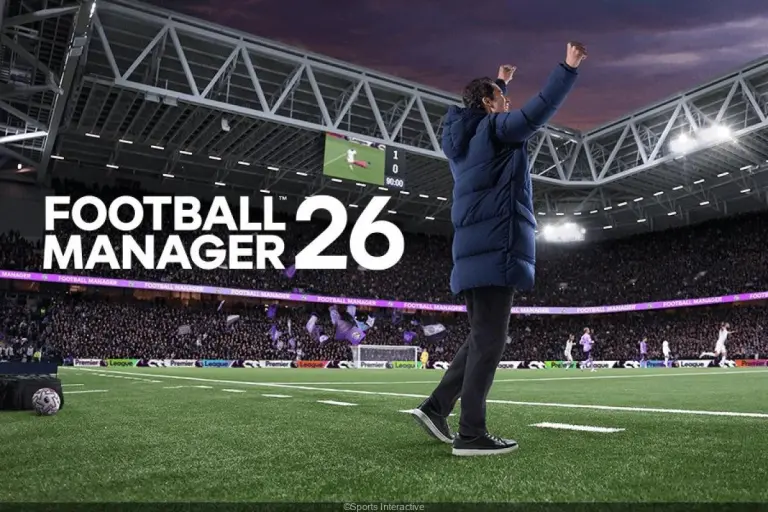
| Key Points to Remember |
|---|
| The match engine progresses with more credible ball trajectories and better-animated duels, despite still dated graphics. |
| The user interface gains clarity and speeds up recruitment, analysis, and training, thanks to better-hierarchized panels. |
| The game strategy is enriched with contextual instructions and a more powerful set-piece editor. |
| The football simulation remains the most comprehensive for a management game, with a more credible transfer market. |
| Budget realism and data impose finer trade-offs, especially for mid-level clubs. |
| The new edition captivates with its immersive experience, but it is not a total revolution. |
| The update is worth it for tacticians and recruiters, less so for players focused on visual rendering. |
The debate surrounds a simple promise: to put the ball back at the center of a football simulation that aims to be more agile, more readable, and more ethical against current economic logics. On one side, the match engine is redesigned with smoother animations and better-calculated trajectories. On the other, criticisms persist concerning a graphical rendering lagging behind modern standards. Between these two poles, the key lies in the rhythm of the matches: the redesigned user interface streamlines recruitment, training sessions, and performance analysis.
This new edition of Football Manager 26 marks a refocus on the essentials: decision relevance. Thus, the game strategy benefits from more contextual tactical tools, while the transfer market better simulates agent pressure, signing bonuses, and budget impacts. For a reference management game, the question is no longer to deliver a revolution but to ensure concrete, reliable, and measurable progress. So, is the update worth taking action? The following sections provide precise markers to judge the true value of the new installment.
Football Manager 26: innovations that shake things up, between credible match engine and lagging graphics
Match engine and ball physics: a visible advancement
The heart of the experience is played on the pitch. In FM26, long shots are less “rocket-like,” crosses better reach the head, and deflections gain naturalness. Thus, the match engine produces more readable situations, notably during transitions. On counter-attacks, runs mesh better and overlapping calls truly stretch the defensive line.
At the same time, some benchmarks remain perfectible. High-speed dribbles sometimes lack variety, and some second-post duels still lose intensity. However, the whole composes a credible base, which reinforces realism without sacrificing readability.
Animations, cameras, and readability: balancing play and vision
Several camera angles help decode blocks, especially off-ball phases. In wide view, the spacing between lines and distances between midfielders are perceived quicker, improving live corrections. Yet, facial rendering and net fineness remain discreet. Purists will regret the presentation still lagging compared to competing field simulations.
However, the goal remains clear: ensuring an immersive experience where the eye quickly detects what’s wrong. For a technician, the ability to diagnose a flaw over two sequences often outweighs refined textures.
Case study: a rain-soaked derby and a game-changing decision
Imagine a drenched Red Star – Paris FC. Crosses float, controls become complicated, and the penalty area turns into a lottery. With FM26, the match better renders these micro-events: clearances slide, footholds slip, and the ball skids along the ground. From then on, a choice imposes itself: lower the block height, push forward faster, and target the second ball.
By reducing pressing intensity and asking for forward passes from the full-backs, the coach capitalizes on the context. The goal comes from a quickly executed switch, followed by an instant layoff. This type of sequence illustrates the ambition: linking cause and effect to make the reading coherent.
Defensive AI and smart fouls: measured progress
Defenders read balls behind better, especially if the line maintains the right depth. Still, some errors survive on hurried back passes. Conversely, “useful” fouls are better assessed: a midfielder cuts a transition at the right moment, avoiding a needless yellow card.
This balance is pleasing, as it encourages nuance. Rather than piling up attributes, success stems from a clear plan, in tune with the weather context and opponent profile. In the end, the promise of Football Manager 26 lies in this finer relationship between intention and rendering.
User interface and ergonomics: faster navigation serving decisions
A dashboard refocused on the essentials
The redesign of the home hub reduces lost time. Health, fitness, and objectives modules are readable at a glance. Consequently, the coach adjusts training load and playing time faster. Relevant alerts appear without flooding the screen, reducing cognitive fatigue.
A noticeable gain comes from contextual shortcuts. From a fitness alert, a click leads to the analyst report, then to the targeted session. This smooth thread fosters regular micro-corrections, rather than large late projects.
Scouting, recruitment, and dynamic lists
The search engine includes smarter filters. Thus, it becomes possible to prioritize profiles by role in the system, by adaptation time, or by salary constraint. The user interface also highlights clear comparisons: the candidate appears opposite the starter on 8 to 10 readable criteria.
This clarity transforms the transfer window phase. Dynamic lists update according to season progression and real availability. Furthermore, the impact of agents is better felt in the tone of requests and firmness of bonuses.
Match reports and real-time data
Post-match reports gain granularity. Occupation zones reveal imbalances, while “passing chains” expose strong circuits. Then, contextual alerts guide corrections: “limit inside play,” “force weak side,” “reduce width on loss.”
Thanks to this clear hierarchy, the football simulation takes on a more educational turn. Staff synthesize, the coach decides, then the tactical update applies in a few clicks.
Onboarding, aids, and accessibility
Learning tools evolve. Tooltips explain interactions between roles, pressing, and line height. Consequently, entry into tactics is no longer a wall. Accessibility options, from contrast to resizing, also help during long sessions.
These adjustments seem modest, but they change the experience. A management game lives by its tempo. When ergonomics smooth frictions, the immersive experience thickens and progression accelerates.
Case study: a typical week in a mid-table club
At FC Annecy, a series of three matches in eight days is announced. The dashboard signals two risks of overload. Immediately, rotation is organized: a young full-back gains playing time, while the starter moves to a light session. The medical module anticipates, the staff validates, and the work rhythm adjusts.
In conclusion, a narrow win and two draws, without serious injury. This finding illustrates FM26’s central idea: the tool steps back to let ideas govern.
FM26 Test: tactics, roles, and game strategy — better mastered granularity
New contextual levers and refined roles
The tactical aspect gains precision. Pressing triggers by zone activate according to the quality of the opponent’s build-up. In parallel, width management in possession adapts to wingers’ profiles. Thus, a strong-footed inside forward tightens the block, whereas an inverted winger opens the touchline.
Adjusted roles clarify responsibilities. The supporting pivot finds his accomplices better, while the inverted playmaker balances the creative load better. These choices simplify circuits and encourage a more coherent game strategy.
Set pieces and “plug and play” routines
The set-piece editor advances a step. Combinations become more visual and the run logic is easily understood. Moreover, thematic routine packs help to start. Then, everyone is free to refine according to average squad size or aerial qualities.
On the pitch, the benefits are obvious. Blocking screens cover runs better at the near post, and switches to the blind spot create a clean shot.
Analysis video for better decoding the engine
To clarify these choices, a video resource allows observing typical sequences and adjusting instructions. The relationship with data is thereby strengthened, as visual proof supports intuition.
With this support, community coaches share realistic variants. Each can then tailor their plan according to their core’s profile.
Typical game plan: from 4-2-3-1 to an asymmetrical 4-4-2 diamond
At a club like Valenciennes, a compact 4-2-3-1 serves as a base. Facing a central block, the team switches to an asymmetrical diamond to invite drops. Thus, the half-space opens for the deep-lying playmaker, and the winger compensates in controlled width.
The gain comes from simple and quick in-game adjustment. Contextual instructions make this switch safer, without heavy micromanagement.
Practical checklist to stabilize a starting eleven
- Define two clear plans: high pressing and midfield fallback, depending on the opponent.
- Assign a role of balance per line to avoid creative overload.
- Adjust runs in behind according to the real speed of the attacking pair.
- Adapt width to winger profiles, not the other way around.
- Block transitions with a “cut” midfielder by personal instruction.
In summary, FM26 strengthens the link between match reading and execution. Adjustments remain human, and the game rewards coherence more than a magic formula.
Career, transfer market, and data: a more coherent and demanding football simulation
Transfer market: prices, agents, and timing
The market breathes better. Prices vary according to form, contract duration, and real competition. Consequently, agents modulate their demands for bonuses and resale percentages. Crafty clubs benefit from finer options: loans with smart coverage, performance bonuses, and promotion clauses.
This logic gives more leeway to the manager. A “B” profile becomes an opportunity when the “A” tightens up, while a young player found early saves a fortune in summer.
Budget, regulation, and trade-offs
Budget constraints are better expressed in financial screens. Wage drift triggers concrete alerts. Then, management adjusts sporting objectives or tightens the wage bill. The coherence of the management game is thus reinforced, as negotiations with the board become real dialogues.
Local regulations also weigh in. In some championships, the “homegrown” quota takes a decisive role. Recruitment is thus planned over three windows, not just one.
Data Hub: finer reading and direct actions
The analysis center better consolidates signals. Shot maps isolate toxic zones, and “progressions by carrier” tell the manner, not just the outcome. Thanks to direct action buttons, a recommendation switches into an instruction without heavy navigation.
Thus, data supports decision-making instead of drowning it. An indicator triggers a response, and the virtuous cycle settles in.
Youth, training, and individual trajectory
Youth development clarifies. “Milestones” set a quarterly target: intensity, target role, and technical objectives. In return, staff reports provide actionable feedback. Then, it becomes easier to orchestrate a structuring loan with regular monitoring.
Consequently, the new edition strengthens the internal pathway. Mid-level clubs can finally build a sustainable identity.
Scouting video and community sharing
To complement, educational content helps master advanced search and comparisons. A second video support clarifies sorting by role and budget to avoid impulsive signings.
In the end, recruitment is based on facts. Gambles become rarer, and good deals gain value.
Football Manager 26: is the new release worth it? Review, player profiles, and buying advice
Who benefits most from the update?
FM26 primarily targets tacticians and recruiters. The cumulative improvements to the match engine, set pieces, and data create a clear qualitative step. Conversely, photorealistic rendering enthusiasts will stay divided. Certainly, visuals improve, but do not catch up with AAA field simulation standards.
Then, long-career players gain over time. The more logical market, milestone training, and fast navigation reward perseverance. Loyalty to a project finds its reward.
Implicit comparison with the previous installment
Compared to the previous episode, differences are measurable in time saved and decision relevance. The click/information ratio decreases. Moreover, matches better tell the game plan. Thus, game strategy is observable with the naked eye, not just in numbers.
On the other hand, the visual leap does not fully convince. The title remains a management game focused on decision intelligence and systemic realism.
Buying advice by profiles
For a newcomer, it is the easiest entry point. The user interface guides better, and contextual aids explain the “why” behind every lever. For a tactical veteran, the update is worth the investment if time spent on analysis and set pieces is high.
For a player prioritizing presentation, it is better to wait and observe patches. The studio often adjusts the match engine balance in the months post-launch.
Final checklist for deciding with clarity
- Tactical priority: use of new triggers and routines? Buy.
- Visual focus: seeking a big graphical leap? Wait.
- Long career: need for a coherent market and actionable data? Buy.
- Quick sessions: desire for smoother daily navigation? Buy.
In the end, Football Manager 26 consolidates its position as a benchmark. The immersive experience improves thanks to details that matter. The title convinces when judged on its football science, not on its textures.
Quick comparison of standout features
To anchor the decision, the table below condenses the features changing the manager’s daily life. Each point acts on time, precision, or game understanding.
| Decisive elements in favor of FM26 |
|---|
| More readable match engine, with coherent transitions and better-animated duels. |
| Refocused user interface, allowing faster and better-informed decisions. |
| Game strategy enriched by contextual instructions and a revised set-piece editor. |
| Transfer market better reflecting prices, agents, and negotiation timing. |
| Actionable Data Hub, linking insights to instructions with one click. |
| Overall more coherent immersive experience, despite still perfectible visuals. |
Is FM26 a revolution or a solid evolution?
It is a solid evolution. The match engine, interface, and data significantly improve. However, the graphical leap remains measured, which directs the recommendation toward players who value decision-making and strategy.
Are tactics simpler to implement?
Yes. Contextual instructions and clarified roles reduce unnecessary complexity. The set-piece editor offers concrete models, easy to customize according to the squad.
Is the transfer market more realistic?
It is. Prices, agents, and timing weigh more. Loans, clauses, and bonuses offer more credible options, useful for clubs with tight budgets.
Should one move from the previous installment to Football Manager 26?
The update is worth purchasing for tactical profiles and data enthusiasts. If the priority remains visual rendering, it is better to wait for patches and the post-launch roadmap.
Is the learning curve suitable for new players?
Yes. The interface and aids make the learning process smoother. Tools better explain links between roles, pressing, and width, which accelerates progression.