
| Key points |
|---|
| Football Manager 26 includes women’s football with 14 playable leagues across three continents, supported by a database of more than 36,000 female players. |
| Her Football Hub is now present in press conferences, media interactions, and the game’s news feed. |
| The Unity engine inaugurates a new era of smoother, clearer, and more immersive football simulation. |
| Specific features of professional women’s football are modeled: shorter contracts, fewer release clauses, longer recovery times. |
| The game strengthens equality in sport by allowing the management of a women’s team like a men’s team within a unified ecosystem. |
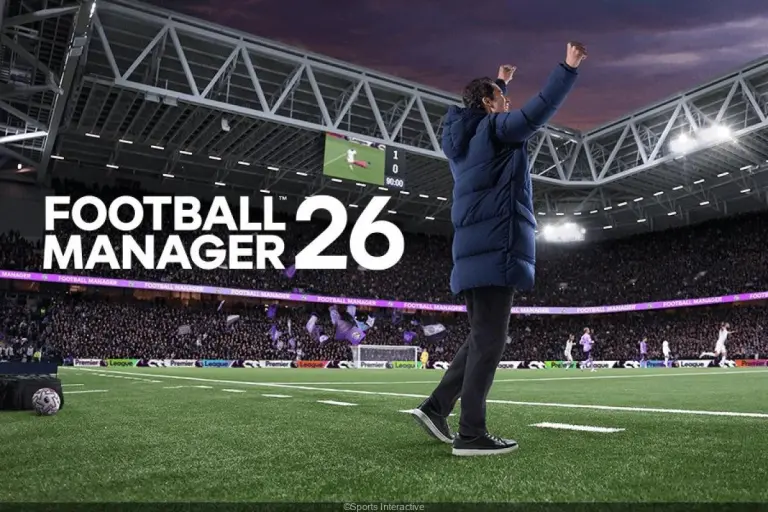
Football Manager 26 marks a decisive turning point for the series and, above all, for the visibility of women’s football. The globally launched version places the 14 playable women’s leagues at the heart of the experience, embedding this progress within a unified ecosystem where the management of both male and female sections is seamless. With the arrival of the Unity engine, the whole gains in visual clarity, stability, and fluidity, which enhances tactical readability and the appeal of the management game. This technological choice supports a broader horizon for clubs, competitions, and the database, which becomes the most comprehensive ever offered by the franchise.
Simultaneously, the presence of Her Football Hub in the media layer of the game validates the rise of an independent media outlet that has made covering women’s football its mission. Players now see questions, news briefs, and analyses from this editorial team displayed alongside other recognized titles. Concretely, the simulation is more anchored in reality by combining expanded databases, contractual specifics of professional women’s football, and credible press interactions. In other words, a new era opens where mechanical realism serves equality in sport and the development of football as a whole.
Football Manager 26 and the integration of women’s football: key data, licenses, and vision of a unified ecosystem
The foundation of Football Manager 26 rests on a clear ambition: to integrate women’s football within the same architecture as the rest of the simulation. This unique approach avoids the creation of a separate module and offers seamless continuity between careers. Practically, the user can switch from a women’s team to a men’s team, and vice versa, without friction. This choice reinforces the idea of a club journey, long-term, consistent with the history, finances, and culture of the managed institution.
The data volume supports this vision. More than 36,000 female players are referenced, along with about 5,000 non-players (technical staff, executives, medical personnel). A network of around forty specialized researchers contributed to this mapping. Each modeled championship is based on its own sporting, salary, and administrative regulations. For example, the rarity of release clauses in some women’s leagues is respected. Similarly, shorter contract durations appear as a structural marker that the simulation faithfully reproduces.
The arrival of 14 playable leagues across three continents accelerates the discovery. The game cites licensed competitions such as the Barclays Women’s Super League, the Google Pixel Frauen-Bundesliga, the SOMPO WE League, and the NWSL. Other championships, like Liga F, enrich the tactical and cultural diversity. Thus, the same club can set distinct objectives: securing survival, entering a title race, or structuring a competitive training center. This diversity broadens the scope of possibilities and serves the development of football worldwide.
Medical and athletic specifics are taken into account. Longer recovery times for certain injuries, observed in sports literature, manifest as adapted absences in professional women’s football. Training plans must therefore include realistic thresholds, with fine load management. This rewards anticipation and monitoring of individual data. A balanced squad, where minutes are better distributed, becomes a competitive advantage over time.
To illustrate these dynamics, imagine “Lina,” a coach taking charge of a women’s section in England. First, she assesses the salary structure, often more compressed. Then she negotiates cautiously because contracts are shorter. Next, she builds a rotation plan, incorporating the league-cup alternation and international breaks. Thanks to the shared ecosystem, she shares scouting methodologies already proven on the men’s side of the club. This transfer of know-how boosts collective progression and establishes a transversal performance culture.
Finally, the media aspect strengthens authenticity. With Her Football Hub, press conferences address themes that anchor the season in the reality of the field. The resulting stories highlight the journeys of players, coaches, and clubs. The outcome is clear: the football simulation model expands while consolidating a central message of equality in sport.
At the end of this exploration, one conclusion stands out: integration does not just add teams; it transforms the way of thinking about a long-term career.
This solid foundation allows us to approach the project’s other pivot: integrating a specialized media into the heart of the sports narrative.
Her Football Hub in FM26: an integrated media that changes the narrative and the press conference experience
The presence of Her Football Hub in Football Manager 26 goes beyond a simple logo. The editorial team is found in questions posed at press conferences, in news briefs, and in dossiers punctuating the season. This choice reshapes the link between the virtual locker room and the public space. Coaches must navigate editorial angles that highlight the quality of play, youth development, and community anchoring, all key elements in women’s football.
Regarding impact, the benefit extends beyond enthusiasts. Many players, accustomed to male sections, now encounter content and analyses from Her Football Hub. This wider exposure creates bridges to reports, interviews, and data-driven summaries accessible from the real world. Ultimately, the reputation of an independent media gains legitimacy and contributes to the development of football in the long term. The game becomes a vehicle for sports education as much as entertainment.
Feedback from the community confirms this feeling. The platform’s editorial managers praised this symbolic step, considering the integration as the culmination of years of work. Their message stresses coherence with the idea of “one unified ecosystem” defended by the studio. In the simulation, this translates into a consistent narrative. The same news cycles follow the competition, highlight form dynamics, and point out tactical weaknesses. The exercise demands professional rigor that feeds the women’s team managed in the game.
Let’s return to “Lina.” After a close victory, a question from Her Football Hub targets minute management of a recovering forward. The constructed answer, based on workload and fitness data, shapes the club’s public image. Then, a retrospective article highlights the emergence of a 19-year-old midfielder. This media echo influences internal negotiations and the player’s confidence. Then, ahead of a continental clash, a tactical analysis published in the newsfeed prompts pressing adjustments. The media is not decorative: it influences the narrative and decisions.
This integration does not dilute the simulator’s neutrality. On the contrary, it adds varied perspectives, reminding that sporting performance is also written in the media space. Responses chosen in press conferences affect relationships with the locker room, management, and supporters. Over time, this narrative layer strengthens realism and more closely ties football simulation to the life of a real club. Consequently, equality in sport also resides in the way competitions are told and space is given to specialized voices.
In the background, this editorial dimension merges with a major technological modernization made possible by the Unity engine.
After the media angle, another central question arises: how does technology support these ambitions?
Unity and football simulation: enhanced readability, animations, and longevity for a new era
The switch to Unity in Football Manager 26 does more than improve appearance. First, the display of highlights gains fluidity. Ball trajectories appear more natural. Aerial duels are easier to read. Next, the interface is more responsive, with tactical and analytical screens that open and overlap without noticeable latency. For a management game, this micro-dynamic matters. It frees the coach’s attention to focus on decision-making, not ergonomics.
This technical foundation favors stability and longevity of features. It becomes easier to expand the database, diversify competitions, and refine collective behaviors. Moreover, visual consistency across platforms is reinforced, stabilizing the competitive experience. Ultimately, exploiting Unity paves the way for more credible lighting and depth rendering. The spectacle gains without sacrificing the precious clarity needed for rapid tactical readings.
The modeling of aspects specific to professional women’s football also finds technical support here. Recovery parameters, differentiated training load, and athletic profiles benefit from an engine that better manages transitions and states. Thus, return-to-play plans become more gradual. Preparation calibrated by small increments limits relapses. This operational realism rewards organized and attentive staffs.
On the pitch, the synchronization of collective movements is felt. Distances between lines are perceived more precisely, aiding measurement of lateral pressing or mid-block defense effects. Coaches identify preferred passing routes more quickly. For example, a right-side triangle can emerge from a simple animation setting and a support instruction. The eye understands how things link, and tactical adjustments follow with more confidence.
For “Lina,” the impact is immediate. During a key match, she notices the quality of overlapping runs by her wingers. The visual rendering clarifies synchronization with the full-back, encouraging her to raise the support height of the wide midfielder. Then she tests live a pressing variation after an opposition goal kick. The engine better restitutes body orientation shifts. The readability gain accelerates learning, for both staff and players.
Finally, the alliance between Unity and the unified ecosystem strengthens a central message: technology serves faithful representation of women’s competitions. This coherence reinforces the promise of a new era of football simulation where substance and form advance together.
Extending the analysis, it is appropriate to discuss concrete management methods called for by this ambitious overhaul.
This technological advance takes full meaning when translated into concrete day-to-day club strategies.
Managing a women’s team in FM26: contracts, injuries, recruitment, and performance methods
Managing a women’s team in Football Manager 26 revolves around well-modeled structural peculiarities. First, shorter contracts require anticipating renewals. Clear milestones must be set six to nine months before expiry. Next, the rarity of release clauses shifts negotiation to other levers: performance bonuses, guaranteed playing time, collective bonuses. Finally, the medical staff must plan workload, as longer recovery times for certain injuries demand a balanced squad.
To quickly build a robust framework, a stepwise method proves useful. It adapts to championships and aligns with the club’s financial constraints. Here is a proven operational outline fitting a demanding management game logic:
- Squad audit: map key roles, age, injury history, and versatility.
- Renewal plan: prioritize 3 to 5 strategic extensions linked to playing minutes and hierarchy.
- Targeted recruitment: aim for complementary profiles rather than duplicates in status.
- Managed load: establish return-to-play thresholds and adapted micro-cycles.
- Development: secure youth playing time through relevant and supervised loans.
In the medical field, anticipation pays off. A recovering player must follow bench time, short substitute appearances, then controlled starting. The engine restitutes benefits of reasoned progression. In a dense month of competition, this method avoids extended breaks and stabilizes group fitness. Squad depth, even modest, becomes an asset when planned through clear responsibility distribution.
Recruitment takes advantage of an expanded database. Reports emphasize technique under pressure, vision, and availability between lines, common qualities in playable leagues. In Europe, for example, a mobile playmaker can make a difference in a low block. In North America, the ability to attack in behind heavily influences more explosive defenses. Adapting the profile to the championship’s tactical context immediately boosts collective output.
Returning to “Lina.” Her club aims for the top 3. She extends her goalkeeper’s contract, negotiates a clean sheet bonus, and secures a versatile full-back. Next, she recruits a fast forward to punish long transitions. Then she establishes a rotation protocol during two-match weeks. Minutes of some key players are capped. Youngsters enter at fixed times. Balance settles. Results follow, and squad value increases.
Over time, relationships with the locker room and media complement this groundwork. Measured answers, especially facing Her Football Hub, forge a credible club identity. The whole consolidates a virtuous dynamic and feeds a medium-term vision.
This management backbone gains even more importance when observing the competitive architecture and associated licenses.
The strategic framework illuminates the scene, but competitions set the pace and international scope of the season.
Licenses, competitions, and visibility: 14 playable women’s leagues to expand the horizon
The introduction of 14 playable leagues structures the calendar and ambition. This global map allows comparison of styles, athletic density, and economic models. It also helps establish new rivalries. Consequently, football simulation better reflects the real richness of women’s football. The diversity of environments offers an ideal breeding ground for the development of football, both sportingly and culturally.
Several flagship competitions are already listed among announced licenses. The Barclays Women’s Super League embodies a demanding championship, with chameleon tactical blocks. The Google Pixel Frauen-Bundesliga highlights collective discipline and marked pressing intensity. The SOMPO WE League illustrates technical precision and off-ball movement. Finally, the NWSL features direct play and large-scale transitions. Added to these is Liga F, inviting for more patient exchanges and demanding turnarounds.
To guide starting choices, it is useful to list some concrete markers. This list is not exhaustive but highlights useful characteristics when creating a save:
- Barclays WSL (England): talent density, frequent tactical battles, market attractiveness.
- Google Pixel Frauen-Bundesliga (Germany): organized pressing, strong youth development pipelines.
- SOMPO WE League (Japan): mobility, precision, and timing in movements.
- NWSL (USA): athletic volume, rapid transitions, valued squad depth.
- Liga F (Spain): technical mastery, possession, and refined turnarounds.
In practice, “Lina” discovers different constraints depending on the destination. In England, competition among giants pushes role specialization. In Germany, the ability to resist counter-pressing proves decisive. In the USA, the ability to rotate the squad is key during fixture congestion. In Japan, reading passing angles and coordinating runs prevails. This variety motivates exploration, then learning from local contexts.
Finally, media coverage progresses with license alignment. Virtual broadcasts gain credibility. News feeds, enriched by Her Football Hub, highlight player pathways and club projects. Equality in sport is not decreed; it is built daily through calendars, training, rule coherence, and the space given to narratives. Football Manager 26 brings these elements together and gives them a global stage.
Ultimately, the competition map widens the scope of possible careers and confirms the promise of a new era for the discipline.
What are the major new features related to women’s football in Football Manager 26?
FM26 includes 14 playable women’s leagues across three continents, a database of over 36,000 female players and 5,000 staff members, as well as realistic features like shorter contracts, fewer release clauses, and longer recovery times for certain injuries.
What is the impact of Her Football Hub in the game’s media section?
Her Football Hub appears in press conferences, media interactions, and the news feed alongside other recognized titles. This enhances the authenticity of the narrative, promotes coverage of women’s football, and influences how club communication is managed.
What changes does the use of the Unity engine bring to FM26?
Unity brings smoother highlights, increased readability of game phases, and a more responsive interface. This technical foundation facilitates data expansion, stabilizes the multi-platform experience, and supports clearer simulation for decision-making.
Can you manage both a women’s team and a men’s team within the same save?
Yes. FM26 adopts a unified ecosystem logic. It is possible to switch between a women’s team and a men’s team without interruption, fostering a long-term club vision and shared management methods.
Which women’s leagues are playable from launch?
Among the featured licensed competitions are the Barclays Women’s Super League, the Google Pixel Frauen-Bundesliga, the SOMPO WE League, the NWSL, and Liga F. In total, fourteen playable leagues are available at launch.