
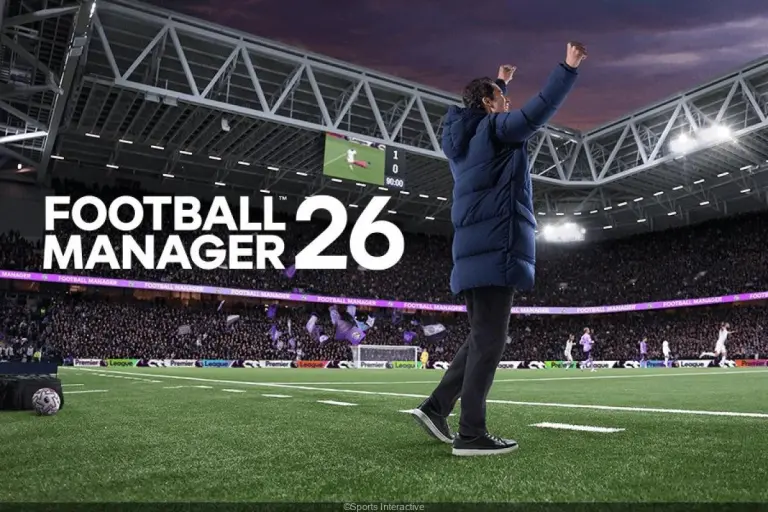
| Key points for a season survival in first division on Football Manager 26 |
|---|
| Prioritize defense immediately after promotion: compact structure, triggered pressing, decisive set pieces. |
| Smart player transfers: targeted loans, release clauses, short contract durations, and flexible salaries. |
| Data-driven team management: planned minutes, strict recovery, consistent dressing room messages. |
| Adaptive football tactics: sober Plan A, direct Plan B, ultra-compact Plan C to protect the point. |
| Calendar analysis: points to take, targeted rotations, and disciplinary risk management. |
| Controlled communication: realistic objectives, short team talks, measured individual feedback. |
Rising to the elite turns every detail into a challenge. The slightest mistake costs points, while a well-prepared set piece can stabilize a promoted club. In Football Manager 26, the athletic and tactical gap is more visible thanks to the new rendering and animation precision. Therefore, a clear strategic guide is needed, capable of offering effective routines and a reproducible method to secure survival.
This dossier highlights concrete principles, designed for a FM26 beginner as well as a more experienced technician. Recommendations cover defensive structure, player transfers, rotation, and data analysis. Above all, they are grounded in the reality of a modest team facing giants every weekend. With operational football advice, it becomes possible to succeed season after season by building a cautious yet ambitious identity.
FM26, immediate elite survival: budget planning, staff, and calendar for longevity
Promotion requires reviewing all sports governance. Moving up to first division multiplies expenses, while revenues remain volatile without results. On Football Manager 26, structuring the budget like a match sheet offers an advantage. Each cost line becomes an item to optimize, starting with the wage bill and match bonuses.
The fictional club Stade Rive-Nord illustrates this challenge. Promoted with a limited squad, it survived by dividing the budget into three blocks: salaries, bonuses, and staff improvement. Thus, one envelope controls monthly impact, another protects motivation with targeted bonuses, while the last raises coaching quality.
Model the budget like the squad and calibrate the staff
A squad is structured by roles; a budget should follow the same logic. Vital positions absorb most resources: an assistant coach specialized in video analysis, a head of physical preparation, and a data manager. Thanks to them, tactical decisions gain precision, and training loads are finely adjusted.
An example speaks volumes. Rive-Nord reduced injuries by hiring a prevention specialist. The cost was offset by fewer key absences and points gained late in matches. Consequently, investing in staff creates a virtuous circle.
Calendar, point ranges, and pivotal matches
Here comes the central question: where to take points? The method consists of segmenting the calendar into series of five matches. In each series, target two winnable games and one home upset attempt. The rest focuses on anti-fragility: blocking the score, managing cards, and securing goal difference.
Against giants, the objective becomes twofold: reduce chances conceded and work on quick breaks with a pacey winger. This limits mental fatigue and prepares a rebound in the next game. Thus, the group maintains a course.
Survival checklist for a FM26 beginner
- Set an internal target of 38 to 42 points depending on the league.
- Prioritize quality in analytics and physical preparation staff.
- Standardize a defensive framework for low-probability matches.
- Allocate 10% of the budget to set-piece development.
- Plan rotations during three-match weeks.
Planning discipline may not be glamorous, but it saves seasons. By setting this framework, every decision gains coherence and strengthens the survival outlook.
Pragmatic football tactics: mid-block, quick transitions, and lethal set pieces
The best tactic is the one that protects your area. In a higher league, the promoted team must accept a reactive role. A compact mid-block, well-chosen pressing triggers, and sharp transitions form a foundation. This approach reduces exposure time and maximizes efficiency.
The Football Manager 26 engine punishes imbalances. A full-back pushing too early is punished by a pass behind. Hence the need for strict management of freedoms, especially against opponent flanks.
Blocks and pressing adjusted to the opponent
Against teams building short, the mid-block slides patiently. Pressing activates on a back pass to the goalkeeper, then the weak side release is shut down. Conversely, against a direct formation, second balls must be won. The axis is densified, zone 14 protected, and play directed away from goal.
On lost balls, the transition must be clear. A fixed target forward, a winger sprinting into the half-space, and a central midfielder triggering a vertical pass. This simple mechanic suffices to launch three to five situations per match.
Set pieces: the outsider’s weapon
Set-piece phases often decide season survival. An outswing corner at the near post with a screen on the goalkeeper creates a chaos zone. Meanwhile, a wide defender attacks the far post. On free kicks, the short feint stretches the line, then a lofted ball targets a favorable duel.
Rive-Nord scored 11 goals from set pieces in its first campaign. The team dedicated 20 minutes per session to these patterns. The impact went beyond attack, as opponents dropped back fearing to concede fouls.
Plans B and C to lock in a point
A direct Plan B is necessary when pressure rises. The pivot striker is targeted, the second ball launched to an aggressive midfielder, and width secured. In Plan C, the line drops, wings close, and time is managed from the 75th minute to hold the draw.
These switches give players breathing space and free the mind. Ultimately, team management gains serenity, game after game.
To move from concept to pitch, video support helps visualize triggers. Visual cues better guide the setup of triggers and pressure zones.
With a pragmatic structure and precise routines, a promoted team can trouble any favorite. The key lies in repetition and clarity of roles.
Smart player transfers and sustainable squad management: clauses, loans, and controlled wages
The market does not forgive approximation. A promoted team must buy reliable minutes, not just names. On Football Manager 26, contractual flexibility makes the difference. Loans with options, downward clauses in case of relegation, and performance bonuses limit risk.
Profiling becomes crucial. Specialists are targeted rather than generalists. A winger to attack depth. A midfielder to cover laterally. A dominant stopper on set pieces. Thus, each signing serves a match scenario.
Targeted loans and smart clauses
A loan from a big club youngster can transform a line. However, minimum playing time must be guaranteed and excessive wage contributions avoided. With a conditional purchase option, success does not trap the budget.
Release clauses adjusted to club status protect balance. In case of relegation, wages automatically drop. In case of survival, a bonus activates, but cost remains proportional to performance.
Wages, hierarchy, and continuity
The wage structure must remain clear. The captain and two leaders set the emotional ceiling of the dressing room. Then, newcomers place below to protect cohesion. A sudden inflation creates jealousy and weakens team talks.
Rive-Nord split wages into three tiers. Core A groups untouchable starters. Core B covers highly useful substitutes. Core C gathers prospects and rotation players. This mapping reduced uncontrolled wage demands.
Key roles and realistic targets
To materialize the strategy, this table presents profiles and acquisition leads according to a promoted team’s needs. It complements football advice by indicating a reasonable budget per role.
| Role | Key profile | Market targets | Recommended wage budget |
|---|---|---|---|
| Goalkeeper stopper | Reflexes, aerial exits, leadership | Loan from a big club, reliable free agent | 8–12% of wage bill |
| Dominant center-back | Aerial play, marking, controlled aggression | Nordic market, affordable clauses | 10–14% |
| Defensive midfielder | Endurance, tackles, lateral coverage | Internal league loans | 9–11% |
| Depth winger | Acceleration, runs, tight crosses | U21 loans, squad players | 7–9% |
| Target striker | Back to goal play, lay-offs, presence on set pieces | Experienced free agent, short wage | 10–13% |
Coherence between roles and budget supports the trajectory. With these safeguards, player transfers become performance levers, not risky bets.
Youth development and smart rotation: micro-cycles, target minutes, and recovery
Repeating matches wears down bodies and minds. Without thoughtful rotation, injuries stack and momentum collapses. A prudently ambidextrous team, able to change three players without losing structure, gains about a point per month on average.
The weekly micro-cycle offers a grid. After a match, the first session targets recovery and prevention. The second works on automatisms. The day before the match, set pieces are reviewed. This routine anchors reflexes and maintains freshness.
Promote 1 to 2 prospects with a clear role
A young player only helps if he knows his mission. For a winger, the instruction becomes to attack depth at the far post and defend diagonally. For a midfielder, cover lateral space and trigger on the full-back’s signal. Giving 15 to 20 targeted minutes accelerates learning.
Rive-Nord integrated an 18-year-old full-back on low-risk home matches. He progressed thanks to measurable goals: 20 sprints, 80% accurate passes, and one aerial duel won. Indicators guided the progression.
Workload, prevention, and rotation windows
Three-match weeks require alternation. Identify the winnable match and field the fresh eleven there. For the other two, lock down and manage key players’ minutes. Sessions focus on recovery and strategy.
Injuries often occur after repeated efforts without enough sleep. By monitoring fatigue shown by the scientific staff, anticipation is possible. It is better to have 60 intense minutes than a whole match at low intensity.
Specific training and invisible progress
On Football Manager 26, individual training coupled with match role produces results. A winger can work on tight crosses and diagonal runs. A pivot improves strength and aerial game. Progress appears in data, sometimes before showing in animation.
This approach structures the balance between present and future. Consequently, rotation stops being a constraint and becomes a competitive advantage.
Planning visuals and feedback help calibrate micro-cycles. The important thing is to stay true to principles and adjust according to match load.
A better-breathing collective finishes stronger. The form curve rises, and survival often materializes before the last day.
Data, psychology, and communication: the hidden strategic guide to succeed in your first year
Tactics alone do not suffice without mental management. Numbers reveal trends, but locker room language seals performance. By combining dashboards and brief messages, the coach creates a bridge between pitch and mind.
The Football Manager 26 data engine highlights useful metrics. Expected goals conceded, average attack speed, and high recoveries per 90 provide a clear angle. These benchmarks dictate weekly adjustments.
Survival KPIs and quick decisions
Three indicators guide elite promoted teams. First, clear chances conceded must remain under 0.80 per match. Then, corners won exceed 4 to extend pressure. Finally, sprint load of key players manages availability.
When a KPI deviates, a simple action follows. If too many chances are conceded, drop the line and densify the center. If corners drop, provoke more lateral fouls. This short loop feeds performance.
Team talks, media, and momentum
Words weigh more than expected. A too-long talk dilutes the message. Better three clear sentences: objective, strength, caution. After a setback, responsibility is assumed collectively, and the path to progress is announced.
Media management protects the group. Facing tricky questions, the answer refers to the process. The idea of progress is repeated and efforts valued. Thus, internal confidence remains high and panic recedes.
Case study: Rive-Nord and obsession with details
In mid-winter, Rive-Nord dropped three one-goal matches. The staff reacted with two levers. On the one hand, a late-game routine was added. On the other hand, the team talk tone changed to reinforce duel strength.
The following week, the team secured a heroic draw then a corner-winning success. Modest, repeated decisions restored the trajectory. By ripple effect, players further adhered to roles.
Mental dimension seals project coherence. By aligning numbers and communication, every point earned is consolidated.
Operational summary for controlled promotion
Before closing, here is an actionable reminder. It serves as a common thread on doubtful evenings and structures collective effort around measurable objectives.
- Standardize a mid-block, a direct plan, and well-drilled set pieces for a robust tactical trio.
- Sign loans with options and protective relegation clauses.
- Plan training micro-cycles prioritizing recovery–automatism–set pieces.
- Monitor three simple KPIs: big chances conceded, corners won, sprint load of key players.
- Adopt brief, coherent communication centered on the process.
These priorities support every choice. With this foundation, a team can succeed season after season, turning promotion into a solid foothold.
What basic tactic should a promoted team adopt on Football Manager 26?
A compact mid-block with quick transitions works well. Add a direct plan against pressure moments and offensive and defensive set-piece routines. This combination limits exposure and maximizes points earned.
How to prioritize player transfers without exploding the wage bill?
Target specialists with precise roles, prefer loans with options, and impose downward clauses in case of relegation. Structure the wage grid into three tiers to protect cohesion and avoid internal bidding wars.
What trainings favor season survival on FM26?
Plan micro-cycles: recovery just after matches, automatisation midweek, and repetition of set pieces the day before. Add individual targeted work according to roles for steady gains.
What data to monitor weekly for season success?
Monitor big chances conceded, corners won, and sprint load of key players. If an indicator deviates, quickly adjust block height, foul provocation, or rotation.
What football advice for a FM26 beginner discovering first division?
Set a realistic points target, solidify defense, work on set pieces, sign smart loans, and give simple instructions. This base provides stability and a clear direction.