
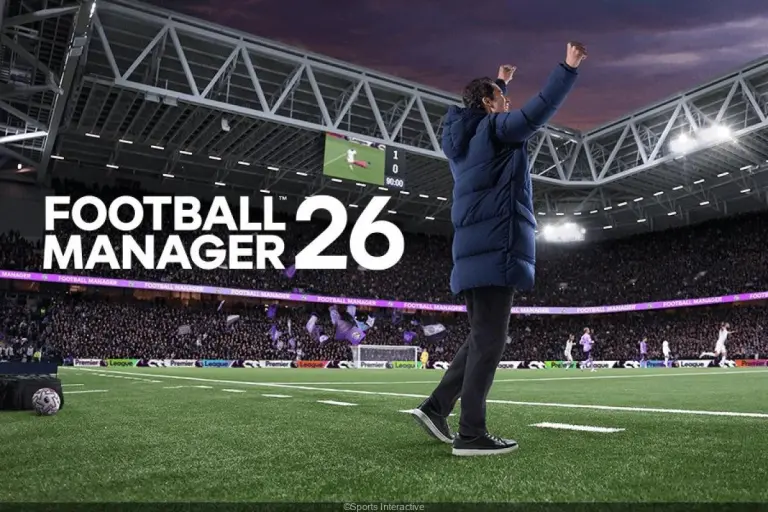
After many closed seasons, countless virtual press conferences, and tactical briefings that eventually resemble rituals, FM26 establishes itself as a mirror of modern football. Its strengths quickly become evident, but its rough edges reveal themselves slowly, as career choices and tactical micro-details intertwine. In this game, failure builds the trajectory. Data reassures, yet emotions still command. Between an AI sometimes too bold and a match engine that surprises, the tension remains fertile. Thus, acceptance of gray areas becomes a skill. And resilience transforms every defeat into raw material for learning.
The story is not only about the titles won. It feeds on reflection, cycles, and patience. Successful managers learn to establish a culture, even when the schedule is crushing and the locker room doubts. FM26 rewards tolerance for chaos but also demands humility in the face of analytical biases. Because the game remains imperfect, a share of love for the project is necessary. Accepting is building. Correcting is progressing. And ultimately, bringing to life a sustainable idea of football, despite blind spots, becomes the ultimate promise.
| Main takeaways to remember |
|---|
| Accept imperfection to better read the match engine. |
| Measure learning through short and revisable objectives. |
| Build an identity before multiplying adjustments. |
| Value humility in data analysis and human dynamics. |
| Maintain love for the project to nurture resilience during lows. |
| Practice tolerance toward AI and schedule constraints. |
FM26, still imperfect, but a love that grows with experience
FM26 offers a vision of football that dares the vivid and rough angle. In a compact season, fatigue weighs, sequences follow one another, and data sometimes breaks logic. Yet, the whole remains coherent as soon as a clear identity asserts itself. The game rewards consistency and intensity in ideas.
Some AI choices are puzzling. Transfers seem opportunistic, and decisions during matches appear reckless. However, the attentive observer detects patterns. After a few months of play, trends emerge, and learning happens.
The match engine has made progress on through balls and zonal pressing triggers. Nevertheless, inconsistencies occur in aerial duels and surface defending. Again, acceptance becomes a tool. By integrating randomness, plans gain stability.
Match engine and AI: active tolerance rather than tension
Rather than attributing everything to a bug, it’s better to contextualize. A poorly coordinated midfield block gets pulled apart. A defensive line too high exposes slow center backs. This imperfect realism demands tactical reflection that unfolds over time.
A fictional club, US Lormont, illustrates this approach. The team concedes on crosses to the far post. After analysis, the solution combines a stricter full-back marking and a winger tasked with shutting the diagonal down. The leak stops. Resilience does not exclude rigor.
Club culture: love for the project, not for banners
The project takes precedence over reputation. A sporting management that protects youth development reduces instability. In FM26, young hybrid-profile players progress quickly if the development plan is clear. Patience becomes a strategy converted into points.
The charm of the title lies in this paradox. The game remains imperfect, but love arises from the leeway left to the manager. Adjustments are made, corrections implemented, and the trajectory eventually takes shape.
This approach requires time and clear notes. By recording successful settings, progression becomes visible. And the team gains coherence.
Imperfection as a method: acceptance and resilience facing FM26’s limits
In the grammar of the game, the “imperfect” is not just a tense. It is a way to approach uncertainty. We tell what lasted, what evolved. FM26 is thus apprehended: a season is played like a long sentence, punctuated by pauses, resumptions, and evolutions.
This vision liberates. Instead of seeking the definitive solution, iterative corrections are adopted. Is a team going through a difficult winter? Training loads decrease, rotation widens, and tempo instructions ease. This tolerance for adjustment ultimately protects results.
This mental framework changes analysis. A series of high xG without a win is not a disaster. It’s a signal. The quality of shots, positioning in the rebound zone, and presence of a sober finisher are checked. The cause is identified, and self-improvement accelerates.
Progression routines: small victories, big effects
Weekly routines structure the buildup. A video meeting to review ten key sequences suffices. Next, a set-piece session consolidates the framework. Finally, an interview with the locker room leader stabilizes moods. Emotions weigh heavily.
A telling example concerns full-backs. In a long season, they tire. US Lormont’s staff established a strict alternation and a recovery window. Injuries dropped, and the wide play improved in accuracy. Technical resilience stems from collective hygiene.
Choosing your battles: between ambition and humility
Wanting to fix everything drowns intention. Prioritizing is necessary. In a dense sequence, defensive transition is secured first. Then build-up in zone 2 is refined. Finally, ball exits against asymmetric blocks are rethought. This humility makes the team readable.
The match engine rewards this selection. A clear team in its priorities distorts the opponent. And confidence spreads by capillarity. Love for the game arises from this clarity.
All things considered, integrating acceptance is not giving up. It is turning ambiguity into an advantage. This mental framework will ease the next, more technical phase.
Learning and self-improvement in FM26: tactics, data and concrete methods
Learning becomes more efficient when based on short sequences. Two-week goals guide loads, direct match feedback, and structure reviews. A simple cycle produces measurable effects on the pitch.
6-step method: from plan to field
- Quick diagnosis: identify 3 visible problems in 20 minutes of video.
- Single objective: set one major focus per micro-cycle.
- Targeted workshops: design 2 sessions correcting this point.
- Feedback: discuss with 2 leaders to align behaviors.
- Controlled test: measure over 2 matches with simple indicators.
- Review: keep, adjust, or discard according to gaps.
This list limits noise. And it helps avoid dispersion. Players understand better, and output increases.
Useful indicators and quick reads
Some indicators tell a lot in little time. The ratio of “strong foot” shots in the value zone, line density at loss, and average width in possession already outline the picture. By combining these signals, reflection rests on concrete data.
| Leverage | Indicator | Pragmatic action |
|---|---|---|
| Defensive transition | Recoveries in central corridor | Re-center weak winger, reduce full-backs’ freedom |
| Finishing | Shots in zone 14 and “strong feet” | Swap wingers, target striker’s layoff |
| Pressing | Opponents’ forced long passes | Triggers on short build-up, decoys on central defender |
| Set pieces | xG per attacking corner | Blockers on keeper, far post variations |
The table guides micro-adjustments. But it doesn’t explain everything. Match reading remains paramount, as human behaviors influence performance.
Case study: US Lormont, flexible 4-3-3 version
The 4-3-3 first conceded on quick attacks. Then, the team reduced space between lines and directed the opponent outward. Finally, a hybrid 8 covered the zone between full-back and center-back. Conceded goals dropped by one third.
This progress illustrates self-improvement. The staff learned to fix without denying the original idea. The model lives, and the team retains its personality. Here is a steady course.
Once the framework set, creativity expresses itself. Players feel secure, and roles complement each other. Love for the collective grows.
Emotions of a virtual career: from tolerance to love for the project
Careers are written like collective novels. The fictional club US Lormont, initially a survival candidate, ended up aiming for promotion. This emotional shift does not come from a patch. It comes from assumed dialogues, clarified roles, and an understood locker room.
Virtual supporters oscillate between impatience and fervor. A home draw triggers criticism. However, the next streak restores momentum. This flow feeds an affective grammar where acceptance of weaknesses becomes a shared strength.
Leadership and climates: the art of moods
Leadership relies on human sensors. A captain who knows how to soothe, an assistant who notices details, and an analyst who explains without jargon. These relays turn diagnoses into actions. Emotions circulate better, and the team breathes.
An anecdote sums up the issue. The striker goes four matches without scoring. Rather than overturn the entire plan, the staff adjusts the reception zone and offers a penalty to restart confidence. The player finds his timing. Resilience has served as a springboard.
Rituals and narrative: the value of long time
A simple ritual can change a season. Monday’s video review, Wednesday’s specific workshops, and Friday’s opponent preview create stability. This rhythm soothes. And performance follows by a narrow margin.
In FM26, these gestures resonate. The tool does not replace club culture. It accelerates it if it remains faithful to principles. The project acquires a soul. Love for the jersey, even virtual, becomes tangible.
In the end, these dynamics remind why an imperfect game can charm. Because it allows nuance and adjustment, it leaves room for character. It is this character that wins seasons.
Reflection and humility: what FM26 teaches real football
FM26 forces us to think football beyond recipes. The basis relies on clear principles, but the environment fluctuates. Injuries, runs, and adversity push toward humility. In return, the method becomes more robust.
A teaching stands out. Ideas last if they accept real friction. Refusing adjustment leads to breakage. Conversely, tolerance for errors maintains continuity. This logic applies both on the pitch and in group management.
Transferring learning outside the game
Micro-managing loads recalls injury prevention in club. Tactical prioritization echoes project governance. And mastering emotions helps in every negotiation. The game becomes a controlled laboratory where reusable mental frameworks are tested.
This transposition is not esoteric. An amateur coach can apply the six-step cycle to their team. A data unit can draw inspiration from the proposed indicators. Even a supporter will find a finer match reading framework.
Why imperfection still attracts
Imperfection tells a state in motion. FM26 works the same. Nothing is fixed, and that’s the good news. Because margins for progress feed learning. And love for a project is stronger when built against adversity.
Ultimately, the strength of the game is to make intelligent effort visible. Through patient adjustment, sporting truth eventually emerges. And the trajectory of a club, even fictional, becomes a promise kept.
How to progress quickly in FM26 without denaturing your playing identity?
Choose a single objective per micro-cycle, work on two targeted workshops, then measure the effect over two matches. This approach favors self-improvement while preserving the coherence of the initial idea.
Why accept the imperfection of the match engine?
Because it simulates the uncertainty of real football. Acceptance of deviations builds resilience and leads to better tactical adjustments.
Which indicators should be prioritized?
Defensive transitions (central recoveries), shot quality (strong feet, zone 14), and pressure generating opponents’ long passes. These signals offer a quick and reliable reading.
How to manage emotions in a virtual locker room?
Establish rituals, clarify roles, and maintain simple dialogue with leaders. Tolerance and humility stabilize performances.
Is FM26 suitable for beginners?
Yes, provided a stepwise progression is adopted. A simple framework, short objectives, and regular reviews transform learning into tangible progression.