
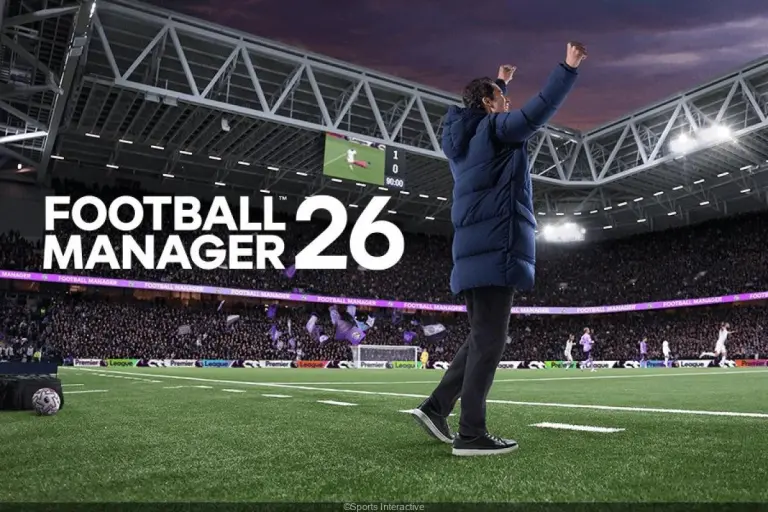
| Key Points about Football Manager 26 — patch 1.008 (version 26.1.3) |
|---|
| Simultaneous deployment on consoles, PC, and mobile, light download. |
| Numerous stability bug fixes, Hotseat and Tactics. |
| Revision of the match engine (rain, pressing, marking, dribbling). |
| User interface enriched with Pass Maps and dynamic tiles. |
| Gameplay improvements on transfers, staff, media, and MLS. |
| Targeted rebalancing for women’s football (NWSL, injuries, salaries). |
| Safer and clearer In-Game Editor tools. |
| Tactical focus: better-armed defenses against no striker systems. |
| Addition of visual cues (icons, live scores, tables) for a clearer management game. |
The deployment of patch 1.008 for Football Manager 26, labeled version 26.1.3, marks a solid step for Sports Interactive’s football simulation. On consoles, this build is identified as 1.008.000 and installs quickly. The team combined robust bug fixes, several match engine rebalances, and real new analytical features. The whole aims for a truer reading of matches, but also a more efficient backstage ergonomics.
On the pitch, rain falls less often, marking better aligns with runs, and goalkeepers handle short passes differently. On the sidelines, Pass Maps appear everywhere: in the last match, in the formation carousel, or at halftime. Sports directors also benefit from welcome details on transfers and delegation. Women’s football finally enjoys targeted adjustments, aligned with 2026 realities.
Football Manager 26: deployment of patch 1.008 and version 26.1.3 — schedule, platforms and scope
Sports Interactive delivered the update across the entire ecosystem: consoles, PC, and mobile. On PlayStation and Xbox, the patch appears as patch 1.008, while the PC and mobile branch clearly mentions version 26.1.3. This uniformity eases communication in clubs and within online communities. It mainly reduces confusion between cross-saves and game modes.
The download remains modest. Multi-platform users can therefore update without rearranging their week. This compactness does not prevent deep tweaks, particularly in the match engine. Many Hotseat crash reports have been addressed. A recurrent crash, occurring after the first match of the day, has been eliminated.
The Tactics navigation received focused attention. A crash related to quick back-and-forths between “With” and “Without ball” posed a risk during briefings. It is fixed. Similarly, a temporary black screen, encountered by managers playing the second match of a Hotseat session, has disappeared. These fixes reassure competitors hosting local gatherings.
The scope of the update is broad. It mixes accessibility, technicality, and tactical finesse. The goal is clear: stabilize the foundation while refining the details that make the difference over 90 minutes. In a management game so systemic, a simple AI inconsistency can skew the championship meta. This build closes several holes.
Compatibility and concrete save scenarios
Current saves load without trouble. A club undergoing rebuild can continue its narrative arc. Take “Amina,” a virtual coach of an OL in transition. She chains winter transfer window and European journey. The restored stability of match meetings reassures her at the moment of locking her starting eleven. “Javier,” manager of a fictitious MLS franchise, was confronted with salary cap management via assistants. The AI now stops breaking caps when delegated the squad selection.
This case illustrates the patch philosophy. It does not overhaul the game but repairs the invisible gears. In the end, sporting decisions carry more weight than technical artifacts. AI clubs recruit a coach faster, which reduces artificial instability windows. In a dense league, this correction changes the balance of a final sprint.
Official distribution and communication
Full notes are available via SI channels and the community hub. The studios also remind the importance of verifying the build ID. In doubt, a simple check via the main menu confirms the update status. Help resources list, point by point, the technical choices behind each adjustment.
Overall, this version 26.1.3 establishes itself as a stable base for online tournaments and private leagues. Cross-platform consistency guarantees the same game reading for everyone. It is the foundation the 2026 meta needed.
Match engine of version 26.1.3: pressing, weather and animations serving realism
The heart of Football Manager 26 beats in its match engine. The update rebalances key areas: weather, defensive behaviors, and decision-making. First visible tweak: rain frequency decreases in all leagues. Surfaces slow down circulation less. Possession teams breathe better, especially in winter.
Defensively, no striker systems lose a small structural advantage. Central defenders and midfielders know better who to follow and when to trigger. Marking of runs from behind gains clarity. Simply put, the “8” pushing forward is identified faster. This reduces free gaps in the center.
Pressing on the flanks has been polished. Wide players read angles better to trap or guide the opponent. The instruction “trap inside” now impacts collective shape on the opponent’s six-yard box. Goalkeepers refine short pass decisions. Immediate turnovers decrease, without removing risk if the opponent presses high.
Ball control gains flexibility. 180° turns emerge to avoid dead ends. Then the dribbler stops crashing into a cul-de-sac. This visual detail gives a more human flow to actions. In the same spirit, players can cushion headers to bring down a drifting ball.
AI substitutions find a better tempo. Virtual coaches react earlier to obvious scenarios but don’t overreact. Posts finally trigger credible defender reactions. General reactivity limits “gift” goals on second balls.
Concrete impacts on popular formations
A 4-4-2 with high pressing, previously guilty of leaving wide midfielders too deep out of possession, fixes its height. The line stays compact. Opponent vertical passes find less oxygen. In 3-4-3 without a “9”, the numerical advantage between lines decreases. Marking of late runs blocks shooting angles.
Another subtle benefit: attacking wingers hold width better out of possession. Block exits become cleaner. The structure offers transitions better oriented toward the outside. On corners and set pieces, display and low-resolution image anomalies have been eliminated. Readability improves accordingly.
Two atmosphere fixes also matter. Missing trophy celebrations in some leagues now trigger. VAR banners no longer overlap some goal replays. This reinforces the television dimension, including in 2D view, whose “discs” gain finesse.
In tactical workshops, the multi-player selector during the match via Ctrl/Alt + left click improves visual references. Staff can thus simultaneously signal two coverings, without losing the line of conduct. Added together, these details create more readable matches at real-time pace.
Key markers to exploit right now
- Less frequent rain: favor short passing lanes again.
- Adjusted marking: watch second line runs earlier.
- Goalkeeper distribution: calibrate the height of the first passing square.
- OOP width: secure opponent switches on the weak side.
- AI substitutions: anticipate micro-rhythm shifts.
In the end, this engine overhaul does not change team philosophy. It smooths out blind spots and restores credible balances. Realism advances in measured touches, firmly anchoring the football simulation.
| New logic | Match effect | Recommended setting |
|---|---|---|
| 180° dribbles | Fewer trapped actions on the touchline | Encourage “Carry the ball” for agile profiles |
| Wide pressing | Better-closed lanes, forced crosses | Set “Trap inside” according to opponent |
| Marking of runs | Fewer shots down the middle on second waves | Adjusted CM roles: Carrilero/Box-to-Box |
| GK distribution | Decrease turnovers at restart | Place a nearby supporting pivot |
| AM width | Cleaner lateral passes | Fix width to attack the weak flank |
User interface and Data Hub: Pass Maps, tiles, and clarity for a more readable management game
The user interface layer gains in density and precision. Pass Maps enter the “Last match” section of the Data Hub. They also appear in the match UI via the formation carousel, as well as at halftime and end of match. Staff can thus adjust the plan by observing circulation nodes in real time.
These pass maps even enter bench advice. They do not replace the eye, but guide attention. A neglected full-back, for example, stands out if their connection disappears from the graph. Immediately, the game is flipped or the attack raised on that lane.
“Shouts” gain explicit icons. Live scores and live table slip into the “in-highlights” tile accessible via the “stats” button. This juxtaposition speeds up information intake. It avoids opening three screens in the heat of the moment.
League history graphs by club improve. Scale and readability offer a truer curve. Moreover, a goal alert could display before the action. This delay has been fixed. Now, no spoiler precedes the reality on the pitch.
On the match day Tactics page, the striker’s jersey no longer cuts off. A stray name does not remain at the top of the bench after a substitution. The order of substitutes stops misaligning. All these small font details matter over a season.
Data, formation and daily navigation
Penalties scored appear in post-match news. Past honours no longer clear randomly. A “formations” block appears in the previous match report. On training schedules, an extra scroll eases tactical style selection.
The medical center offers a carousel to consult U21 or U18 injuries. On the Instruction > Out of possession page, the displayed role no longer errs. Low resolution images disappear from set pieces. The “Clean Slate” option now correctly redirects to the properly filled “All” tab.
B team players now display level and potential in the correct place. “Grays” no longer misalign positions in the squad bar. A bug sometimes preventing entering a match after a “Clear Squad” or a “Quick Pick” won’t return. The hierarchy column in Dynamics > Happiness finally sorts correctly.
Finally, a vice-captain can no longer be chosen if on loan. A simple logic but essential to avoid leadership failures in match. It is precisely this kind of detail that differentiates a pleasant interface from a click trap.
To speed onboarding, the team clearly indicates the user’s club in Hub visuals. A player scanning a heatmap spots the correct colors instantly. The management game becomes smoother because the user interface places fewer obstacles between intent and action. This is a direct gain in decision-making time at high intensity.
Gameplay, transfers and club life: a systemic layer consolidated by patch 1.008
The update 26.1.3 also acts behind the scenes. B team staff previously blocked now join the club after recruitment. Transfer histories display correctly, including some past operations that no longer appeared. Staff searches provide notes consistent with reports, which frames priorities.
Board objectives are no longer celebrated if the event happened before taking office. The agent, often cheeky, no longer simultaneously suggests making an offer and waiting for expiry. This paradoxical injunction disappears, making logs clearer for sporting directors.
Youth players with specific training goals no longer get upset when an accepted loan happens. The Shortlist welcomes scanned players in squad comparison. Saudi clubs adjust their propensity to “nick” premium starters. The transfer market gains credibility, especially for European-standard targets.
AI-managed clubs appoint coaches faster. Air pockets shorten. In pre-match meetings, an ambiguous text about a “Premier League qualification” corrects itself to cite the Champions League. Emirati clubs present a more realistic volume of pro group elements.
Unemployed managers no longer see the “advice” button displayed. In MLS, the assistant no longer breaches the salary cap when entrusted with the lineup. This was crucial for online leagues. It protects fairness and avoids administrative restarts.
Administrative and media clarifications
The “appearances” column in recruitment history now details starts and substitutions. A message follows every coaching license request. Coaches can manually assign tasks for reserves and youth. A simple menu checkbox saves a day of organization.
The “not for sale” status no longer triggers a media rumor with an unlikely default “£226m.” When a player returns to a club where they have already worn the jersey, the dispatch mentions it correctly. Biographies cease to contain anomalies. Out-of-contract players no longer see the active transfer status option.
In broker negotiations, the amount granted finally appears at its true value in activity screens. When media obligations are delegated, a summary of recent conferences arrives for the manager. The news feed thus remains complete without drowning in useless information.
Women’s football benefits from precise cleanup. Female articles no longer display in the male section. AI injuries normalize, aligning physical load with standards. In NWSL, no relegation clauses pollute sponsorship agreements. In Australia, player salary demands better reflect the market.
Practically, these tweaks read quickly on an advanced save. A European club, harassed by micro-offers from exotic leagues, finds a healthy rhythm. A sporting director, monitored by an analytical cell, closes files with reliable data. The core of the management game gains transparency.
In-Game Editor and tools: control, security and ergonomics in version 26.1.3
The In-Game Editor (IGE) receives several safeguards. The editor icon activates correctly on the first team card. In-game currencies no longer fluctuate when editing finances via IGE tools. This lock prevents involuntary economic imbalance in long games.
When moving a player via IGE, nationality information displays in lists. Columns “hidden” in 1–20 format take on logical coloring. This dressing isolates rating peaks without diving into complex filters. It speeds up the overview for database creators.
Multiple club affiliations can be added to a player. Independent recruiters gain path nuances. The “Move to my club” option now appears for any unemployed staff. Users crafting “realistic” scenarios can orchestrate a full staff without inconsistencies.
A confirmation dialogue opens when a role is occupied or at capacity. This behavior limits structural overloads, frequent in ambitious academies. An anomaly that made “Become Unsackable” possible by right-click during multiple selection is fixed. Save governance remains intact.
Usage scenarios and editing best practices
A custom league creator, inspired by the Scandinavian model, uses multiple affiliations to establish horizontal partnerships. Youth circulate more harmoniously without breaking realism. A training club can also finely mark its network without diverting the game’s economy.
For roleplay projects, the already-taken role alert avoids assistant overload. Over several seasons, this frugality improves responsibility clarity. It also limits attribution conflicts between the first team and reserves. In short, the IGE frames itself without losing flexibility.
| IGE Function | Concrete benefit | Risk avoided |
|---|---|---|
| Secure finance editing | Stability of in-game currency | Unintentional budget drift |
| Multiple affiliations | Richer loan network | Unrealistic youth paths |
| Role alerts | Staff sized finely | Hierarchical overload |
| 1-20 coloring | Quick reading of peaks | Internal scouting errors |
| Move to my club | Coherent staff in one click | Opaque recruitment path |
For football simulation enthusiasts, the IGE remains a powerful lever. But the update 26.1.3 shows a commitment: preserve fairness, even when editing serves storytelling. It’s a healthy compass for very long careers.
Applied advice for the 2026 meta: leveraging new features without unbalancing the squad
The meta adjusts. With less frequent rain and sharper marking, fast passing lanes regain value. It becomes relevant to restore a “regista” or “deep-lying playmaker” a pivot role. The idea is to link play between central defenders and the first line of midfielders.
Facing no-“9” systems, it’s better to orient the block to refuse easy switches. Instructions on half-spaces can slow down #10 drop-offs. In return, a standard 4-2-3-1 produces nice sequences if the opposite winger holds width out of possession. The new OOP logic of wide attacking midfielders helps there.
In the UI, Pass Maps become a session compass. Training an exit on the strong side, then flipping in one gesture to the outside, reads instantly on the graph. A missing link between right-back and winger signals a possible tactical slide. Sometimes, a simple role tweak suffices.
In the transfer market, unreasonable over-solicitations decrease. It’s the chance to close priority files quickly. For a mid-tier European club, selling a key player still requires the right resale bonus. But the environment seems less noisy. The restored consistency of media messages strengthens the manager’s authority in the dressing room.
On training, manual assignment of coaches to youth and reserves offers new granularity. A technical coordinator can cover U19 finishing over three micro-cycles. Feedback on coaching courses paces the rise of promising assistants.
Ten-day competition action plan
- Days 1-2: Update and verify patch 1.008/version 26.1.3 ID.
- Day 3: Audit the user interface and activate use of Pass Maps.
- Day 4: Recalibrate wide pressing in directed session.
- Day 5: Test short GK distributions with tight triangle.
- Day 6: Adjust midfield roles to track late runs.
- Day 7: Lock two transfer priorities based on reliable reports.
- Day 8: Reassign youth staff and confirm formations.
- Day 9: Review set pieces with new visuals.
- Day 10: Simulate “rain off” match to validate short passing lanes.
This roadmap supports a smooth transition. It limits noise and focuses energy on what the update really improves. In the end, results follow the intended gameplay logic.
For further depth, official channels offer practical resources. A visit to the FM site or community hubs helps master fine variations. The sporting project always benefits from relying on documented recipes.
How to verify that patch 1.008 (version 26.1.3) is properly installed?
From the main menu of Football Manager 26, the build identifier displays on the home screen or in options. On consoles, check for 1.008.000. On PC/mobile, look for 26.1.3.
Are existing saves still compatible?
Yes. Current games load without special conversion. It is still recommended to reread tactical and medical reports, as Pass Maps and engine fixes bring new signals.
What are the tuning priorities after updating?
Reevaluate OOP width of wingers, short goalkeeper distributions, and tracking of second line runs. Integrate Pass Maps into halftime briefing for live adjustments.
Does women’s football benefit from dedicated adjustments?
Yes. AI injuries are rebalanced, article classification errors are corrected, NWSL no longer gets relegation clauses in sponsorship, and salary demands in Australia are adjusted.
Does the In-Game Editor modify game economics?
No, no longer. Editing finances via IGE no longer affects in-game currency. Confirmations appear to avoid role errors or staff overloads.