
| Main Lessons |
|---|
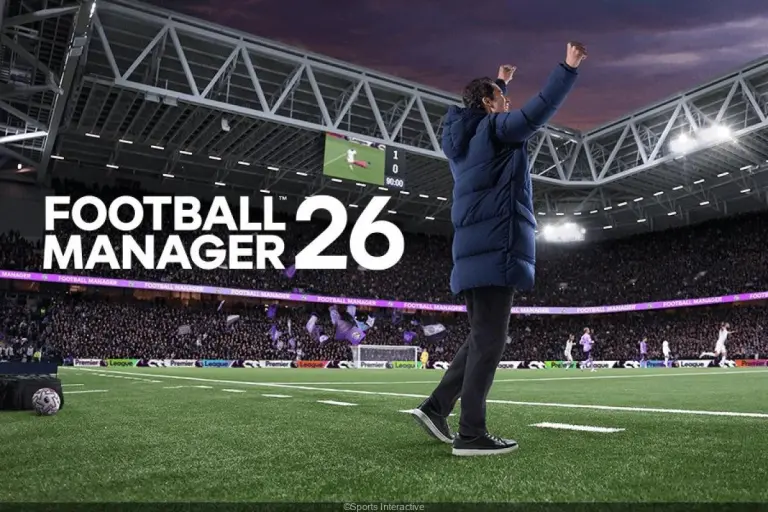
| Football Manager 26 relies on a match engine under Unity that enhances football realism and immersion. |
| The FM26 new features impress on the field, but the interface sometimes overloads the experience. |
| Team management gains precision thanks to phases with and without the ball better distinguished. |
| Fourteen playable women’s leagues and the Premier League license densify the football simulation. |
| The career pace remains slow, hence the importance of a clear method and mastered delegation. |
| The global database and tools like TransferRoom energize the transfer market. |
After a turbulent year and a major technological change, Football Manager 26 presents itself as a football video game that redefines its priorities. On one side, the match engine under Unity enhances the reading of actions, the variety of animations, and the visual impact of tactical choices. On the other, a more talkative interface multiplies analysis frames. In practice, the complete analysis highlights a clear shift: the spectacle and understanding of collective dynamics progress, while the off-field information flow requires increased discipline.
This crossed observation is seen from the first hours of career. Spectacular goals, decisive micro-gestures, and the defensive block’s stance are better seen, thus better coached. Yet, the menu density can disorient. Thus, the user gains control during matches but must tame a new ergonomics to accelerate routines. The balance remains attractive: football strategy is refined in context, team management is further equipped, and football simulation embraces the world of the round ball more broadly.
Complete analysis of Football Manager 26’s match engine: realism and immersion serving decisions
The first shock lies in the new match engine. Thanks to Unity, Football Manager 26 gains in animation variety and readability of intentions. Concretely, an attacking full-back no longer just “runs” fast: he anticipates, orients his hip, fixes, then triggers a driven cross or a short feint.
This subtlety changes everything. In matches, the difference between a winger who carries the ball too much and a more altruistic profile is perceived in three touches. Thus, the pitch video finally surpasses the stats table, as the eye better distinguishes what truly turns a game.
Animations, physics and tactical references
Movements chain more intermediate states. Consequently, coordinated pressing becomes a reliable visual marker. When a block dislocates, it is spotted live: the gap opens, the opponent attacks it, and a mental alert is triggered in the virtual coach.
The variety of shots and crosses also feeds immersion. A curl from the center, an off-centered volley or a smashed header now punish micro-gaps understood in slow motion. This realism nourishes gameplay education.
Emerging stories and attachment to players
Sports narration settles effortlessly. A young box-to-box midfielder daring a long shot at the right moment changes status. Then, theatrical attitudes, small cheats or grit in a duel explain locker room moods and strong choices.
What used to be in the rating table becomes visible. For example, a winger who hesitates too much gets reined in through a less creative role, because the images explain why his output drops.
Concrete reading examples over 90 minutes
In a Serie A career, a virtual Roma reveals a very aggressive full-back who enters the box rather than crossing from far out. This detail forces rethinking midfield coverage, under penalty of offering deadly transitions.
Conversely, a fast winger but uninspired in the final act invites changing the plan on the opposite wing. Thus, the team becomes more predictable for the manager and less readable for the virtual opponent.
Impact on preparation and video session
Because everything is better seen, “match review” sessions gain meaning. Key actions are isolated, annotated, then the corresponding tactical exercise is aligned. Collective learning becomes iterative.
Ultimately, the promise of immersion and football realism is not cosmetic. It guides clear choices and tests plan coherence.
Interface and readability: FM26 UI overhaul shakes habits
The major interface overhaul exposes more information on each screen. The intention is honorable: reduce back-and-forth clicking and show the depth of football simulation. However, the abundance can unsettle veterans.
A central “portal” groups widgets, news feeds, and shortcuts. On paper, time is saved. In practice, visual density first slows the learning curve, especially if this page is not actively personalized.
The portal, favorites and info hierarchy
The “favorites” function pins essential views: squad, staff, finances, training, recruitment. From there, navigation becomes fluid again. Even better, the portal can display custom KPIs: training load, minutes played by U21, and xG conceded.
Still, one trap remains: too many widgets kills the widget. Sorting, hiding, then ordering truly useful blocks for the next match is necessary.
Reducing noise, amplifying signal
To gain speed, massive alert sorting is needed. Some press notifications are disabled, training summaries limited, and less strategic press conferences delegated. The flow slows, the mind clears.
Then, it is appropriate to standardize color codes and filters. Visual coherence avoids wasting time mentally reloading each view.
Practical quick configuration tips
Here is a pragmatic method to apply on a new game. It targets daily team management and prepares the micro-cycle between two matches.
- Create a “Matchday” page with fitness, condition, morale, and key stats.
- Pin “Opponent Analysis” and “Tactical Staff” to anticipate the rival’s plan.
- Standardize list filters by position, age, wage status and playtime.
- Disable non-sport news and low-priority rumors.
- Automate outgoing loans via clear rules for U19 and U21.
To visualize concrete settings and save a week of adaptation, a video demonstration is useful.
These adjustments make the interface more docile. Subsequently, attention refocuses on the pitch and tactical levers.
Football strategy and AI: tactical granularity renews team management
The clear split between phases with and without the ball finally clarifies planning. Two distinct structures can now be built: rational use of channels in possession, and more compact reactivity in counter-pressing.
This breakdown favors targeted instructions by role. An inside winger attacks the half-depth space, while a full-back re-centers to lock the transition. The whole becomes more coherent, as each micro-choice matters.
Meta and counter-meta: watching excesses
A point of attention has been raised by the community: some wing-backs tend to attack the box instead of overlapping, creating quick overloads. This bias can break balance if spammed.
To counter this, width is adjusted, a more thoughtful tempo imposed, and more cut-back crosses required. The goal is to vary angles to avoid dependence on a single winning scheme.
Progress workshops and session feedback
Tactical workshops target short themes: pressing on first pass, quick switches, and occupation of zone 14. Then, a debrief focused on FM26 new features of the video engine isolates three clips to correct.
The following week, effect is measured via coherent KPIs: high recovery, shots conceded on weak side, and ratio of dangerous crosses. It’s measurable, thus actionable.
Data, recruitment and squad coherence
The market gains transparency with TransferRoom, which smooths profile exchanges. A strong U21 winger in one-on-one is targeted, an exchange proposed, then tested in calibrated friendlies.
Besides, a solid analytical staff turns numbers into decisions. A simple but robust model beats a misunderstood crazy machine.
Case study: locking the half-spaces
Against a 4-2-3-1 searching for the number 10 between the lines, the idea is to crush this pocket. One midfielder drops back, the winger on the ball side falls back, and the diagonal pass is closed down.
If the opponent insists, a trigger press is launched as soon as the lateral pass is made. The AI adapts, but this plan keeps a step ahead.
Ultimately, football strategy regains readability that serves decision-making. And this dynamic naturally opens the door to licensing and competition stakes.
Licenses, database and women’s football: simulation opens and gains credibility
The official presence of the Premier League and addition of 14 playable women’s leagues broaden the scope of football simulation. This change is not just cosmetic: calendars, staff profiles and talent pipelines evolve accordingly.
In careers, this contribution reshuffles recruitment cards. Staff from women’s leagues bring complementary expertise, and men-women crossed trajectories enrich club dynamics.
A world that lives without the player
The database remains the treasure of Football Manager 26. It simulates promotions, sales, injuries and succession plans independently of your choices. Thus, even without applying, one follows the title fight in Ligue 1 or a relegation battle in Brazil.
This bustling creates a feeling of a persistent world. The results tab is opened as one would read a sports daily.
Market, rumors and digital tools
Market interactions modernize via channels like TransferRoom. A need is posted, offers received, then compared by advanced data. Opportunities refine in a few clicks.
Depending on the budget, inventive setups are needed: loans with options, resale bonuses, shared salary. The financial simulator does not forgive follies.
Women’s careers: another reading of the game
Women’s championships offer different speeds, pressing densities and technical profiles. Therefore, a plan thought for English men doesn’t export as is. Width and transition management must be reconfigured.
To measure these specifics, targeted video feedback helps a lot. The community is already beginning to document these adaptations.
A video guide sums up these first steps within playable women’s leagues.
Thanks to these additions, the promise of immersion extends to more audiences and stories possible. Next step: tame the game pace to savor it all.
Career pace and gameplay loop: speed up without betraying depth
The density of events between two matches still slows progression. Even when delegating, low-critical notifications often pop up. The goal then becomes simple: lighten the week without losing control of key levers.
A clear work framework solves this dilemma. A weekly routine is frozen, who decides what is specified, then impact is measured match after match.
Typical weekly routine
On Monday, video staff isolate five clips and propose three tactical adjustments. On Tuesday, targeted players go in technical workshop. On Wednesday, the provisional starting eleven is validated.
On Thursday, opponent analysis dictates two Plan B scenarios. On Friday, set pieces are fixed. On Saturday, match is played. On Sunday, recovery and a 15-minute KPI review are done.
Delegate without losing control
Partial delegation works well. Routine press conferences and standard loan offers are entrusted. Conversely, control over tactics, major transfers and group dynamics is kept.
In this way, the heart of team management remains under control. The rest follows a clear, pre-approved specifications.
Filter information to speed up
Email filters are an immediate lever. Administrative is grouped in a weekly folder, opponent analysis is highlighted, and noise archived. Result: accelerated scrolling up to match day.
To go further, segmented dashboards by season goal help prioritize. Energy goes where it counts.
Express pre-kickoff checklist
A short checklist ensures decision consistency. It applies to every match, whatever the fixture.
- Validate fitness and condition of the eleven expected starters.
- Review two targeted offensive and one defensive patterns.
- Adapt trigger pressing to the opposing keeper.
- Check full-backs’ discipline according to rivals’ wingers threat.
- Update set pieces based on recent data.
With this method, the gameplay loop gains pace without sacrificing choice quality. It is here that Football Manager 26 shows its best face: when the tool fades for the plan.
Does FM26 really improve match realism ?
Yes. The engine under Unity multiplies animations and clarifies players’ intentions. Tactical reading is thus easier, and structural errors are spotted faster.
How to tame the interface without wasting time ?
Customize the portal, pin your key views and massively filter notifications. In a few sessions, navigation becomes fluid and decision-making accelerates.
Do FM26 new features change tactic building ?
The clear separation between phases with and without the ball refines roles and shapes. Structures can vary, local meta can be neutralized and more adaptive plans built.
Does women’s football bring real added value ?
Yes. Fourteen playable leagues open new dynamics, novel profiles and specific tactical adaptations. Careers gain diversity and depth.
Can you speed up a career while keeping control ?
Absolutely. Delegate administrative tasks, standardize a weekly routine and use a match checklist. The pace accelerates without losing the quality of key choices.