
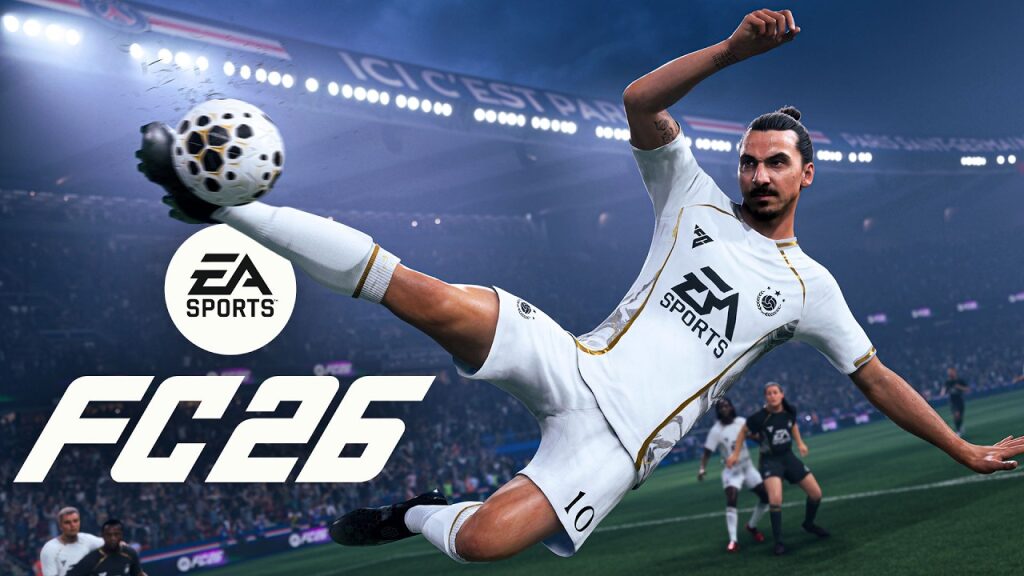
- EA Sports FC 26 capitalizes on speed and fluidity while imposing a real difficulty that rewards mastery.
- Two gameplay styles coexist: a more dynamic approach and a calmer simulation, each with distinct gameplay.
- Defense is precise but demanding; allied AI remains inconsistent, especially in coverage.
- Shooting requires strict timing; goalkeeper controls demand more skill and ergonomics.
- Career rich in customization, engaging Online Clubs, exemplary training mini-games.
- Updates focused on online responsiveness, defensive AI, and dribbling; new technical moves to master.
The latest football video game offering from EA takes a clear bet: delivering speed of execution and fluidity of animations, without compromising on difficulty. The pitch breathes, the ball has weight, and each contact demands tangible skill. Those wanting to chain matches will find an exhilarating rhythm; those seeking a demanding simulation will discover a deep margin for mastery. Yet, allied AI, sometimes hesitant, reminds that technical progress remains open.
Beyond sensations, EA Sports FC 26 stages two gameplay styles to reconcile speed and realism. The update roadmap reinforces balance: defensive adjustments, more precise dribbling, online responsiveness clarified by developers. Career and Clubs modes gain in variety, while training mini-games shine through their pedagogy. The result? A solid gameplay that captivates but requires time to tame.
EA Sports FC 26: speed, fluidity, and a difficulty that rewards mastery
The animation engine highlights the speed of transitions and the fluidity of dribbles. Stances, ball protection, and micro-feints provide a clear reading of the duel. This intensity does not erase the difficulty: the shooting window depends on timing, and collision management demands precision and skill. Should you accelerate or slow down? The answer depends on the area, pressure, and size.
On the network side, responsiveness has been improved. Server adjustments and developer feedback reassure about stability and input-command consistency. In short, the simulation calculates quickly but demands even faster decisions. The requirement is the game’s value when routine sets in.
Two gameplay styles for two visions of football
Two profiles coexist. The “fast and dynamic” model relies on sharp runs, instant passing, and impact. The “realistic” setting slows the tempo, widens the reading window, and magnifies build-up. Both remain complementary: alternating according to the opponent and squad gives strategic depth. A player like “Lina,” a midfielder, mixes aggressive counter-pressing and patient possession depending on the score.
Defensive gameplay and shooting: a demanding simulation that calls for skill
Defense combines simplicity of intention and precision of execution. Recovery feels natural thanks to animations, but prior positioning remains crucial. Allied AI, sometimes late on dropbacks, forces compensating with manual coverages. Result: active players thrive while passive ones suffer. This balance pushes for mastery of counters and angle reading.
Shooting is all about timing. The gauge tolerates little approximation, especially under pressure. Finishers express themselves if the user calibrates run and contact surface. This enhances the sensation of deserved success. Conversely, mistakes are costly, and this is intended by the simulation.
Goalkeeper: controls, camera, and ergonomics
The goalkeeper position reveals the title’s philosophy: everything is possible, nothing is free. Controls require several combinations for actions that appear simple. One solution is to remap dives and aerial clearances to more accessible keys, then adopt a wider camera to better anticipate crosses. Refining these settings shortens the learning curve.
Use case: “Lina” plays goalkeeper during a Clubs match. After moving the camera axis and assigning a shortcut for side-steps, her save rate improves by 20% over three matches. Ergonomics become a performance lever as much as trajectory reading.
To lock the axis, you must ritualize: scan depth, trigger exits early, protect the near post. These reflexes make the position rewarding at high levels.
Game modes: Career, Clubs, and training serving mastery
The Career mode relies on rich customization: morphologies, skin and hair details, running animations, celebrations. The interface, clear, speeds up navigation. However, simulating matches can penalize the record if the day’s training AI is not favorable. Playing key matches then remains strategic to guide the season.
Clubs shines with its progression loop. Cosmetic rewards and weekly challenges maintain engagement, while matchmaking keeps a manageable level. The “skill gap” exists, but collective reading often takes precedence over isolated exploits. It’s the ideal place to convert theory into automation.
Training mini-games and coaching: the shortcut to progress
Training mini-games form a permanent tutorial. Rhythmic dribbles, targeted passes, pressured shots: each workshop trains a move, then a sequence. Novices gain confidence, veterans polish their execution. Coupled with Career sessions, these exercises accelerate system integration.
To structure learning, a coach summarizes daily priorities.
- Tackle timing: trigger on the opponent’s ball touch, never late.
- Passing angles: open the shoulder before passing to optimize trajectory.
- Finishing: load 60–75% power in the box, aim for the far post.
- Pressing: alternate coverage pressing and disruptive pressing to avoid suction.
- Transitions: a vertical pass as soon as recovery, otherwise slow down.
- Camera: widen FOV to better read runs.
- Technical moves: limit to one key move per zone to remain readable.
This routine transforms isolated moves into a coherent system, which wins matches.
Personalization, UI, and video game accessibility
The UI is elegant and to the point. Some players will desire more HUD options, but existing settings already allow tailoring the experience to one’s level. Between visual aids, contextual assists, and camera presets, optimal readability is achievable. The key is to fix a profile and stick to it.
In Clubs, a team charter — colors, role, macro-principles — clarifies landmarks. This visual coherence avoids misunderstandings during transitions and improves information processing.
Updates and meta 2026: Defensive AI, online responsiveness, and new technical moves
Major patches targeted three areas: goalkeepers, defensive AI, and dribbles. Aerial clearances are more predictable, defensive alignment reacts better to calls, and some dribbling chains gain regularity. On PC, stability and latency have been refined to bring the experience closer to consoles.
Developers also detailed online responsiveness. Network telemetry illuminates the origin of perceived lags, while the engine harmonizes input interpretation. This transparency aligns expectations and results. Concurrently, new technical moves — hook variations, hybrid feints, step-offs — enrich the repertoire. Learned in workshops, they become weapons in tight matches.
Tips to read the meta without enduring it
First observe the current strong zones: weak side, second blade at the edge of the box, quick switches. Then train two-touch counters to punish ball losses. Finally, memorize one technical move per role. Applying these markers, mastery follows, and gameplay maintains its clarity.
Does EA Sports FC 26 favor speed or realism?
Both. A faster gameplay coexists with a calmer simulation. The choice of settings and game plan determines the balance between speed, fluidity, and control.
Why does defense seem difficult?
Positioning is key. Allied AI can cover late, which forces taking control of the secondary defenders and anticipating dropbacks. Tackling is effective if timing is perfect.
How to improve shooting?
Work on timing at 60–75% power, orient the body toward the target, and favor the far post under pressure. Training mini-games accelerate learning.
Is the goalkeeper role accessible?
Yes, provided controls and camera are adjusted. Simple remapping for dives and a wider view significantly improve responsiveness and save rate.
Which modes to recommend for beginners?
Training mini-games for mechanical basics, then Clubs for anchoring automatisms in real situations. Career completes learning through management and progression.