
| Key Points to Remember |
|---|
| Football Manager 26 launches an ambitious overhaul, but the player feedback on Steam points to a chaotic start. |
| Steam reviews drop quickly, citing bugs, a fragmented interface, and slowdowns on PC gameplay. |
| The new match engine brings animations and tactical readability useful in the relegation battle. |
| Onboarding (tutorials, FMPedia) eases access for beginners, despite more click-heavy navigation. |
| For the 2026 season, the sports strategy should prioritize quick transitions and set pieces. |
| A roadmap of fixes is essential to stabilize the simulation gameplay experience. |
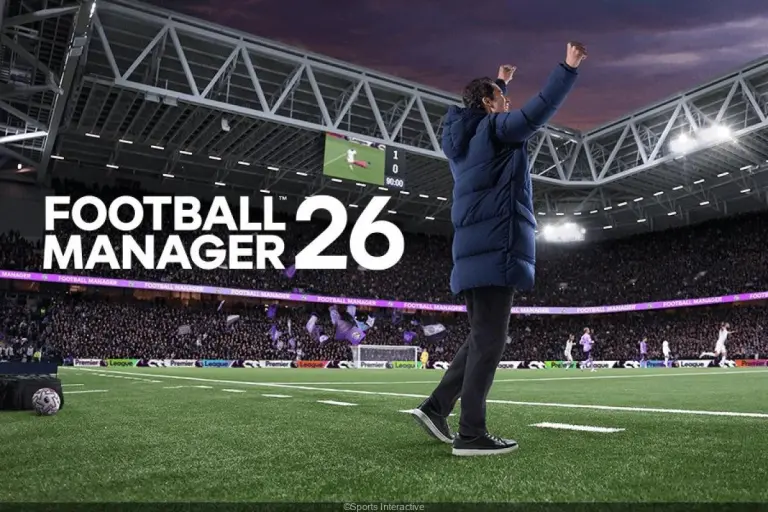
Football Manager 26 arrives after an unusual wait, a blank year, and promises to modernize football management. From the first hours, the community is fired up around the Steam reviews, swinging between enthusiasm for the new match engine and frustration related to the interface. The contrast is explained by real ambition and radical choices. Some celebrate more credible animations and more coherent AI. Others, however, criticize heavier navigation and poor optimization on PC gameplay.
In this context, the relegation battle imposes itself as the best stress test. The pace of the season start exposes the slightest ergonomic flaw, as well as highlighting the tactical clarity of the new 3D environment. The challenge goes beyond simple habit. It questions the very heart of a historical simulation gameplay, now split between accessibility and depth. For the 2026 season, the community’s verdict will weigh heavily on the trajectory of the project.
FM26, strong start and controversy: what Steam reviews really say
The launch was quick, massive, and controversial. In less than twenty-four hours, the Steam reviews register a very low score, close to the floor rarely reached by the series. The feedback lists recurring criticisms about stability. They also highlight an insufficient state of completion.
According to many testimonies, thousands of bugs are mentioned on forums, with reports of screen freezes, misaligned texts, and inactive buttons. This noise, however, masks a more nuanced reality. Some users highlight clearer onboarding, with a robust FMPedia and better-paced tutorials.
The ergonomic break concentrates tensions. The interface, designed to simplify, fragments information into widgets and multiplies clicks. On paper, the concept seems logical. In practice, experienced players regret the informational density of historic screens.
There are nevertheless notable counterpoints. Several newcomers find the visual framework more welcoming than in previous releases. They also appreciate the contextual guidance. However, they admit that bugs still disrupt the experience.
Amid the turmoil, a consensus emerges on a specific point. The match engine shows real potential. More varied game phases and better-linked animations help tactical reading. This matters particularly during a relegation battle, where every detail counts.
This turbulent start creates a paradoxical dynamic. The core base demands urgent fixes. New profiles discover a more guided but imperfect simulation gameplay. The future will depend on patches and a fine listening to player feedback.
For now, the series stands. However, it must reduce the gap between ambition and execution. Without this, the momentum of the season start will erode too quickly.
Overhauled Football Manager 26 interface: radical ergonomics or clickable maze
The new interface breaks with the series’ habits. It organizes data into smaller modules. It also encourages a modernized visual hierarchy. Yet, many users report cognitive overload.
Previously, the squad screen displayed roles, statuses, and instructions in one block. Now, the same information is spread across tabs and side panels. The gaze travels more. The cursor clicks more often. Decision speed suffers in the daily life of a fictional club like “Union Maritime” engaged in the relegation battle.
For example, adjusting pressing intensity by position required two actions in an earlier version. Here, the operation sometimes demands several submenus. By the end of a match series, the accumulation tires. It reduces the joy of micromanaging a sports strategy plan that is otherwise relevant.
On the other hand, beginner reception improves. Help bubbles open at the right moment. The FMPedia cleanly links each screen to its logic. The challenges of a 2026 season become less intimidating. Progression is accelerated in the first weeks.
This duality raises a central question. How to reconcile expert density and accessibility? The answer lies in customization options. Panel presets, reassignable shortcuts, and saved filters offer concrete paths.
A virtual coach like “Coach Rivera” will save time by creating a dedicated “maintenance” view. It groups form, distance covered, shot-leading errors, and set-piece metrics. Then, analysis becomes smoother despite the widget structure.
Targeted comparison of UI changes and practical consequences
| UI Change | Direct Impact | Adaptation Advice |
|---|---|---|
| Fragmented widgets | More clicks, less density | Create customized views per task |
| Side panels | More segmented navigation | Keyboard shortcuts and screen favorites |
| Integrated FMPedia | Better pedagogy | Browse guides during pre-season |
At heart, the philosophy of simulation gameplay demands clarity. In form, it deserves flexible tooling. The widgets + saved views combo can reconcile both worlds. Provided excess clicks are trimmed via quick fixes.
While waiting for patches, organizational discipline pays off. Building a “UI routine” by goal speeds up the season start. Above all, it gives control back to the player in a framework that seemed to take it away.
New FM26 match engine: realism, animations and readable decisions in relegation battle
The Football Manager 26 match engine attracts much more positive feedback. Animations gain continuity. Collisions seem better managed. The tempo varies more organically according to contexts.
Concretely, cross-calls from wingers better pull opposing full-backs. Half-spaces open up. One-touch passes are more noticeable. Thus, coaches read more quickly what works or not.
This readability changes the game in the relegation battle. Clubs plagued by doubt can’t afford to try fifteen ideas per match. They need immediate feedback. The new animation-event sequence allows this better.
On set pieces, the effect is tangible. More squared editing screens coupled with credible trajectories increase the edge. A fictional team like “AC Maris” survives thanks to a 0.35 average xG per match from worked corners.
However, the AI is not perfect. Some mention latency in blocks. Others report sometimes exaggerated pressing traps. Despite these reservations, the direction seems sound for a simulation gameplay focused on anticipation.
From the virtual touchline, the butterfly effect becomes tangible. A defensive width adjustment immediately influences opposing ball circulation. By ripple effect, interceptions by your defensive midfielder increase. The cause-effect link motivates more precise iterations.
Concrete tactical readings for a realistic sports strategy
Facing a 4-2-3-1 dominating width, a narrow 4-4-2 middle block reduces the passing angle. Then, quick transitions to a deep striker punish the high line. The engine brings this script to life, without unnecessary blur.
Another frequent case, the overloaded 3-5-2 opponent corridor-axis. Switching to 4-3-3 with a strong-footed winger on the wide side pushes back the wing-back. Then, your lateral triangles create two-on-one situations. The engine illustrates this switch more naturally.
In short, the core of the simulation breathes better. Coaches read a match’s flow more finely. Even in the turmoil of survival, this extra clarity changes everything.
Fierce relegation battle: game plans and micro-details for the 2026 season
Survival demands method, not just heart. In Football Manager 26, gaps are decided by preparation details. Then, the sequence of matches dictates the granularity of adjustments.
A fictional club, “Rive-Sud FC,” starts the season start with a losing streak. The squad suffers, fans grumble in local Steam reviews. Yet, a simple plan reshuffles the cards in four weeks.
First, a clear defensive base. A compact 4-1-4-1, protected channels, modulated width. Then, clean exits on the strong side, without excessive risk. Finally, a vertical threat exploits any pass breaking lines.
The microcycle becomes crucial. Monday, recovery work and cohesion of the back line. Tuesday, transition automation and coordinated runs. Wednesday, set-piece workshops targeting opponent weaknesses.
In recruitment, the winter window brings two low-wage loans. A physical pivot to fix play, a right-back resistant to pressure. With this, the opponent’s pressing hesitates. Your relaunches gain useful length.
Survival checklist: concrete and measurable actions
- Standardize set pieces: short corners/near post variations according to aerial profiles.
- Filter shots: invite the opponent to shoot from distance via a compact middle block.
- Plan workloads: press in waves, not continuously, to preserve energy.
- Profile substitutes: speed off the bench for 20-minute bursts.
- Monitor fatigue: alternate training intensity according to schedule density.
Squad psychology weighs as much as tactics. Brief quantified objectives reassure. Aiming for seven points over four matches turns green signals back on.
Finally, analytics remain accessible thanks to custom views. Linking conceded shot maps and recovery heatmaps shows where to tighten. Moreover, the more expressive engine quickly validates hypotheses.
All in all, the sports strategy gains sharpness when the interface does not hinder. While waiting for fixes, self-organization compensates. It’s the guiding thread of a successful survival operation.
Technology, performance and roadmap: stabilizing PC gameplay and regaining trust
Technical complaints dominate Steam reviews. Interface freezes, 3D stutters, and micro-freezes spoil the experience. On some setups, optimization varies too widely.
According to feedback, quick fixes address isolated crashes. However, the accumulation of frictions damages the pace of football management. Impatient players quit matches too early.
A clear roadmap would reassure. A biweekly cadence of hotfixes followed by monthly major patches seems credible. In between, a beta channel would allow validation without breaking saves.
The modding community already fills gaps. Skins reduce widget height. Tweaks recompact key tables. In parallel, camera packs aid reading the new engine.
On portable PC gameplay, like Steam Deck, the situation depends heavily on presets. Lowering shadow density and limiting secondary animations improves stability. Touch navigation, however, still requires polishing.
Example of a realistic player-oriented patch plan
| Deadline | Priority | Benefit for Players |
|---|---|---|
| Week 1–2 | UI crashes, inactive buttons | Reliable menus, fewer rage quits |
| Month 1 | 3D optimization, stutters | Smoother matches, improved tactical reading |
| Month 2 | Advanced UI customization | Fewer clicks, productivity of views |
| Month 3 | AI pressing and positioning | Strong realism, defensive balance |
In the short term, the advice is simple. Save often and enable automatic updates. Then, choosing a stable UI theme and limiting intrusive mods helps diagnose real problems.
Football Manager 26’s bet remains bold. To win it, one must quickly prove that listening to player feedback translates into measurable improvements. It is the shortest path to reconciliation.
Why are Steam reviews so divided on Football Manager 26?
The interface overhaul complicates navigation for veterans, while the new onboarding appeals to beginners. At the same time, bugs and performance issues on PC gameplay taint the launch. However, the more readable match engine receives largely positive feedback.
Does the new match engine change the strategy in the relegation battle?
Yes. The animations and coherence of phases improve tactical reading. Struggling clubs better optimize transitions, defensive width, and set pieces, key levers to scrape points.
How to mitigate interface problems at season start?
Create customized views by objective, use FMPedia as a guide, and map keyboard shortcuts to speed navigation. While waiting for patches, these habits reduce clicks and cognitive fatigue.
Should I buy FM26 now or wait?
Football management enthusiasts open to overhauls may appreciate the new engine. Those fearing bugs should monitor upcoming patches. A clear roadmap will ease the decision.
Does the game run well on modest setups?
With cautious settings (reduced shadows, limited secondary animations), stability improves. The experience remains playable, but further optimizations are expected for lasting comfort.