
| Key Takeaways |
|---|
| Football Manager 26 on PS5 maintains a dense football simulation but suffers from a confusing interface and gameplay poorly adapted for the controller. |
| Match graphics below par and stuttering during highlights hinder the user experience. |
| The switch to the Unity engine brings bugs and occasional crashes, despite promises of fixes. |
| The tactical core and database remain remarkable, but their value is buried under frustrating ergonomics. |
| The addition of women’s football is successful, but some key options are still missing at launch. |
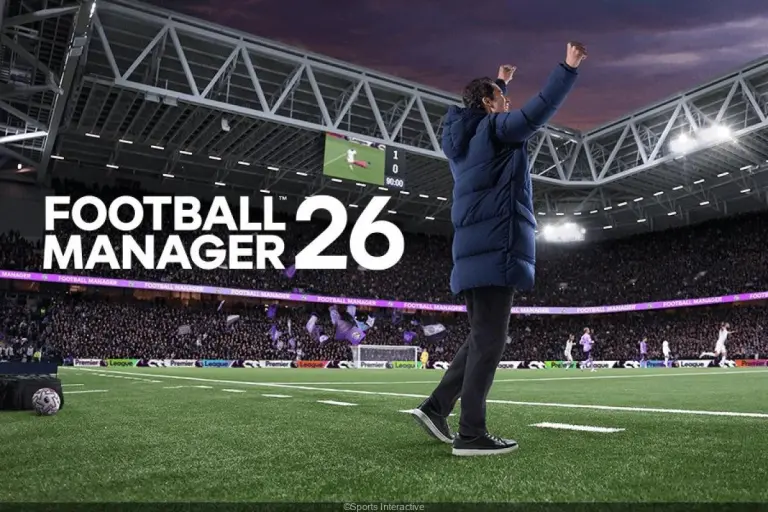
After a year of waiting and an ambitious technical shift, Football Manager 26 arrives on PS5 with the aura of an awaited reboot. The promises are many, including an interface overhaul, renewed 3D engine, and expanded integration of competitions. However, the review of the video game on console reveals a clear split between intention and execution. The foundation of the football simulation remains impressive, but the user experience suffers from laborious navigation and slowdowns during matches. On the console front, the series aims for openness but encounters ergonomic and performance constraints.
The test bench focused on the PS5 version, where the controller/menu adaptation was supposed to convince. Tactics enthusiasts will find abundant data and tactical granularity, but the disappointment creeps in from the first hours. We observe a paradox: the core remains appealing, while the technical shell and interface detract from the enjoyment. This assessment fits within the context of a complex transition to the Unity engine, which explains the hiccups without excusing them. The challenge now lies in the patches’ ability to put the season back on track.
Football Manager 26 Review on PS5: a Complicated Restart Despite an Intact Foundation
FM has long dominated sports management thanks to a colossal database, precise statistical models, and a refined reading of modern football. Football Manager 26 is no exception. Recruitment modules, post-match analysis, and performance reports remain excellent. However, on PS5, the first impression is discouraging. Menus spread out, layers of information overlap, and the navigation logic dissolves with the controller.
The switch to the Unity engine was meant to modernize everything. In reality, it requires a learning period. Technically, downtime is not the main issue. It is rather the stuttering in 3D highlights, more pronounced in rain, and sporadic crashes. The graphical packaging feels like a previous generation, exposing a gap with the visual standards expected on consoles in 2026.
For illustration, a fictional club, Montreuil Atlantique, was entrusted to the AI with simple directives: high pressing, offensive width, and quick transitions. The preparation executes properly. However, entering the tactics tab multiplies micro-loads and back-and-forths. The user spends more time searching than deciding. The sense of control, essential in a video game management title, fractures.
The most frustrating aspect comes from the contrast. The core remains very high quality. Assignments of scouts, team morale, and individual development provide consistent results. Still, each adjustment requires several unnatural actions on the controller. The left stick activatable cursor improves life a bit but betrays a port too directly taken from the PC version.
This mismatch fuels the disappointment. Ambitions are visible, the framework is solid, and the franchise’s DNA survives. Alas, the console translation lacks targeted finishing touches. Fans will find their favorite simulator but will have to deal with dissonant ergonomics. Consequently, the gap between promise and actual use is evident from kickoff.
In the end, the restart seems forced: the team showed up on the field, but the automatisms are not yet in place.
Interface and User Experience on PS5: Ergonomics That Hinder Strategy
The interface of Football Manager 26 changes deeply. It gathers more information on screen with contextual panels and stacked tabs. On PC, the density makes sense with a mouse. On PS5, the controller imposes a different grammar. Navigation via triggers and directional pad lacks precision. Cursor mode activates a compromise but slows decision flow.
Visual overload complicates routine tasks. Building a shortlist of low-cost targets requires more steps than on previous PC versions. The bridge to advanced data (xG, pressing sequences, reception zones) is present but demands detours. Over a season, these frictions add minutes that turn into hours.
The test club, Montreuil Atlantique, was to complete a fullback transfer. The sporting director proposes three profiles. To compare wages, bonuses, and absence history, the user opens four screens. Then, they return to the data hub to validate an endurance criterion. Controller commands lack intuitiveness. As a result, decision-making loses spontaneity.
Accessibility options exist but remain discreet. Adjustable fonts help on a large screen. However, contrasts and shortcut mapping would deserve console presets. A “simplified navigation” mode with contextual ribbons could ease the learning curve. Currently, the cognitive effort exceeds what a console audience expects from a video game management title.
Here are the major friction points noted during the review:
- Stacking of panels that drowns key information and dilutes priorities.
- Menu routing unintuitive, with too many sub-tabs for a simple action.
- Stick cursor useful but revealing a port designed for keyboard-mouse.
- Powerful search filters but slow to configure with the controller.
- Underused haptic feedback, while it could guide the user experience.
Despite everything, the interface is not irreparable. With targeted patches, contextual shortcuts, and shorter action paths, potential would resurface. For now, strategy battles with the tool, reversing the logic of an effective FM.
In summary, the will to display everything is understandable, but the controller demands tough choices: fewer screens, more clarity, better control.
Gameplay and Football Simulation: Depth Is There, but Stifled
The gameplay of Football Manager 26 remains exceptionally rich. Game plans revolve around modern principles: coordinated pressing, rational occupation of half-spaces, and alternating triggers in transition. Weekly intensity management shows credible effects on fatigue. Players’ cognitive profiles guide instructions. Thus, a creative playmaker receives more autonomy between the lines.
The recruitment cell continues to impress. Advanced indicators bring the simulation closer to the pitch. A winger with a high xThreat impacts the match even without scoring. On this front, immersion remains strong. However, access to the right levers wastes time because the interface lengthens the adjustment paths. Tactical decisions drown in micro-navigation.
Women’s football integrates smoothly. Major leagues fit into the career without friction. Player progression models provide interesting trajectories. The feeling of equitable treatment reassures. Yet some ancillary features, like international options at launch, are still missing. This angle will frustrate part of the community, especially after the rise of women’s football in recent seasons.
On the pitch, a 4-3-3 from Montreuil Atlantique illustrates internal coherence. High fullbacks, short buildup, and a pivot able to hold to free an inside winger. Patterns confirm with statistics: sequences of ten passes, duel win ratios, and recovery mapping. The logic responds, and that is precious. But the slowdown of graphics breaks the emotional rhythm.
The group dynamics engine still makes a difference. A well-calibrated pre-match talk influences performances. Some personalities require fine rivalry management. The system responds to context, bringing the simulation closer to a real locker room. The problem, again, comes from technical obstacles that eat attention and muddy reading.
Ultimately, the raw material remains top-level. The quality shows, but access complicates, limiting long-term projection on PS5.
Graphics and 3D Engine on PS5: Dated Highlights and Stability to Fix
The graphics of the matches are the main disappointment. The highlights display stiff animations, approximate collisions, and timid lighting. On PS5, one expects comfortable fluidity. Yet framerate drops occur during weather effects. In rain, the image shakes and action reading cuts off. Immersion drops within seconds.
The engine change partly explains the situation. Unity offers modular tools and wide compatibility, but the optimization curve remains steep. FM26 pays the price at launch. Stadium and pitch rendering is decent, no more. Player models approach aliasing. The overall feel evokes an earlier generation, despite the console’s power.
Camera choices offer useful angles, but sharpness fluctuates. In fast action, visual compression confuses reference points. Pauses do not bother. It is the consistency of the frame rate that weakens the whole. Logic would have it that “extended view” or “analyst” compensate. Alas, lack of stability limits the interest of these perspectives.
For Montreuil Atlantique, two preseason matches highlighted the limits. At the 65th minute, a fast transition starts. The camera follows, then the movement stutters, and the key action cuts off. The feeling of control evaporates. In a game where each tactical adjustment counts, losing the visual thread is like losing part of the strategy.
Targeted optimizations could fix most issues: lighter weather management, better-tuned dynamic LODs, and tightened animation pipeline. Developers seem aware of the problem. Recent patch notes mention stability fixes. However, tangible gains will be needed to reassure.
In summary, the 3D engine undermines an excellent tactical base when it should elevate it.
Technical State, Fixes, and Purchase Advice on PS5: Caution Before Investing
Overall stability does not yet meet platform standards. Crashes occur at match end or during autosave. Frequent saves limit damage. Still, interruptions break the rhythm. Haptic feedback could have compensated by sensory cues. They remain timid, although the DualSense controller offers real leeway.
On PS5, the offer does not benefit from a Game Pass-type access. Comparison with Xbox hurts the entry ticket’s appeal. For the curious, it is better to monitor post-patch feedback. Enthusiasts will get their management fix. However, they will accept a steeper learning curve. The disappointment stems precisely from this contrast between ambition and finish.
Before buying, some checks are necessary. Announced updates address the interface, match graphics, and save stability. Controller navigation improvements also appear on the roadmap. If realized, FM26 could reverse the console dynamic. Product support will determine the season’s trajectory.
For a competitive profile, tactical depth partly compensates for flaws. Long careers focused on youth development and trading remain exciting. Short and casual sessions suffer from command access delays. The user experience favors those who persevere and are already familiar with FM logic.
Montreuil Atlantique illustrates the trade-off again. The sporting director secured a free striker. Physical indicators were positive. The signing happened after several screens. Once integrated, the impact was immediate. Two goals in three preseason matches. The potential of gameplay is confirmed, provided ergonomic obstacles are overcome.
Current recommendation: wait, check patch notes, then decide. The quality of substance deserves to be found in form.
Practical Tips to Optimize FM26 on PS5
While awaiting updates, some settings help. Disabling certain visual effects reduces match stuttering. Limiting open panels smooths navigation. The cursor mode is better used occasionally, not permanently. Organizing favorites in menus saves time on weekly routines.
These gestures do not erase limits but stabilize the career. Progression becomes clearer, and mental load diminishes. On a title with such density, clarity wins matches. Applying these tips circumvents most blind spots while waiting for fixes.
Is Football Manager 26 on PS5 worth immediate purchase?
Not for everyone. The depth of the simulation impresses, but the confusing interface, slowdown in highlights, and occasional crashes recommend waiting for patches if tolerance for flaws is low.
Are match graphics on PS5 up to standard in 2026?
No, the rendering seems dated and fluidity degrades under rain. Optimizations are needed to reach current console standards.
Is the gameplay core still solid?
Yes. Tactics, scouting, progression and data remain excellent. The problem mainly comes from accessing these systems via an interface poorly adapted to the controller.
Which new features hold up?
The integration of women’s football is well-crafted and fits nicely into the career. The database and statistical models remain a benchmark for football simulation.