
In brief
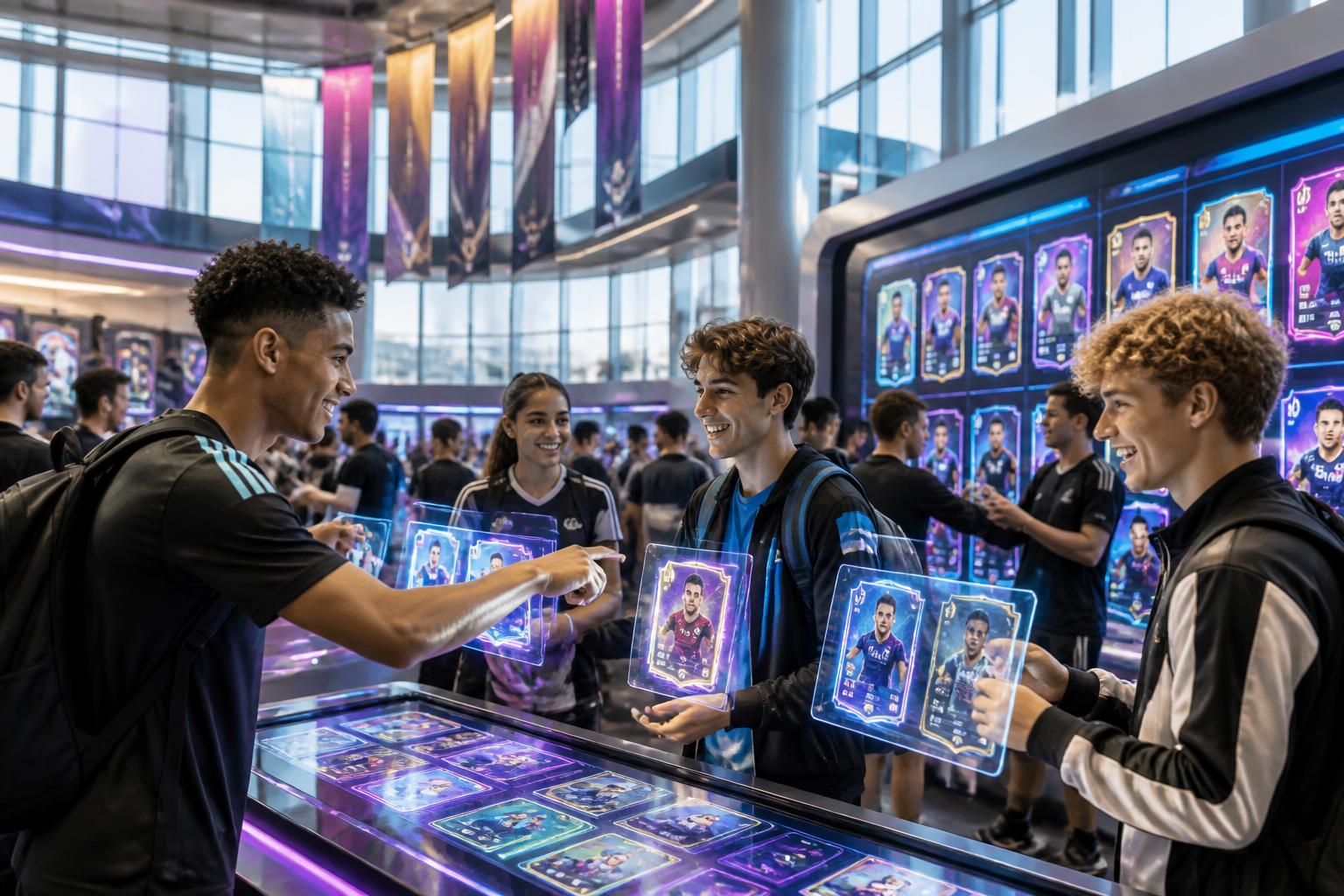
- Top Eleven launches the Superstar World Gallery event, focused on collectible cards integrated into the management experience.
- An innovative card trading system is highlighted, with a negotiation and rarity logic designed for interactivity.
- The event is part of a 2026 trend: merging progression, collection, and social aspects without leaving the football game.
- The Gallery emphasizes showcasing the obtained cards, with goals related to completing collections.
- The main impact plays on the club’s economy: squad optimization, trade-offs, and management of duplicates.
On Top Eleven, the arrival of Superstar World Gallery installs an event designed to give a central role to collectible cards in the club’s progression. The idea is clear: transform collecting, often seen as a “bonus” layer, into a structuring mechanic with tiers, rewards, and a more pronounced social dimension. This choice aligns the football game with what mobile has popularized for years: collection as a retention driver, provided it also serves performance on the pitch.
The core of the system lies in a redesigned card exchange. The innovative system promises smoother circulation of duplicates and increased interest in rare cards, with a transaction framework that aims to avoid “disposable” trades. The stated goal is to create interactivity between managers while maintaining control over balancing: an overly permissive exchange economy would kill rarity, too restrictive would discourage the community. Superstar World Gallery thus presents itself as an attempt at balance, driven by a new feature that touches both collection and sports management.
Superstar World Gallery on Top Eleven: what the event changes for the collection
Superstar World Gallery is conceived as a hub: cards are no longer just obtained, they are displayed, organized, and tracked via collection goals. Progression relies on sets to complete, which provides a clear framework for gameplay sessions, even for players who don’t aim to “max everything.”
In practice, the event encourages making choices. Keeping a card to complete a series may conflict with the desire to convert it into a trading resource. This tension, common in collection games, is brought here into management: the value of a card also depends on the immediate needs of the squad.
Progression focused on completion and showcasing of collectible cards
The Gallery introduces a more “collector” path: series, milestones, and gratification upon completion. This model, widely used on mobile, works when objectives remain compatible with the pace of a football game played over time, season after season.
Concrete example: a manager aiming for an immediate boost to their defense will benefit from targeting specific cards rather than opening packs at random. The Gallery, by structuring what is missing, makes decision-making more rational and reduces the feeling of forced collecting. In the end, the card becomes a management tool, not just an object.
To place the spirit of the system on the platform side, cookie consent screens recall the direction taken by some digital services: audience measurement, fraud prevention, personalization based on settings, or non-personalized display influenced by location and current session. This “choice-based” logic is found in game mechanics that offer interactivity and customization options, while maintaining a common functional base for all.
Card exchange in Top Eleven: an innovative system to streamline duplicates
The new card exchange system primarily targets a classic issue in collectible cards: the accumulation of duplicates and associated frustration. As the collection grows, the probability of pulling the same items increases, which puts pressure on the game’s economy.
Here, the intention is to frame more useful trades: turning surplus into leverage rather than simple inventory. The event also seeks to foster a micro-economy where a card’s value depends on its rarity and demand, not only its rating.
Interactivity between managers: negotiation, rarity, and usage value
Interactivity is the key word that conditions the interest of the exchange. If transactions boil down to “gifts” or obvious symmetrical trades, activity quickly declines. On the contrary, negotiation becomes interesting when a card has a usage value: completing a series, unlocking an event stage, or responding to a squad need.
In a football management game logic, value is not only aesthetic. A card that strengthens a weak area of the team can be worth more than a more “prestigious” but redundant card. This discrepancy creates asymmetrical trades, and therefore discussions, which feed the social loop of the event.
Announced revolution: what the new feature brings to mobile football gaming
The term revolution easily circulates whenever a game touches its internal economy. Here, the real shift lies in the fact that collection is no longer a parallel layer: it becomes a decision-making mechanic. When card trading influences strategy, playtime reorganizes around clearer priorities.
On mobile, this type of new feature also serves to densify short sessions. A few minutes are enough to check a trading opportunity, adjust a collection, then return to training or match management. The event positions itself as a binder between previously separate activities.
Use case: optimizing the squad thanks to collectible cards
In a management model, optimization often happens through details: weak positions, too weak substitutes, or lack of versatility. Collectible cards can become an adjustment tool if they allow faster access to a precise target via trading, instead of relying solely on randomness.
A typical use case emerges: keeping cards indispensable for a series, trading duplicates to obtain a missing piece, then securing a reward linked to the event. The loop is clearer, thus easier to plan. The interest is measured by the system’s ability to avoid trade blockages due to a chronic lack of offers.
Comparison table: collecting, management, and card trading in Superstar World Gallery
The table below summarizes the concrete elements structuring the experience around the Gallery and card trading, with measurable criteria from the player’s side.
| Component | Main action | Resources mobilized | Typical frequency | Impact on progression |
|---|---|---|---|---|
| Superstar World Gallery | Complete collections | Obtained cards, sets to finish | Daily during the event | Unlocks stages and rewards |
| Card exchange | Convert duplicates into targets | Duplicates, offers available | Depending on market and needs | Accelerates access to missing cards |
| Rarity management | Arbitrate between keeping and trading | Inventory, relative card value | At each significant acquisition | Optimizes medium-term choices |
| Social interactivity | Negotiate and track opportunities | Network, contacts, exchanges | Short repeated sessions | Stabilizes progression beyond randomness |
Practical advice: making the most of the event without unbalancing your club
Superstar World Gallery encourages quick decisions, but a Top Eleven club is built over time. The risk during an event is sacrificing long-term useful resources to complete a short-term series. A disciplined approach improves the outcome.
The most reliable lever is to define a single objective per cycle: complete a precise collection or strengthen a gameplay area, not both simultaneously. This method reduces impulsive trades and allows better assessment of card value.
Concrete action list to manage card trading efficiently
- Isolate duplicates as soon as obtained to avoid mixing them with collectible cards.
- Prioritize trades that complete a series missing only one card, to maximize transaction yield.
- Avoid trading a versatile card if it covers a fragile position in the squad.
- Monitor demand on rare cards before making an offer, as rarity only has value if it circulates.
- Reserve part of progression resources for periods outside the event to avoid “emptying” the club in a single window.
What do we say about it?
Superstar World Gallery has a good chance to establish itself long-term if the card trading system remains simple enough for short sessions, while being sufficiently constrained to preserve rarity. The event strengthens Top Eleven on a field expected in 2026: giving a strategic use to collectibles rather than confining them to decoration. The strong point is interactivity, as it turns duplicates into opportunities and limits the frustration of chance. The potential weak point lies in balancing: if too many key cards become unreachable without constant trades, progression could feel artificially stretched.
Is Superstar World Gallery a permanent mode or a limited event?
Superstar World Gallery is presented as an event in Top Eleven, with a structure centered on a participation window and goals to complete during this period. The exact content can evolve according to event rotations, but the Gallery and collection logic is designed to be revisited via new sets and tiers.
What is the point of card trading if collection can be done by playing normally?
Card trading mainly serves to manage duplicates and reduce dependency on randomness when a collection is almost complete. In a football management game, obtaining a targeted card can also meet an immediate squad need. The innovative system thus aims for greater control over progression.
Should rarity or the sporting utility of collectible cards be favored?
Rarity matters for completing series and securing event tiers, but sporting utility remains decisive if a card helps strengthen a weak position. An effective strategy involves keeping cards that directly impact the team and trading duplicates or redundant cards. The decision depends on the club’s short-term needs.
How to avoid wasting resources during the event?
The safest approach is to set a single priority: aim for a specific collection or optimize a squad area, then trade only in that direction. Sorting duplicates, waiting for coherent opportunities, and avoiding impulsive trades limits losses. By keeping resources for progression outside the event, the club remains stable over time.