
| January 2026: targeted nerf of Defensive AI on ball carrier marking |
| More space in transition, more open and readable gameplay pace |
| Ultimate Team: arrival of the New Release Hub for SBC, objectives, and packs |
| Squad Battles: more direct CPU AI, faster progression towards goal |
| Return of the Potential Indicator at the beginning of the year |
| Patch 1.2.0 already deployed: better marking on short corners |
| The complete pitch notes are expected at the very beginning of the month |
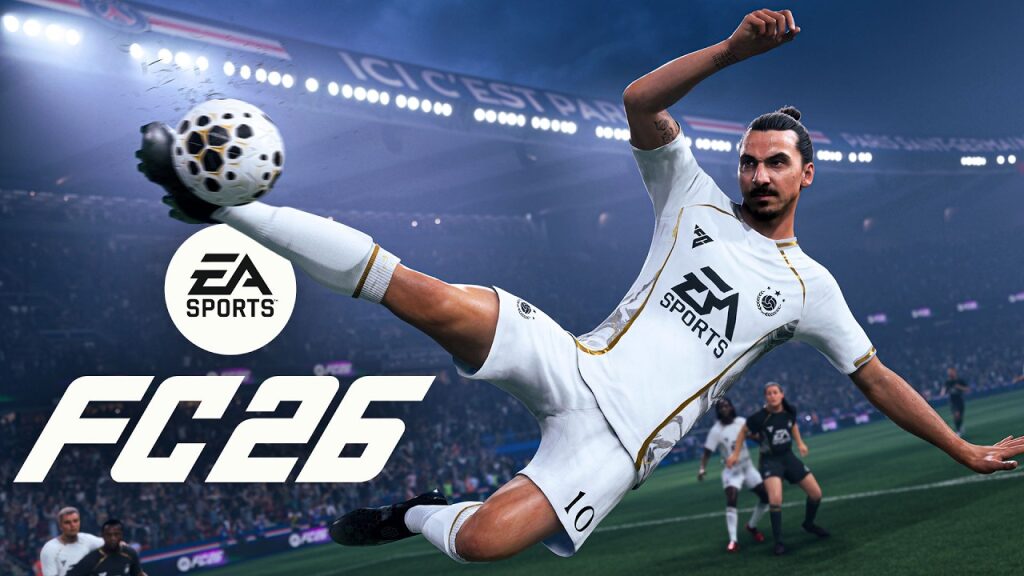
EA Sports FC 26 enters a pivotal phase. In January 2026, the update announced by EA deeply adjusts the Defensive AI, targets better reading of transitions, and rebalances the ball carrier/defender duel. The stated objective is clear: a sports simulation that rewards anticipation, information gathering, and measured risk-taking even more.
At the same time, the studio deploys concrete tools to ease the experience. A New Release Hub arrives in Ultimate Team to centralize SBC and objectives, while the CPU AI in Squad Battles will move faster forward. In the background, the return of the Potential Indicator facilitates squad management in Career mode. The detailed pitch notes, expected at the start of the month, will clarify the final tuning and impacts on gameplay.
EA Sports FC 26: Defensive AI nerf and concrete effects on gameplay
The core of the update targets the reaction of defenders controlled by the Defensive AI when marking the ball carrier. The reaction time is slowed down in these scenarios, which opens up more space during transition phases. Thus, rapid changes of direction will no longer be neutralized as easily by “perfect” lateral movements.
This recalibration encourages players to vary their defensive strategy. A finer manual repositioning becomes crucial, especially near the last 25 meters. Concretely, “free” recoveries become rarer, and directed pressing requires more precision. This rebalancing values offensive initiative and creativity with the ball.
Based on community feedback from December, EA targets what made the AI “too sticky” laterally. Expected result: a more readable Football video game, where placement errors are punished, but technical quality is better converted into clear chances. Duels become again a matter of angles, tempo, and coverage.
Transitions, marking and timing: what will really change
The nerf mainly acts “between two defensive actions.” As soon as a CPU defender has to put a foot down or readjust their run, a micro-window opens for dribbling, oriented carrying, or one-two passes. Yet, well-anticipated marking remains solid if the angle and distance are controlled.
Concrete example with a winger faking inside/outside: previously, the AI followed the fullback almost perfectly. Now, a properly timed cut creates space to cross or shoot. Technical wingers and short-support strikers therefore gain strategic value.
2026 novelties on modes side: Ultimate Team, Career and CPU AI
For Ultimate Team, the arrival of the New Release Hub centralizes SBC, objectives, and packs. This showcase reduces friction and speeds up daily navigation. Hence, the content roadmap becomes more visible, which promotes a more readable item economy.
In Squad Battles, the CPU AI will play more direct. It will carry the ball more forward and create shooting opportunities faster. Players will therefore have to better manage depth and cover passing lanes to avoid opposing waves.
Finally, the return of the Potential Indicator at the beginning of January 2026 provides a valuable reference in Career Mode. Youth academies, like a fictional “Atlas 92” academy, can calibrate contracts and playing time. The key: a more coherent progression of young profiles.
Patch 1.2.0 and continuity of tuning
The recent 1.2.0 patch already improved marking on short corners. This milestone prepares the broader adjustment of the Defensive AI. Furthermore, official communication emphasizes that the detailed pitch notes will spell out all the refined values at the beginning of the month.
Practically, this sequencing reassures the competitive scene. Adjustments come in measured steps, leaving time to adapt schemes and mechanics. E-sport clubs are already working on engagement routines and rushed ball exits.
Prepare your manual defense for January 2026
With less “assisted” AI Technology in one-on-one, manual control becomes central again. Defenders with high reactivity and good agility gain value. Consequently, proper timing on jockeying, interior coverage, and lateral shifting becomes non-negotiable.
A fictional e-sport staff, “Nova FC,” illustrates the method. In training, the team runs high-intensity 3v3 sequences, then pressing exits on goalkeeper distribution. The goal: embed a clear defensive strategy for each lane, with a trigger per player.
- Close the strong angle of the ball carrier before attacking the ball.
- Direct the dribble towards the closest cover, never towards the heart of the game.
- Prepare lateral shifts on the opponent’s second touch.
- Vary standing tackles and containment to avoid unnecessary fouls.
- Only play short passes if the first line is secured.
These automatisms reduce drop-offs in the final third. Ultimately, high recovery remains possible but demands a finer risk reading.
Targeted exercises to gain consistency
Building a daily routine helps stabilize the level. For example, 15 minutes of lateral duels against Legend AI, then 10 minutes of axial pass coverages. Then, 5 minutes of ball-out exercises to secure the first pass.
In matches, the guideline remains simple: defend space first, then the ball. This hierarchy limits runs behind. Thanks to this framework, the team gains serenity and efficiency.
Tactical reading: space, tempo, and calculated risks
The nerf planned for January 2026 restores value to tempo. A carrier alternating between chasse step, oriented carrying, and cut now creates a real differential. Defenses must anticipate, then accept stepping back one pace to better spring forward.
This realism serves the Sports Simulation. Virtual coaches prioritize protecting the axis before any intervention. Thus, covering the half-space becomes key to cutting the interior pass that breaks a line.
Practical case: managing a very explosive right winger
Against a winger like Thauvin, the fullback must no longer overcommit on the first touch. It’s better to close the left foot for shooting and invite the opponent towards the sideline. Then, the central midfielder comes to double to trap the exit.
This sequence forces the attacker to play with their back to goal. In return, the team recovers in a less dangerous area and can relaunch with limited loss rate.
Official context and information calendar
The communication started with a post from the EA Sports FC Direct Communication account on X. Developers confirmed the Defensive AI adjustment, the arrival of the New Release Hub in FUT, and the return of the Potential Indicator. The pitch notes will arrive at the very beginning of the month.
At the end of December 2025, patch 1.2.0 had already touched up defending on short corners. This step serves as the base for the tuning of January 2026. Note: Team of the Week 12 highlighted Lautaro Martínez, David Neres, and Florian Thauvin.
Competitive impacts and evolving meta
Less lateral assistance means a more technical meta. Precise dribblers and short-support handlers rise in power. However, aggressive defenders will remain valuable if timing is flawless.
E-sport tournaments will adjust their scrims. Several structures already test more compact 4-2-2-2 or 4-3-2-1 to better close the axis. This tipping point could clarify style identities.
AI Technology and realism sought in EA Sports FC 26
The project fits into a vision: reconcile execution speed with credibility. AI Technology should not erase human error but make it readable. Thus, each duel becomes a micro-tactical event with high impact.
Ultimately, this compromise serves learning. Players better understand why they win or lose a duel. It’s a strong signal for a Football video game that aims at demanding quality without losing accessibility.
What exactly changes in Defensive AI in January 2026?
Defenders controlled by the AI will react more slowly when marking the carrier, especially between two actions. This inertia opens more space in transition and makes duels more technical.
What is the New Release Hub in Ultimate Team for?
It centralizes SBC, objectives, and content drops to reduce navigation and make the mode’s economy more readable on a daily basis.
When does the Potential Indicator return and why is it important?
It returns at the start of January 2026. Career managers use it to prioritize playing time, contracts, and youth development, with a more coherent trajectory.
What impact did patch 1.2.0 have before this update?
It improved marking on short corners and laid a defensive tuning foundation, which continues with the Defensive AI adjustment.
How to train effectively for manual defense?
Work on high-intensity lateral duels, prioritize axis coverage, then trigger pressing on a bad control. Favor spatial reading before ball conquest.