
| To remember |
|---|
| The triumphant return of esports comes through the entry of Football Manager into the FIFAe ecosystem. |
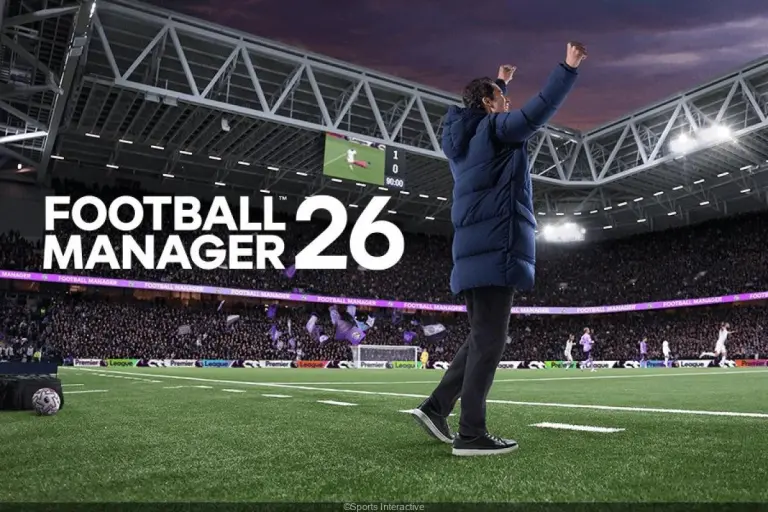
| The FIFAe Club World Cup is established on the reference football simulation. |
| Clubs will be represented by managers specialized in video games in competitive e-sport. |
| Performance relies on tactics, data, and detail management. |
| A new economic ecosystem opens up to leagues, brands, and media. |
In the digital world of football, a seismic shock has occurred. FIFAe sets up the World Cup of clubs on Football Manager, closing a parenthesis and opening an era where strategy takes precedence. This triumphant return of virtual management in esports is part of a broader shift, initiated by the diversification of competitions across several titles.
The shift was initiated by a double movement. On one side, the end of the historic partnership with EA reshuffled the cards. On the other, FIFA multiplied bridges with Konami for eFootball, while partnering with Sports Interactive to institutionalize tactical management as a major discipline.
This turn is based on concrete milestones. In 2024, a FIFAe World Cup on FM24 named a champion of virtual tactics, while creators like Arkunir or Joel shone on the French scene. Now, the clubs edition promises an unprecedented show, with managers defending badge and game philosophy.
Beyond the format, the issue is cultural. The football simulation moves from couch commentary to the official arena, where decisions in three clicks can write the fate of a competition. The credibility of virtual management will hinge on the strictness of rules and the quality of transmissions.
The triumphant return of Football Manager esports: context, disruptions, and FIFAe opportunities
This turn is explained by a conjunction of strategic factors. FIFA has committed to a strong repositioning, internalizing the governance of its esports circuits and betting on the complementarity of titles. Thus, eFootball embodies the moment of execution on the field, while Football Manager enhances tactical depth and data science. Two axes, one unique ambition: to give back competitive e-sport its diversity.
Historically, the competitive scene often favored technical skill. However, the audience has shown a growing appetite for behind-the-scenes: scouting, game plan, human management. The decision to launch the FIFAe Club World Cup on a video game management title is based on this expectation. A massive community already follows the simulation, sharing careers on Twitch and offering tactical analyses that rival TV consultants.
The pivot was fueled by noteworthy announcements. Media confirmed a FIFAe World Cup on FM24 in 2024, demonstrating technical feasibility and public interest. Then, the horizon expanded: the officialization of a clubs competition marks the durable establishment of a new pillar. Above all, the promise of an international format clarifies the roadmap for leagues and sponsors.
To illustrate the impacts, the example of a fictional club, US Méridiem, is telling. After betting on a manager-analyst duo from the first qualifiers, the structure doubled its social media audience and attracted a regional partner. Consequently, its pro team integrated the data dimension into its sessions, creating coherence between real and virtual.
Another disruption plays out in the pedagogy of the game. Viewers learn why pressing breaks or repairs, what a double pivot changes in progression, and how a long throw becomes a lever of expected threat. By ripple effect, the discipline strengthens the overall understanding of football. This educational benefit serves both FIFA and academies.
Finally, the French dynamic deserves a sidebar. The eBleus relaunched a multi-game project with popular figures, and the ripple effect is already observed in pro clubs. Tomorrow, performance centers will integrate a virtual test bench to try scenarios before the weekend. The image concludes the shift: strategy becomes spectacle.
Why strategy attracts as much today as technical skill
Digital technology has accelerated the spread of analytical thinking. Moreover, the rise of expected goals and pressing models has normalized data use. In such a context, Football Manager serves as a living laboratory. Because it simplifies without betraying, it allows the audience to “see” the causality between plan and result. The World Cup clubs version relies on this lever.
Ultimately, the FIFAe bet reconciles consultation and action. A demanding audience expects coherence, clear rules, and strong narratives. That is exactly what this triumphant return promises.
Announced format of the FIFAe Club World Cup on Football Manager: selection, phases, and refereeing
The competition is based on a simple logic: the best clubs in the world will be represented by managers specialized in football simulation. According to the information shared, access will be through territorial and partnership qualifiers, to ensure a diversity of styles. Thus, historic structures will coexist with ambitious academies and entities from the streaming ecosystem.
Concretely, the structure should organize a group stage and a final knockout bracket. This combination protects sporting fairness, as it smooths out the variance of a single match, while preserving the drama of do-or-die clashes. Above all, the format opens space for careful preparation, the heart of the discipline on Football Manager.
A crucial question concerns multiplayer representation. Several clubs plan a manager-analyst duo, with a third role dedicated to tactical draft phases and patch monitoring. This trio answers a need: redistribute cognitive load in real time to exploit adjustment windows. Furthermore, competitive refereeing will decide on intervention limits during the simulated match.
The calendar follows the logic of the FIFAe ecosystem, with dedicated windows and international broadcasts. To avoid fatigue, rest periods will be interspersed between series. As a result, teams will have to plan microcycles: scouting on Monday, scrims on Tuesday-Wednesday, set-pieces on Thursday, mental review on Friday. Each block will serve a specific intention.
The variety of squad rules will also create differences. Some clubs will bet on versatile profiles, capable of preparing multiple models (4-3-3 pressing, 3-2-5 possession, 4-4-2 transition). Others will go for hyperspecialization, with a “set-piece architect” dominating low-intensity moments. The important thing will remain the clarity of the overall plan.
To bring this framework to life, the journey of a fictional structure, Northbridge City, illuminates the requirements. After a failed first window, the team changed its method: more profiles, fewer themes, one script per opponent. Then, it strengthened its pre-match process: checklist, substitution scenarios, and adaptation to the simulator pacing. Progress followed.
Refereeing, fair-play, and technical standardization
Credibility will come through a robust regulatory layer. Thus, standardization of databases, setting simulation speeds and pause rules, or neutralizing reproducible bugs are mandatory. A team of specialized officials will support head referees, with a clear protocol in case of incident. This rigor protects sporting value.
Streaming rights constitute another structural point. Clubs will seek to co-stream matches, while central production will maintain an international feed. Consequently, fans will be able to follow both the macro narrative and the micro choices of the staff. This dual level fosters engagement.
The ramp-up phase will create regular appointments. National calendars will include windows for selections and virtual training camps. At the end of the chain, the FIFAe clubs World Cup will become the epicenter, with expected transmedia coverage and short pedagogical formats.
Tactics, data, and meta: winning in competitive e-sport on Football Manager
On the football simulation, the advantage comes from stacking small margins. Thus, understanding mechanisms (creative freedom, press triggers, block height) feeds robust plans. Then, preparation by opponent adjusts half-space coverage, ball-side density, and transition tempo. Each slider must serve a simple narrative framework.
The staff models performance. A video analyst compiles key sequences, a set-piece specialist manages the latent threat, a mental coach stabilizes rhythm. Moreover, a “patch scout” anticipates AI changes and tests engine limits. The team works in short loops to verify that intent survives the simulated match.
Virtual recruitment makes the difference. On Football Manager, multi-criteria filtering reduces uncertainty: hidden attributes, learning profile, adaptability. Then, a minutes model assigns roles and prevents frustration, often destructive to cohesion. Ultimately, emotional stability protects the performance slope in tournaments.
Set-pieces remain the most underexploited source. A well-scripted short corner can generate five clear chances in two matches. However, repetition kills surprise, hence the importance of a package of alternating routines. In tournaments, the winning team varies trajectory, screen, and landing zone to escape opponent scouting.
Management of low-intensity moments must be thought out. A team that slows the game at the right moment protects its lead from an xG swing. Thus, lowering the block, reducing pressing, and using the goalkeeper as a third center-back serve as a tactical airbag. Conversely, a targeted stimulus revives intensity when inertia sets in.
Finally, live communication is the glue. A clear call, a short instruction, and a pause protocol avoid confusion. The staff-player-analyst trio must share the same compass: what sequence do we want to produce in the next five simulated minutes?
Toolbox of a performing staff
- Master plan: three non-negotiable principles guiding every adjustment.
- Counter-scout: one sheet per opponent with two offensive triggers and a defensive net.
- Set-piece routines: four alternating patterns for corners and two for wide free kicks.
- Minutes management: a role/trust matrix to anticipate rotations and morale.
- Patch notes: an impact journal linking AI changes and performance metrics.
This method gains solidity if it relies on indicators. A minimal dashboard includes xG for and against, center danger, entries ratio in the box, and turnover volume in zone 2. Then, the team links these numbers to clips to anchor diagnosis. Data tells, video convinces.
Finally, a human red thread strengthens cohesion. Let’s take Lina Benali, a fictional manager with an analytical profile, paired with analyst Diego Martins. The duo built a common language: one instruction per critical minute, never more. Result: their teams don’t panic. Simplicity works when pressure rises.
Clubs, brands, and rights: the economy of a new FIFAe ecosystem on Football Manager
The shift to Football Manager opens a different market from competitive arcade. First, value concentrates on tactical storytelling and expertise, attracting partners with strong affinity for data, consulting, and training. Then, match temporality, slower but denser, favors editorial integrations rather than raw display.
For a sponsor, the promise holds in three words: precision, pedagogy, loyalty. An analytical software brand finds a natural activation in a co-branded “analytics room”, with live diagnostics and short debriefings. Moreover, a partner university can link a performance management certificate to a clubs team, creating a bridge between studies and practice.
Media rights must respect a dual circuit. Central production guarantees international editorial, while clubs co-broadcast local angles. Thus, a French-speaking club will offer a whiteboard beside the global feed. This arrangement increases value per viewer and nurtures fine monetization (expert subscriptions, masterclasses, premium VOD).
Merchandising also changes face. Rather than only collector jerseys, demand turns to playbooks, routine sheets, or training packs. A “tactical season pass” can offer weekly analyses and interactive sessions. Above all, this offer stays relevant year-round, beyond match days.
On the pro club side, vertical integration is key. An e-sport unit can test pre-match scenarios and share insights with the field staff. Indeed, some ideas will migrate from virtual to real: exploiting aerial mismatches, varying build-up exits, or adjusting width in the midfield block. The flow works both ways.
A fictional case illustrates potential. Lyon Atlas, an imagined but realistic club, structured a tripartite partnership: data publisher, business school, regional broadcaster. Result, the team tripled average watch time on its live streams and converted 7% of viewers into tactical session subscribers. This rate exceeds purely show format averages.
Risks to anticipate and safeguards
Dependency on the meta can weaken a competition. To counter this effect, paced patches and a variety of victory objectives make any single scheme obsolete. Then, transparency of rules avoids disputes. Finally, accessibility must remain a worksite: short explanations integrated in live reduce entry barriers for new audiences.
At the macro scale, the relationship between FIFAe, publishers, and clubs benefits from being contractualized over the long term. This visibility secures investments and encourages talent upskilling. The ecosystem can then rely on a readable calendar, a flow of innovations, and consistent storytelling season after season.
At the end of this recomposition, an obvious fact emerges. The economy of strategy has found its global stage. The World Cup of clubs on Football Manager captures a demanding audience, ready to reward quality of content. This is where differentiation will be played.
Culture, training, and community: how the FIFAe Club World Cup transforms practice
The discipline changes individual trajectories. A high schooler passionate about data can now aim for an analyst role within a virtual staff, then move towards a training center. Thus, the pathway widens beyond the player position. Federations already organize bootcamps blending soft skills, communication, and tactical understanding.
The French scene illustrates this movement. With the spotlight on popular figures during the FIFAe World Cup on FM24, the culture-internet and competition bridge gained credibility. Moreover, pedagogical streams grew, making concepts digestible: directed pressing, width manipulation, rational corridor occupations.
On the academy side, a precise progression framework emerges. First step, reading spaces and the ability to translate a need into an instruction. Then, iteration: test fast, observe, correct. Finally, mental robustness: stay calm when variance tightens the score. This progression is assessed, coached, and celebrated.
Fair-play values must infuse from the start. A clear charter frames communication, pause use, and respect of opponents. Moreover, prevention of toxic behaviors remains a priority. A well-trained staff knows how to defuse tensions and refocus discussion on game intent.
On the identity level, the FIFAe clubs World Cup opens accessible stories. Supporters find familiar codes: press conferences, match sheets, tactical workshops. At the same time, the scene keeps its internet DNA, made of short formats, memes, and creativity. The balance fuels growth.
Let’s resume the main thread. Lina Benali and Diego Martins, after a season of scrims, launched an open class on Wednesday evening. The sessions alternate theory and practice, with cases from their meetings. Viewers learn to formulate hypotheses, choose indicators, and decide when two leads contradict. The method exports.
Access, diversity, and health of performance
A sustainable ecosystem must remain open. Thus, campus leagues, female and mixed circuits, and regional programs feed the talent pool. Then, health support counts: ergonomics, breaks, sleep, and stress management. A staff that breathes works better. This work hygiene shows on screen.
Finally, local communities have a role. Amateur clubs, community centers, equipped libraries: each place can become a crossroads for tactical initiation. Proximity creates loyalty, and loyalty, the future. The football simulation proves that a video game can train, entertain, and unite, all at once.
Quick reference on the Football Manager x FIFAe scene
To clarify key facts, here is a concise memo.
| Key point |
|---|
| Launch: official establishment of the FIFAe Club World Cup on Football Manager. |
| Positioning: discipline focused on strategy, data, and preparation. |
| Audience: fans of football, analytics, and educational content. |
| Opportunities: educational partnerships, premium content, local co-broadcasting. |
| Requirements: technical standardization, clear refereeing, editorial accessibility. |
What differentiates the FIFAe Clubs on Football Manager from arcade competitions?
The discipline values strategy, data, and preparation rather than gestural execution. Tactical decisions, squad management, and set-piece routines become the main performance levers.
How do clubs select their managers for the competition?
Clubs recruit duos or trios composed of a head manager, an analyst, and sometimes a patch specialist. Trials rely on scrims, tactical portfolios, and measurable progress indicators.
What is the interest for sponsors to invest in this ecosystem?
Pedagogical storytelling and analytical formats allow high-value integrations, with a loyal and qualified audience. Data, education, and tech brands find a natural expression ground.
Are simulation rules standardized to guarantee fairness?
Yes, the competition relies on uniform parameters, a refereeing protocol, and technical supervision that frame pauses, simulation speed, and database use.
Can matches be followed on multiple channels?
Central production broadcasts an international feed, while local co-broadcasts offer tactical or community angles. This model reaches both the general public and enthusiasts.