
| Key takeaways |
|---|
| The real transfer market is much more complex than in Football Manager |
| FM’s database is credible and used by professionals for scouting |
| FM’s tactical engine teaches principles, but lacks pedagogy and assimilation time |
| Media interactions remain the weakest point of the simulation compared to reality |
| Real team management involves human stakes impossible to reduce to gauges |
| The integration of women’s football into FM26 strengthens the data depth |
| FM can inspire coaching careers but does not replace field experience |
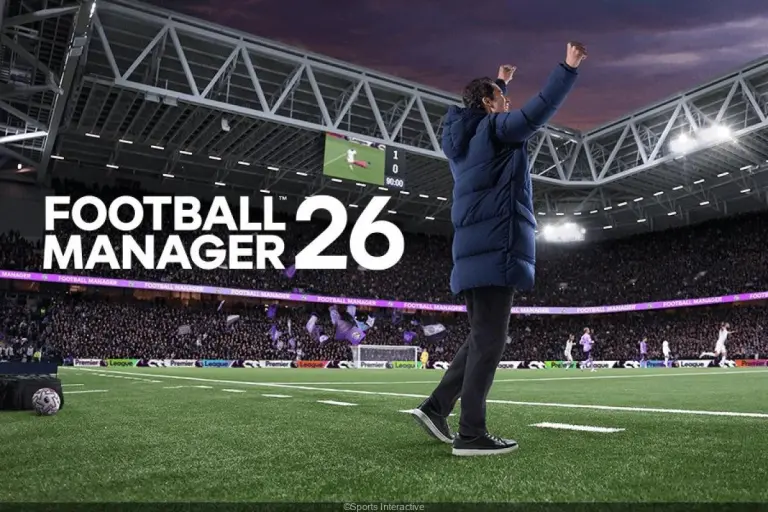
The debate about the reality of Football Manager is not dying down, especially when top-level coaches get involved. Recently, a Spurs coach reminded that the transfer window is nothing like a dropdown menu, putting fantasy and practice on an equal footing. This contrast fuels a legitimate interest: how far does the simulation go, and where does it stop in the face of the chaos of real football? The professional opinions converge on some points but diverge on others, drawing a shifting boundary between model and living world.
Because the video game has gained precision while leaving aside human nuances. Thus, the tool acts as a compass, without ever becoming the territory. Coaches like André Villas-Boas have praised the relevance of the database, while others highlight the social limits of team management. Between numbers, tactics and strategy, one question remains: in 2026, what real link does FM maintain with the touchline, the press room, and the locker room?
Transfers in Football Manager vs reality: what coaches reveal
On Football Manager, an offer is sent in three clicks, and an agent replies in a dialogue bubble. In reality, the market resembles a labyrinth where agents, executives, owners, and lawyers intersect. A Premier League coach summed up the gap: the transfer window is not FM, and it would be simpler if it were. This clarification is necessary, especially when supporters’ patience clashes with cases derailing over a detail.
In practice, a negotiation resembles constrained poker. Dusan Momirovic, who played at Partizan, describes it as a game of influence and connections. According to him, FM offers an excellent framework for analyzing targets, but cannot teach building trust or bargaining subtleties. These dimensions do not fit into a “patience” gauge or a “loyalty” slider.
From click to setback: the frictions FM still smooths out
The game offers a stable budget, clear expectations, and reasonable deadlines. Yet, reality introduces unforeseen events: an executive changes their mind, an owner imposes a target, an agent demands unprecedented bonuses. Moreover, current rules (post-Brexit work permits, squad cost ratios, agent regulation) weigh on pace and feasibility. A case may be perfect sporting-wise but untenable legally or politically.
Let’s consider a fictional case. FC Hexa, a top-tier club, targets a explosive striker. Reports are positive, the price is within range. Suddenly, a rival club inserts an aggressive sell-on clause, and the agent demands a commission subject to new rules. Then, a coaching change at the seller’s side reshuffles internal hierarchy. None of this appears onscreen with the same density, even though FM26 has refined interactions with agents.
What FM models well… and less well
The game excels in logically ordering the steps. It structures thinking: team needs, profile, budget, negotiation, finalization. Thus, it helps staff not to forget anything. However, opinion turnarounds and meeting drama escape the mechanics. A chairman can cancel in one sentence what three weeks of alignment had consolidated.
To grasp the gap, here is a short list of obstacles often invisible in FM but common “IRL”:
- Political arbitrations between sporting director and owner.
- Scheduling conflicts with an agent representing two players sought by rival clubs.
- Hidden clauses in a previous contract that alter the final cost.
- Media timing forcing premature decisions.
- Changing regulations that invalidate a financial structure.
Underlying it all, a consensus emerges among coaches: FM frames thought, but real life sets the tempo. This tension serves as a bridge to the scouting section, where the game is often praised.
This perspective highlights the role of digital scouting, often halfway between tool and oracle.
Recruitment and FM database: when simulation helps reality
Professional opinions are clear: the Football Manager database remains a reference. Renowned technicians, like André Villas-Boas, admit consulting it to refine a shortlist. Moreover, partner analysts explain that data exchange between FM and performance platforms works both ways. Twice a year, attribute reviews circulate, and precision improves.
This trust does not come from nowhere. Volunteer and professional networks collect thousands of observations, then cross-reference them with event metrics. Players themselves monitor their ratings and question their “acceleration” or their “leaping ability.” Internal competition becomes a pedagogical spring. Some challenge each other in training to check if the value is fair.
FM26 and the momentum of women’s football
The integration of women’s football into FM26 required new mapping. Entire leagues were explored, with granularity missing in the sector. Practically, clubs inherited a structured attribute reference system, useful for standardizing evaluation. Thus, the ecosystem gained a common foundation to compare profiles without erasing local contexts.
Of course, data is not a sentence. It serves as a starting point, not a verdict. A cautious club acts in three steps: hypothesis from FM database, verification by video, and gathering extra-sporting information. This triangle reduces the risk of “playing cards” with incomplete numbers.
A user guide for rushed clubs
To use the tool without getting lost, a checklist is essential:
- Define strategy: target profile and maximum budget.
- Filter by data: key attributes linked to style.
- Validate by context: age, minutes played, injuries.
- Confirm by human eye: viewing and interviews.
- Anticipate adaptation: language, culture, role in the group.
Used this way, FM becomes a decision accelerator. However, it does not replace intuition nor intimate knowledge of a locker room. Data calibrates, it does not ordain.
At FC Hexa, the data staff uses FM to widen the radar. Then, the recruitment team refines priorities via video analysis. Finally, the coach tests tactical compatibility on several scenarios. This “data to field” path illustrates the possible symbiosis between video game and profession.
This logical bridge leads to the touchline, where strategy and tactics must become collective behaviors, not just lines on a screen.
Tactical engine, strategy and training: when plan meets pitch
Football Manager’s simulation engine has a major merit: it teaches principles. Roles, zones, balance relations form a common language. Thus, young technicians practice the “what” and the “why.” Will Still has already explained that the game sparked a tactical curiosity in him, which became a demanding practice.
However, the “how” is earned on the pitch. Implementing a system is not decreed. It requires repetitions, feedback, and micro-adjustments. A higher defensive line in FM activates with one click. On grass, it demands work on distances, timing, and mental alignment between four to five players.
Learning, much more than a scheme
At FC Hexa, a 4-3-3 pressing unfolds in sequences. First, the coordinated advance of the winger and the number eight. Then, the trigger on the sideways pass. Finally, the switch of the opposite fullback. Each step lasts, corrects, then automatizes. This latency is FM’s big absence, even if “tactical familiarity” tries to mimic it.
Moreover, player availability differs from the model. Fatigue, emotions, and imperfect communication break the purity of the plan. A match under pressure does not look like a test in a controlled environment. Hence the importance of team management: managing bodies, preserving minds, and pacing ambition.
FM as an ideas laboratory
The game retains immense value for comparing intentions. Do we want a pivot or a false nine? Do we prefer a three-man build-up or an asymmetrical double six? These dilemmas find a testing ground without consequences. Then, reality decides, with its form and adversity surprises.
To measure success, a simple rule helps: the plan is only worth if it survives pressure. In FM, pressure exists but remains abstract. On the bench, a goal conceded at the wrong moment modifies the group chemistry. The coach must choose between staying the course or shortening suffering by an adjustment.
Coaches repeat it: FM develops clarity of ideas. However, only the pitch reveals the ability to embody them. This observation opens another chapter, that of media noise.
The public stage shapes the perception of tactical choices. And there, the gap between FM and real life becomes clear.
Media, pressure and narratives: the Achilles’ heel of the simulation
Press conferences in FM end up repeating. Questions circle, answers hold to a few options. In reality, a full room, a tricky question, and a sidelong look can trigger a crisis. A coach’s word functions within a club. It pacifies a locker room or fuels a tense week.
Impossible, for now, to replay a “Mourinho-style” outburst in the video game. A touch of irony, a controlled barb, or a public sidelining are impactful decisions. They shape a narrative exceeding the green rectangle. FM sometimes records a group reaction but without a credible causal chain.
Communication, this invisible tactic
In modern staffs, a communications officer prepares key messages. Then, the coach adapts the tone to the moment’s mood. A bitter 0-1 does not call for the same semantics as an encouraging draw. Furthermore, managing social networks and leaks requires vigilance. This layer is still missing from the simulation.
Yet the solution is not out of reach. A more contextual conversational engine would suffice. Themes should adapt to the season’s storyline with varied outcomes. Above all, the relational history with journalists should count, on par with the internal hierarchy of the locker room.
Credible evolution paths
In 2026, FM26 has progressed on conference atmosphere, but density remains limited. Free interactions connected to events would reinforce immersion. An ambiguous remark could reassure a senior player and antagonize a star. Silence could calm a fire. These nuances build crisis management, hence overall strategy.
Whether we like it or not, media narrative weighs on the pitch. It colors analysis of tactics and team management. While waiting for better, FM keeps the essential: a framework, but not the shockwave.
This limit sheds light on the final section: the human factor. Because a game can only approach the complexity of relationships.
Locker room, personalities and psychology: the other side of team management
The “morale” gauge in FM condenses multiple realities. A player can smile at training and collapse at home. Dusan Momirovic reminded us: management, in reality, requires patience, modesty, and sometimes firmness. These skills do not fit a tactics scheme. They are acquired over seasons and difficult discussions.
In FM, a fine calms chronic lateness. On the pitch, the approach often starts with listening. Then come sanctions, if needed. Between the two, one must distinguish tantrum from distress. Here, the video game reaches its limit: it doesn’t know everything about the family context or rumor weight.
Case study: when the group matters most
At FC Hexa, a leader loses his place after a badly managed injury comeback. The ego suffers, the agent mobilizes. The staff organizes a three-way interview: coach, player, sporting director. They redefine the role, set a clear six-week objective. Then the player regains meaning, and the group tightens. FM offers dialogue options, but word finesse and body language often decide the outcome.
This finesse also changes with squad diversity, notably since the rise of women’s football in FM26. Integration factors vary, leadership markers too. In a club, captaincy is won as much by example as by public expression. An “influence” rated 17 does not tell the whole story of a unifying captain.
What simulation could better translate
A more credible personal event system would enrich the experience. It’s not about dramatizing for spectacle. The goal would be to introduce micro-dynamics: birth, moving house, studies, career change, social commitment. These elements influence energy and identity of a locker room. Team management is a matter of bonds, not only sliders.
In the end, coaches agree on a simple message. FM teaches you to think like a coach, not to be a coach. This nuance does not take away pleasure or usefulness of the game. It only reminds that football breathes through people.
This understanding closes the journey: from transfers to data, tactics to media, the human remains the keystone, on screen as on the bench.
Quick reference: realities vs FM mechanics
To fix ideas, here is a practical memo summarizing gaps without caricature. It avoids confusion between what FM structures and what the pitch imposes. It serves as a support to adapt game usage to staff needs.
- Transfers: clear framework in FM; political and legal unpredictables IRL.
- Scouting: solid base in FM; video and human validation IRL.
- Tactics: coherent intentions in FM; pedagogy and time IRL.
- Media: limited interactions in FM; narratives and crises IRL.
- Locker room: useful morale in FM; personalities and stories IRL.
These markers show a common thread: use Football Manager as an options simulator, then let reality guide decisions.
Is Football Manager really used by professional clubs?
Yes. Coaches and analysts cite the FM database as a support point to widen the recruitment radar. However, validation by video, interviews, and context remains essential.
Why are transfers easier in FM than in reality?
The game simplifies negotiation by reducing it to clear steps. In real life, agents, executives, and regulations create frictions, making each case unique and sometimes unpredictable.
Can FM’s tactical engine help a young coach?
Yes, it structures thinking around roles, zones, and principles. However, training, group adhesion and emotion management are skills only developed on the pitch.
Do media interactions in FM have significant impact?
They exist but remain limited. In reality, communication builds narratives that influence perception of choices and pressure around the team, with stronger chain effects.
Has FM26 improved the representation of women’s football?
Yes. The integration required thorough data collection and provided a useful common reference. This legitimizes the experience while highlighting club-specific contexts.