
| Key points to remember |
|---|
| The return of “pass maps” integrated into the Data Hub, the match interface, and in the advice of the Dugout. |
| Version 26.1.3 improves the match engine, stability, and tactical coherence. |
| Fixes target substitutes shown out of order, VAR, and the sequence of events. |
| The logic of transfers has been revised, notably for Saudi Arabia and the MLS. |
| New interface options clarify analysis, live scores, and role visualization. |
| Adjustments also affect women’s football, the IGE, and Hotseat crashes. |
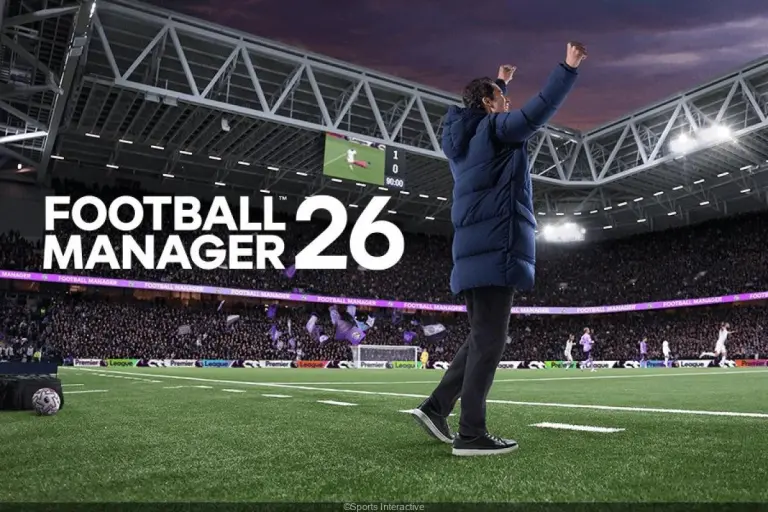
Football Manager 26 receives a solid update that puts data back at the heart of decision-making. Above all, the most requested feature, the “pass maps”, makes a highly anticipated return. Players had pointed out a loss of tactical intuition since the November 2025 launch. Now, ball circulation can be observed at a glance, and the impact on strategy is obvious. Early feedback confirms this trend, with marked enthusiasm on forums and social media. Several voices praise a fix that “changes the game” during analysis phases.
Beyond pass maps, patch 26.1.3 refines the management game on several fronts. The match engine tightens against formations without a striker. The interface gains clarity, and the most annoying bugs disappear. Finally, recruitment logic readdresses some offers that were too low, particularly from Saudi clubs. Overall, a clear direction emerges: a more readable, reliable, and above all, a more faithful experience to real football.
Football Manager 26: the return of pass maps changes tactical analysis
The reintegration of pass maps into Football Manager 26 responds to continuous demand from fans. At every sequence, the team’s structure becomes understandable at a glance. You immediately see where triangles form and where progression stalls. For a management game, this level of readability transforms the approach to virtual coaching.
Patch 26.1.3 places these views at the center of the Data Hub and the formation carousel. The coach can track key link-ups between fullbacks and midfielders. In practice, the tool reveals preferred circuits. Consequently, strategy becomes clearer without relying on opaque tables.
Why pass maps had become essential
Since the cancellation of FM25, expectations rose. Graphical data helps decide on details that cost points. Without them, intuition blurs, notably to identify a “distribution hub.” Thus, the absence of this feature had frustrated part of the audience.
Examples abound. A team builds on the left but loses advantage in the final third: the map shows a broken lane between winger and fullback. By reinforcing interior support, circulation becomes fluid again. This type of quick adjustment remains crucial during a congested run.
Case study: Lyon Academy against a 5-3-2 block
In a community save, Lyon Academy challenges a compact 5-3-2. The pass map shows an excess of sterile lateral exchanges. However, the pivot stands out between the lines. By creating a relay axis via the box-to-box midfielder, density shifts and the team finds cleaner switches of play.
This simple tweak, visible on the connection heatline, is sometimes enough. The opposing pressing splits and the attack finds a second wind. Virtual teachers talk about a “rebalancing through visual evidence.” The impact is tangible from the next match.
Where to find them in the interface and how to use them
Pass maps appear in the “Last match” section of the Data Hub, but also at halftime and full-time whistle. They also sneak into the Dugout as suggestions. During matches, a glance is enough to see if the winger remains isolated. From there, a targeted instruction can reverse momentum.
To act quickly, certain workflows are necessary. First, check the density of links in the central duo. Then, scrutinize the fullback-winger connection on the strong side. Finally, adjust the playmaker’s role if he attracts too much pressure. This triptych guarantees cold decisions, even under pressure.
Ultimately, this return is not nostalgia. It reinstates a compass missing from decision-making. Above all, it aligns the tool with current performance analysis standards.
Update 26.1.3: sharpened match engine and meta questioned
Version 26.1.3 affects several parameters of the match engine. Defenses better handle systems without a striker, which are harder to “exploit.” Back-to-goal passes and dropping deeper receive smarter opposition. By extension, overall strategy gains variety.
Additionally, weather is less intrusive. The frequency of rain decreases across all leagues. Technical sequences breathe, and reading rebounds improves. Animations follow, with various targeted fixes.
Pressing, marking, and key decisions
Lateral pressing reacts better to triggers. Midfielders mark runs from behind more accurately. In OOP phases, wide midfielders keep a coherent height in an aggressive 4-4-2. Result: fewer free spaces between lines.
Goalkeepers better manage six-yard boxes. Dribblers can make 180° turns instead of getting trapped. This nuance avoids stupid losses near the line. The choice-technical sequence gains credibility.
Consequences on buildup and AI substitutions
AI coaches adapt substitutions more finely. Entries occur at more logical moments, according to fatigue and momentum. The impression of “automatic” adjustments decreases. Each match tells a more believable story.
Lateral play improves with strict-width wingers. Wide attacking midfielders hold their position off the ball, stabilizing the flanks. Consequently, crosses come from more relevant zones. Receiving zones gain density.
Field example: countering an ambidextrous 3-4-3
Against a 3-4-3 stretching both sides, the new wide pressing better closes interior angles. Wing-backs must then play faster, thus riskier. The human coach can trap build-up via central baiting. The opponent loses patience.
This update reduces a too comfortable “meta.” Teams relying on axial overload see their output drop. Early outlets on the wing or early switches must be reintroduced. The game breathes more.
In the end, tactical progress seems measured and useful. The engine doesn’t rush habits but fixes several blind spots. Matches appear more logical, especially against extreme formations.
Revamped interface: Data Hub, live scores, and role readability
The interface benefits from a series of very concrete additions. Pass maps show up in halftime and full-time reports. They also appear as advice in the Dugout. A glance is enough to validate a trend. This centralization speeds up decision-making.
New icons accompany “shouts,” helping memorize their effects. Latest scores and live standings slip into an accessible tile. Navigation during matches gains pace. Essential information remains visible without overwhelming the screen.
Fixed annoyances that change routines
The bug showing substitutes out of order is fixed. Organization fans, by position, find their logic again. VAR legends no longer overlay replays. Finally, trophy celebrations trigger better.
Set-piece screens no longer show low-resolution images. B-Teams correctly display level and potential. Dynamic hierarchy sorting works as intended. All this reinforces confidence in the tool.
Data Hub and post-match report: what to read first
The “Last match” pass map deserves systematic checking. It instantly reveals a corridor imbalance. The post-match report now shows penalties scored, which closes the match narrative. This narrative coherence serves internal pedagogy.
A new “formations” block joins the match report. The opposing alignment is identified over the match. Tactical transitions are spotted without rewinding. The bench staff and analysts gain autonomy.
Practical checklist for reliable reading
- Compare the pass map with the recovery zones.
- Monitor the fullback-winger connection on the strong side.
- Check the influence of the playmaker under pressure.
- Validate active “shouts” via their dedicated icons.
- Recheck live standings if a draw is tactically sufficient.
This grid makes reading reproducible and fast. It also sets milestones for next-day debriefs. In a busy schedule, this method saves hours.
In sum, the new interface better connects analysis to action. It limits friction and refocuses attention on the right variables.
Transfers and AI: adjusted offers, MLS rules respected, and women’s football refined
The update fixes annoying behaviors on the market. Saudi clubs no longer “lowball” key players in loops. Offers become more consistent with player status. Negotiations thus gain credibility.
The recruitment strategy also benefits from changes around the MLS. The “Ask Assistant” button no longer breaks the salary cap. Clubs appoint coaches faster, fluidifying careers. The overall save narration is polished.
Precise adjustments in career tracking and press
Media articles now mention the return of an ex-player to the club, rather than presenting him as a random signing. Biographies are cleaned of errors. Fees negotiated via intermediaries display correctly. Transparency improves, reassuring users.
On the women’s football side, several sliders move. AI injuries are readjusted. Australian league salaries gain realism. The NWSL no longer grants sponsorships with relegation clauses, which made no sense.
Case study: a star winger courted by Riyadh
Before version 26.1.3, the winger received approaches far below his value. The club refused, and the offer returned unchanged. Now, the counter-proposal triggers a credible response. A meeting of minds can emerge, or the deal stops abruptly.
This credibility also weighs on the locker room. A player sees his value recognized. Managing expectations becomes easier. Unjustified tensions decrease.
Useful checks during transfer windows
It’s advisable to check transfer history, now more readable. Appearances distinguish starts and substitutions. “Untransferable” statuses no longer show absurd amounts. Sporting directors can thus work without bias.
In short, the market gains seriousness. Discussions resemble more a real club corridor. Choices are made with clearer signals.
Usage advice: workflow, security, and fast wins after the update
Taking advantage of this update requires a clear routine. A three-stage cycle often succeeds: quick data review, targeted adjustment, test in a key match. All wrapped up in a report shared with virtual staff. This ritual sets an execution culture.
With increased stability, saving becomes more peaceful. Hotseat crashes have received fixes. Nevertheless, double backup rotation remains prudent. In long seasons, this hygiene makes the difference.
Typical workflow for a Saturday with three matches
In the morning, quick analysis of the Data Hub over the last 5 matches. Next, focus on the pass map from the last win to detect a pattern. Then, prepare “shouts” with new icons to automate reminders.
In the afternoon, test a micro-adjustment: winger width or the role of the number 8. At halftime, check the most active connections. At the end, archive the map and validate lessons for the next match.
Express lever: move from a clogged corridor to a productive flank
When one side saturates, the pass map shouts it. Add interior support or a half-space occupied by an off-center 10. Sometimes, an inverted fullback opens the diagonal switch. Two clicks, and the opponent’s block pivots.
Over time, this routine saves critical points. It also makes progression more readable for the staff. Everyone knows what moved and why. Tracking strengthens.
In-game editor and micro-organization tweaks
The IGE gets useful touches: recolored hidden columns, multiple affiliations possible, warnings upon taking positions. These safeguards limit slip-ups. Cash flow no longer derails during financial edits.
For reserves and youth, coach assignments are hand-adjusted. Skill progression becomes finer. Academies directly benefit from this control.
Finally, press message coherence improves. Delegated conferences return a clear summary. Objectives prior to appointment no longer trap the dashboard. Sporting leadership remains aligned.
Practically, the post-patch rewards sober routines and quick readings. With pass maps, data becomes an immediate ally again. The common thread is simple: decide quickly and prove it with images.
Useful shortcuts and additional resources
Above all, document your workflow to avoid scattering focus. Then, keep a list of typical scenarios to speed reaction. Finally, consult official resources to complete learning. Patch notes remain accessible and up-to-date.
Official resource: Football Manager Website. Targeted video searches also help visualize new features. The community ecosystem offers detailed analyses, often actionable the same evening.
Where are the pass maps found after update 26.1.3?
They are visible in the Data Hub (Last match), in the match formation carousel, as well as at halftime and at full-time whistle. Contextual advice also uses them in the Dugout.
What major match engine changes influence strategy?
Defenses better handle systems without striker, wide pressing reacts better, midfielders more accurately mark deep runs, and goalkeepers decide better in the six-yard box. Dribblers now avoid dead ends thanks to contextual turns.
Have transfer offers from Saudi clubs been corrected?
Yes. Saudi Pro League clubs no longer multiply largely undervalued offers. Counter-proposals receive more coherent responses, which cleans up negotiations.
Which interface annoyances have been resolved?
Substitutes are no longer displayed out of order, VAR legends no longer cover replays, low-resolution images on set pieces are fixed, and live scores integrate into a dedicated tile with live standings.
How to quickly exploit pass maps during a tight match?
Check the fullback-winger connection on the strong side, identify the most active central relay, then adjust width and role of the pressured playmaker. At halftime, validate the effect and adjust if needed.