
| Main Highlights |
|---|
| Official release : November 4, 2025 (Nintendo Switch Touch : December 4) |
| Platforms : PC/Mac, PlayStation 5, Xbox Series X|S, Mobile via Netflix, Switch (Touch) |
| Game price : €59.99 (Europe) / $59.99 (USA) / £45 (United Kingdom) |
| Women’s football : 14 playable leagues, 11 countries, over 36,000 players and 5,000 staff members |
| FIFA licenses : Men’s and Women’s World Cups officially integrated |
| Engine : Unity, for enhanced animations and interface |
| 2026 Edition : a single ecosystem connecting men’s and women’s careers |
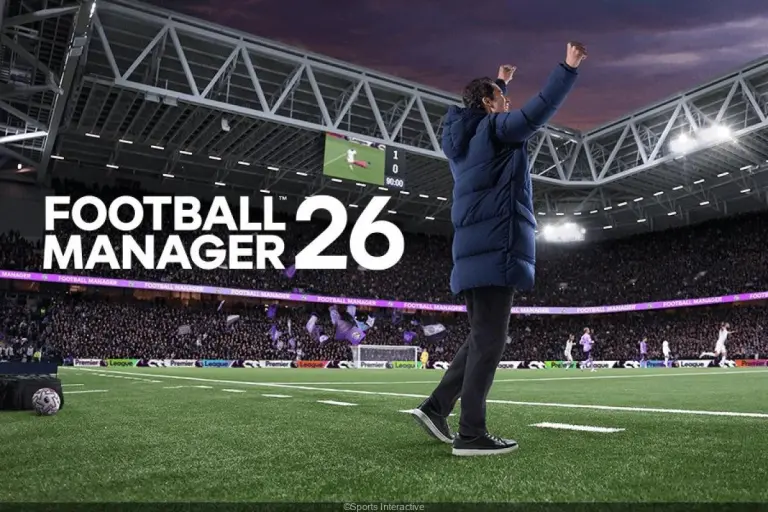
The milestone has been reached. With Football Manager 26, the most influential football simulation video game franchise officially integrates women’s football on an unprecedented scale. This 2026 Edition is based on a new technological foundation, a massive database, and global licenses to bring the virtual closer to reality. The promise is clear: one world, connected careers, and sporting decisions that impact the entire ecosystem. From then on, every structural choice — from training to recruitment strategy — takes on new significance.
This launch is anchored in an official release set for November 4, 2025, with a game price listed at €59.99 in Europe. The experience unfolds on PC/Mac, PS5, Xbox Series X|S, and a Mobile version included with Netflix, while the Switch Touch edition arrived on December 4. To shed light on the novelties, this article dissects the arrival of 14 playable women’s leagues, maps the platforms, details the contributions of the Unity engine, and offers concrete strategies for managing a team in both sectors. As a common thread, a case study illustrates the impact of these novelties on an ambitious and lasting career.
Football Manager 26: Official Integration of Women’s Football and Unprecedented Database
The introduction of women’s football in Football Manager 26 marks a strategic turning point. The studio chose an integrated approach rather than a separate title, to offer a natural continuity between men’s and women’s careers. Practically, users can navigate from one environment to the other without disruption. This philosophy encourages mixed paths, where management skills apply everywhere, and tactical expertise transfers depending on contexts.
Content-wise, the database reaches a rare scale. More than 36,000 players and approximately 5,000 staff members are modeled. Rosters and histories reflect recent dynamics, with varied profiles, distinct potentials, and credible trajectories. Moreover, 14 playable leagues across 11 countries represent the initial expansion axes. Clubs have budgets, infrastructures, and differentiated sporting visions, creating specific challenges depending on the chosen destination.
One World, One Ecosystem
The founding slogan, “one world,” mechanically translates into concrete interactions. Bridges between national teams and club competitions are refined. Thanks to the new FIFA licenses, the men’s and women’s World Cups are added to the calendar, reinforcing the importance of international windows. Managers must then anticipate fatigue, injuries, and federation objectives while maintaining the momentum of the championships.
This coherence also favors the alignment of sports departments. Analyst units, medical staff, and scouting networks pool expertise. Consequently, small organizations get the best value for each euro invested. Large teams optimize anticipation of peak forms. Over time, multi-team strategies become relevant for building a common identity.
Authentic Leagues and Squads
The work done with clubs, players, coaches, and specialized organizations ensures a rare granularity. Technical profiles, versatility, biometric data, and leadership styles enrich reports. Indeed, assistants better identify complementary associations. Style oppositions add a tactical spice, as attacking lines and pressing differ from one championship to another. Over time, squad depth becomes true insurance.
An example helps gauge the impact. Claire Durand, a fictional coach, takes charge of a historic club with a renowned academy. She sets up a flexible 4-3-3, relying on planned rotation around FIFA windows. Quickly, her medical staff reduces absenteeism, and the video analyst isolates weaknesses on set pieces. This precise management offers key insights over the season. As a result, progression is measured as much on the scoreboard as with workload indicators.
Ultimately, the official integration goes beyond the mere “presence” of teams. It settles at the heart of the decision loop to elevate football simulation and legitimize career progression.
Release Date, Platforms, and Game Price: Everything to Know About the Official Launch of FM26
The release date of Football Manager 26 was set for November 4, 2025 on PC/Mac, PS5, and Xbox Series X|S. The Mobile version, included with Netflix, was available at launch. The Nintendo Switch (Touch) version followed on December 4, 2025. This staggered window allowed finalizing optimization for each platform, ensuring a stable and consistent experience.
The game price is set at €59.99 in Europe, $59.99 in the United States, and £45 in the United Kingdom. This positioning reflects the scope of content and investments related to the engine. Moreover, integrating a large network of women’s competitions sustainably enriches the offering. For players prioritizing mobility, Netflix presence facilitates access, provided they accept a leaner format.
Launch Schedule and Versions
The multi-format strategy opens several doors. On computer, the ecosystem of tactical editors and personalized databases retains all its vigor. On consoles, the living room comfort attracts those who want to chain matches with an interface designed for the controller. Finally, the Switch Touch version offers shorter sessions, ideal for experimenting with tactics on the go, then resuming a training cycle later.
A methodological note is necessary. Users planning a long career can split sessions between PC and console via separate saves. This organization avoids overload of a single channel and maintains freshness of decisions. Similarly, the Mobile version provides convenient entry to test a recruitment concept before committing a significant budget on a “main” save.
Which Platform to Choose?
The answer depends on the profile. Micro-management and modding enthusiasts will get maximum benefit from PC/Mac. Players preferring simplified navigation will lean towards PS5 or Series X|S. Fans of short sessions will opt for Switch Touch or the Mobile solution with Netflix. In all cases, the content base remains the same, ensuring a transferable learning curve.
After a blank year due to FM25 cancellation, this rollout clarifies the direction. The 2026 Edition embraces the ambition of a complete game, as readable on a controller as precise on a keyboard. In short, the release window and pricing grid frame a project betting on loyalty and quality.
Major New Features: Unity Engine, FIFA Licenses, and Integrated Media
The shift to Unity shapes the technical DNA of Football Manager 26. The interface gains clarity, transitions are smoother, and animations on the match engine become more readable. Without betraying the series’ soul, the visual overhaul modernizes the experience. Above all, optimization facilitates a denser screen management, with analysis modules loading faster and better structured.
The other cornerstone is the licenses. Thanks to a multi-year agreement with FIFA, the men’s and women’s World Cups are officially integrated. This framework results in coherent international journeys, credible draws, and reinforced selection stakes. The impact is felt from preparation, as workload planning and rotations better refine around international windows.
Smoother Rendering for Football Simulation
On the pitch, ball trajectories are more natural, and synchronization of runs is clearer. Collisions seem cleaner, helping to diagnose offsets and poorly calibrated pressings. In post-match analysis, reception zone mapping and average block height clarify reading. Coaches can then adjust quicker without losing overall logic.
Licenses and Global Competitions
Officially branded final phases add soul. Selections benefit from richer presentation, and federation objectives reflect sporting reality. Consequently, managing egos and statuses intensifies. Coaches must promise careful playing time, as list depths vary according to form and versatility. Clubs face these ups and downs but also find a useful pool for the transfer market.
Enriched Media Ecosystem
The media system welcomes new voices, including integration of a specialized outlet like Her Football Hub. Press conferences gain nuance, and interviews offer more targeted angles. This granularity influences reputation, fan expectations, and management image. Thus, controlled statements encourage stability, especially during fluctuating results.
- Key new features: modernized interface, enriched analysis reports, international calendar under official licenses.
- More readable football simulation: better animation synchronization and more expressive tactical maps.
- 2026 Edition focused: a unique framework to navigate between men’s and women’s competitions.
To visualize these contributions, targeted video research helps compare action sequences and analysis interfaces.
At this stage, the technical evolution aligns with sporting ambition: clarify, accelerate, and better link every decision to collective results.
Team Management in Women’s Mode: Tactics, Scouting, and Development
The core of the game remains team management. With women’s football, some priorities evolve, but the logic remains. Identifying key profiles, optimizing workloads, and connecting staff with the locker room create the backbone of a project. For example, a medium pressing modulated by versatile midfielders works well in high-tempo leagues. Conversely, patient build-up is necessary where blocks tighten quickly.
Scouting gains granularity. Reports detail first touch quality, pressure resistance, and spatial awareness. These criteria refine recruitment, as they translate directly onto the pitch. Observing international matches, made richer by licenses, speeds comparisons between profiles. In short, the recruiter’s eye better captures hidden value.
Recruitment and Data
Clubs with controlled budgets can succeed by combining data and network. A three-step strategy works well. First, target underutilized players in tactically unsuitable contexts. Then, formalize a short integration plan, with measurable objectives over 10 to 12 matches. Finally, secure progression through individual workshops. This framework makes the investment safer and accelerates sporting amortization.
Claire Durand illustrates this method. She spots a full-back with solid defensive impact but undervalued in her club. After signing her, she redefines her role as a wing-back in a 3-4-2-1. Data show a leap in recoveries in the final third and an increase in progressive passes. In the standings, this is quickly noticeable against direct rivals.
Tactical Preparation and Analysis
On the tactical level, variation reigns. A flexible 4-3-3 with inside forwards at variable heights neutralizes strict markups. An aggressive 3-5-2 locks the center and frees very high corridors. The key is to organize readable transitions for the squad. In matches, reading pressing heights and superiority zones guides adjustments. The new analysis interface facilitates this back-and-forth.
Set pieces provide a reservoir of points. With targeted routines, an average team improves its differential on small margins. The key lies in repeating patterns, adapting to aerial profiles, and optimizing second balls. A library of routines per opponent increases efficiency without overloading the cognitive load of starters.
Training, Injuries, and Load Cycle
Prevention matters as much as tactics. The medical staff offers feedback on acute fatigue, sleep, and chronic load. By modulating intensities, it becomes possible to sustain a series of six matches while limiting damage. International windows require even finer anticipation. Late returns, long flights, and different playing styles affect recovery. Pooling data between national teams and clubs reduces these biases.
To complement these markers, a video resource helps visualize micro-adjustments over time.
Ultimately, efficiency comes from a sum of well-aligned details: a sporting puzzle where each piece strengthens the previous one.
Careers to Try in the 2026 Edition: Scenarios, Challenges, and Advanced Tips
Narrative challenges give a unique flavor to Football Manager 26. In the 2026 Edition, combining female and male paths opens cross-cutting stories. Players can start modestly, build an identity, then change horizons without starting over. This plasticity makes the learning curve smoother and rewards well-documented methods.
Several scenarios stand out. A complete “rebuild” in an emerging women’s league values training and smart loans. Taking over a historic heavyweight demands fine status management and adaptation to European objectives. Finally, a national team adventure, supported by the FIFA license, requires surgical planning around international windows and major tournaments.
Immediate Challenges
A roadmap helps prioritize tasks. Short term, three axes yield visible results:
- Build a complementary staff by aligning lead analyst and performance manager.
- Standardize two opposing game plans (high pressure/quick attack and mid-block/build-up).
- Industrialize set pieces with 4 offensive routines and 3 defensive variants.
Then, auditing contracts limits risks. Poorly calibrated release clauses cost dearly in the offseason. Better to renegotiate early with key players having high resale potential. Moreover, a well-chosen loan network stabilizes developing players while preserving collective coherence.
Long-Term Saves
Over time, a mixed “club & country” approach offers stimulating dimension. The goal is to bring a country to the top index while carrying a club through multiple consecutive titles. This double challenge requires clear communication with leadership and meticulous preparation management. Periods of calendar density impose planned rotations, with precise objectives per block of 4 matches.
Sporting economics also demand trade-offs. A model based on training and resale requires reliable sensors in international scouting. Licensed global competitions become showcases. Watching confirmed players against aggressive blocks, recruiters refine their bets. This method reduces risk on major transfers.
Economics and Transfers
Auctions pose a classic dilemma. Should one overpay for a rare profile or wait for an “80% solution” target? The answer depends on the sporting firing window. When the title is tight, investing in a striker at a surgical timing can change a season. Conversely, a consolidation cycle favors hybrid profiles able to cover two positions, cushioning injuries and suspensions.
In short, a successful career project combines long-term vision and short-term pragmatism. This mechanism turns a good season into a winning era.
Why FM26 Was So Anticipated: FM25 Cancellation, Unity, and Confirmed Strategic Shift
The path to Football Manager 26 underwent a major inflection. The cancellation of FM25 surprised, but the choice protected players’ trust. The studio preferred to delay by one year rather than release a judged insufficient version. This decision stabilized the migration to Unity and properly embedded women’s football into the technical framework.
In practice, the delay acted as a buffer. Teams consolidated the interface, refined analysis reports, and standardized AI behaviors. The staggered platform distribution also smoothed the launch phase. This rigor is felt from the first screens. Dashboards breathe better, and information hierarchy facilitates quick decision-making.
A Bet on Quality
Giving up an annual episode was not obvious. Still, this bet put quality back at the center. Fans mainly expected a clear direction. They got it. FIFA licenses validate the overall ambition, while the scale of the women’s base proves the seriousness of the integration. Now, the series can capitalize without diluting its brand.
The 2026 context makes this observation clearer. The game fits a moment where visibility of women’s competitions grows. Clubs invest in infrastructure and data. Alignment between reality and simulation creates a virtuous circle. Virtual careers become laboratories of strategies exportable to real contexts.
A Milestone for Coming Seasons
The strategic foundation is laid. The 2026 Edition shows the series can evolve without yielding to fashions. Analysis tools expand, media influence reputation more, and squad management gains nuance. This density opens prospects for coming seasons, between playable league expansion and engine refinement.
Ultimately, FM26 sets the bar at the right level: a readable, deep simulation connected to its time.
What is the release date of Football Manager 26?
The official release took place on November 4, 2025 on PC/Mac, PlayStation 5, and Xbox Series X|S. The Nintendo Switch (Touch) version followed on December 4, 2025, while the Mobile version is available via Netflix.
What is the price of the game by region?
The game price is set at €59.99 in Europe, $59.99 in the United States, and £45 in the United Kingdom. These amounts reflect the scope of content and the integration of women’s football.
What does the integration of women’s football bring to FM26?
FM26 introduces 14 playable women’s leagues in 11 countries, with over 36,000 players and 5,000 staff members. Career progression takes place within a unique ecosystem linking women’s and men’s teams.
Are the World Cups officially licensed?
Yes. A multi-year agreement with FIFA officially integrates the men’s and women’s World Cups, with a coherent calendar, draws, and objectives.