
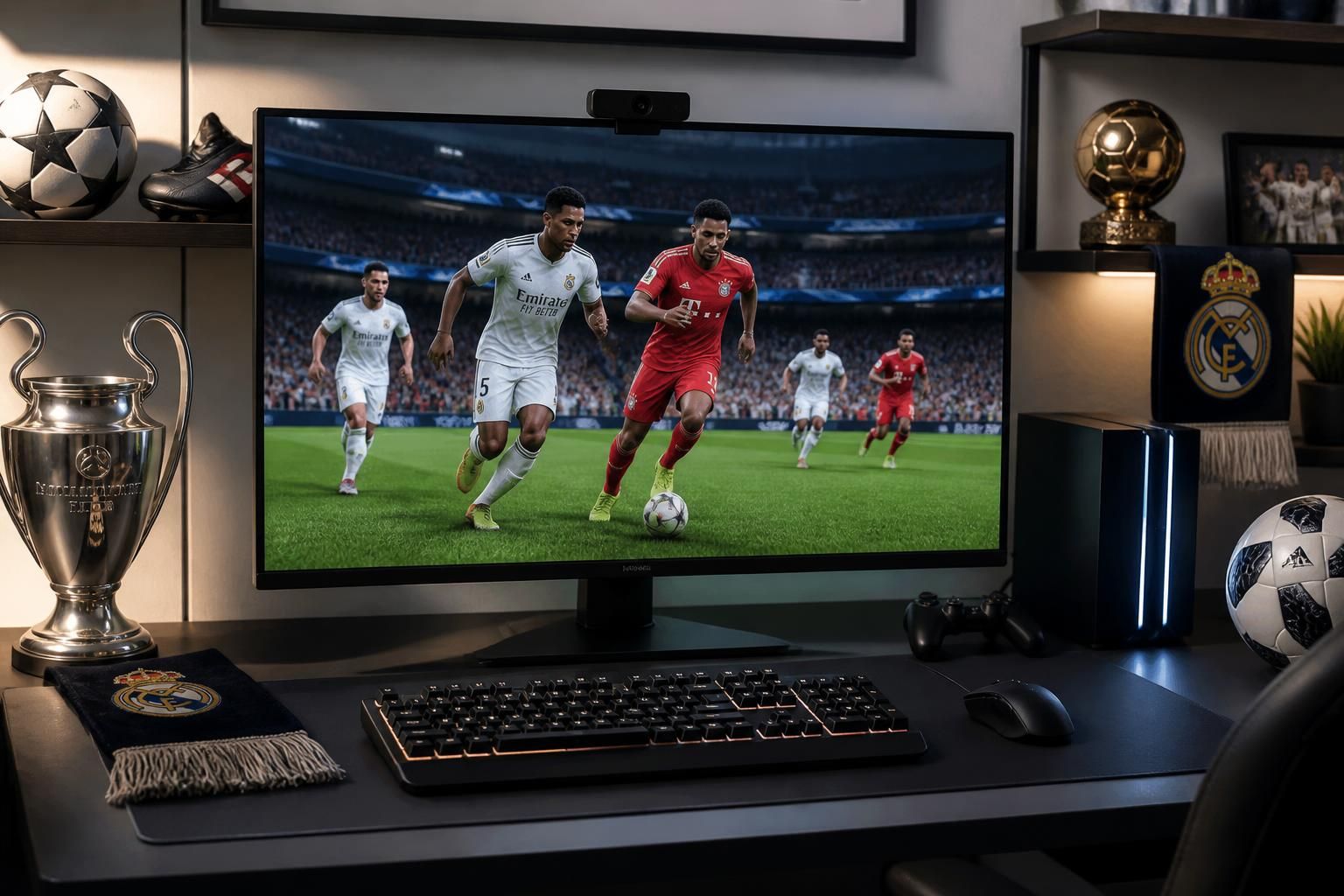
In Brief
- FC 26 version 1.6.3 is presented in preview as a “quality of life” patch, with targeted changes on Team modes and Career mode.
- The update emphasizes new management features (roster, calendar, negotiations) and consistency improvements in matches (passes, finishes, key situations).
- An interface and accessibility section is also expected, with settings aimed at reducing friction in navigation and team management.
- The technical part (stability, fixes, AI behavior) remains at the core of the patch, a crucial point for long Career seasons.
- Privacy options related to cookies and data (audience measurement, personalization) continue to shape the online experience around Google services, with choices “Accept all,” “Reject all,” and advanced settings via g.co/privacytools.
FC 26 version 1.6.3, unveiled in preview, focuses on an often decisive issue for the lifespan of a sports video game: mode stability over the long term and consistency of sequences in matches. Instead of a spectacular overhaul, the update aims at concrete changes, particularly visible in Team modes and Career mode, where the repetition of matches, roster management, and the rhythm of a season make every detail more sensitive. The announced adjustments target both new management features and gameplay improvements likely to reduce situations perceived as “unfair” (poor trajectory reading, too random finishes, ball losses on simple passes).
This patch also fits into a context where the online experience increasingly depends on peripheral technical layers: performance tracking, audience measurement, spam fighting, and privacy settings. Consent options for cookies and data, as presented by Google (delivering and maintaining services, measuring engagement, personalizing content and ads based on settings), directly influence content display, recommendation, and advertising, including around communities and videos accompanying updates.
FC 26 Update Version 1.6.3: What the Preview Changes for Team Modes
In Team modes, the update first seeks to streamline what is done dozens of times per session: managing a roster, preparing a match, adjusting instructions, then chaining actions. The idea is simple: less friction in menus, fewer micro-inconsistencies in tactical choices, and a more reliable reading of the strengths present. In a mode where progression often happens over match series, fixes on interface stability and responsiveness weigh as much as new features.
Concretely, the expected changes affect change management, clarity of roles within the team, and how certain collective behaviors manifest in matches. On the pitch, the stated goal remains to achieve more “readable” sequences: a risky pass must be punished because it is risky, not because the animation or player selection glitched. This type of improvement makes no noise, but it changes the perception of the game as soon as a series is decided by a goal.
New Team Management Features: Roster, Rotation, Readability
The preview emphasizes settings serving daily management: better distinguishing player form, fatigue, and momentum, and making rotation decisions easier to make. In a long season, the effect is immediate: a tired starter is spotted faster, a confident substitute is justified more clearly, and the team reading becomes more coherent.
A concrete example: in Team modes, players using tight rotations (11-13 players) often suffer from fatigue that is felt late. An update clarifying this point, even through an interface, reduces “trap” matches where the team seems to collapse for no apparent reason. It’s a gain in control, hence a gain in satisfaction.
In this logic, several axes regularly come up when a patch targets Team modes:
- Faster navigation between roster, tactics, and match sheet.
- Clearer indicators on fitness and availability.
- Adjustments of collective behaviors (retreat, pressing, lines) to limit unexplained gaps.
- Fixes on player selection and automatic runs during transition phases.
FC 26 Career Mode: Changes on Transfers, Club AI, and Season Flow
Career mode is often the litmus test of updates: a season means dozens of hours, and every inconsistency ends up standing out. The angle of version 1.6.3, as presented in preview, targets the credibility of negotiations and the logic of AI-controlled clubs. The goal is to limit absurd scenarios: clubs stacking players in the same position, offers disconnected from the real role, or incoherent behavior over the course of a transfer window.
In a video game like FC 26, career management is played as much on matches as on the understanding of context: objectives, playing time, locker room dynamics, budget. An update that refocuses these parameters gives a more natural feeling of progression. The player does not feel like “fighting the system” but negotiating with clubs that react according to their needs.
Negotiations and Club Behavior: Towards More Coherent Transfer Windows
The expected improvements relate to implicit rules: consistency between a player’s value, their role, and the club’s strategy. In an advanced game, this typically prevents “broken” transfer windows where a rich team offers anything, or conversely, an ambitious team remains inactive without sporting logic.
A common case in Career: a player in good form chains performances, but offers remain low because the system fails to link recent form, importance in the team, and market dynamics properly. Changes on these links, even modest, make discussions more credible. The impact is mostly measurable during two windows: the summer and winter transfer windows, when rosters tighten.
FC 26 Gameplay: Improvements on Passes, Finishes, and Decisive Situations
Version 1.6.3 is not just about menus. The announced gameplay improvements concern actions that decide a match: passing and finishing. The ambition is to reduce the gap between the player’s intention and the on-screen result, without changing the overall pace. This generally involves animation settings, information gathering (body orientation, timing), and defensive behavior in the final meters.
Passing is a good indicator: a bad choice must still be punished, but a simple pass must not turn into a lottery. Players who like to build will mostly need consistency in short triangles and less “floating” trajectories. Those playing more direct will monitor defenders’ ability to intercept without excessive magnetism.
Timed Finishes and Attack/Defense Balance
Timed finishes and one-on-one situations are among the mechanics that generate the most debate, as they are decided in a split second. The update, in the spirit of rebalancing, seeks to make results more coherent with the risk level: a well-prepared shot should better reward precision, while an attempt from a narrow angle should be neutralized more often.
Practically, these settings change the metagame of competitive modes as well as solo games. When finishes become more stable, building takes more value. When they become more demanding, defense regains a margin, especially on AI rebounds in the penalty area.
Stability, Interface, and Data: What the Update Means for Experience and Privacy
A patch is not only about the ball. The “invisible” improvements affect stability, loading times, screen responsiveness, and parameter coherence. In Team modes and Career mode, a save bug or menu slowness weighs more than a shot nerf, because it breaks the continuity of progression.
This topic also overlaps with the service layers surrounding the game: audience measurement, usage statistics, fraud protection, and personalization. Google describes a classic consent framework: accepting the set activates, in addition to service delivery, the development of new services, ad measurement, and personalization; refusing limits use to essential purposes (security, crashes, usage statistics). Advanced settings are accessible via g.co/privacytools, a useful point for those who consume a lot of content around FC 26.
Summary Table: Focus of Version 1.6.3 by Game Area
This table synthesizes the most anticipated workstreams around this update, distinguishing what directly affects the field, management, and overall experience.
| Affected Area | Type of Changes | Main Expected Impact | Concrete Examples |
|---|---|---|---|
| Team Modes | New features + UI improvements | Less friction in management and match preparation | Condition readability, roster/tactics navigation, consistency of instructions |
| Career Mode | Changes on Club AI | More credible transfer windows and more logical season | More coherent offers, better accounted-for position needs, less erratic AI decisions |
| Gameplay | Balancing tweaks | More consistent results on passing and finishing | Pass trajectories, one-on-ones, penalty area situations, defensive readings |
| Technical & Experience | Fixes and stability | More reliable progression, fewer incidents | General stability, menu responsiveness, season continuity |
What Do We Think?
This version 1.6.3 update seems to take the right direction: strengthening the coherence of Team modes and Career mode rather than seeking a splashy announcement. The most useful changes are those that secure a whole season, because that is where FC 26 is played for much of the audience. If the passing and finishing improvements deliver, the impact will be seen immediately in tight matches and online series. At this stage, the strongest expectation remains the stability and logic of the AI in Career, as these are the points that wear players’ patience most quickly.
Is FC 26 update 1.6.3 mainly focused on gameplay or game modes?
The preview presents version 1.6.3 as a patch centered on game modes, with significant changes for Team modes and Career mode. Gameplay is not absent, but it is handled through targeted improvements (passes, finishes, decisive situations) aimed at strengthening coherence rather than shaking up the overall pace.
What changes the most in Career mode in FC 26 with version 1.6.3?
The core of the expected changes concerns the logic of transfers and club behavior controlled by AI. The goal is to make transfer windows more coherent over the course of a season, with decisions better aligned with position needs, player roles, and roster dynamics, to limit incoherent scenarios.
Do Team modes gain new features with this update?
Yes, the preview highlights new features and comfort improvements related to roster management and match preparation. Even without a full overhaul, interface adjustments, readability (form, fatigue), and instruction consistency can have an immediate impact on match flow.
What is the link between the experience around FC 26 and the cookies/data settings mentioned by Google?
The ecosystem around a video game like FC 26 involves online services, usage statistics, and content recommendation (guides, videos, communities). Google describes consent choices that influence personalization and audience measurement: “accept all” activates more usage, “reject all” limits to essential purposes, and advanced settings are available via g.co/privacytools.