
| To Remember |
|---|
| FM26 reveals a dominant duo: France and Portugal total six titles out of ten simulations. |
| The 2026 World Cup FM edition crowns the host country Mexico twice, a strong signal for home advantage. |
| Algeria reaches the semifinals three times, archetype of an outsider in an international tournament. |
| Vinícius Jr dominates the virtual Golden Boot race, while unexpected profiles (McTominay, Amoura) explode. |
| The simulation game engine of Football Manager 2026 values fine team management and physical freshness. |
| The football simulation reveals winning paths: quick transitions, set pieces, aggressive rotation. |
| Practical use: turn these trends into reasoned match prediction for virtual football and beyond. |
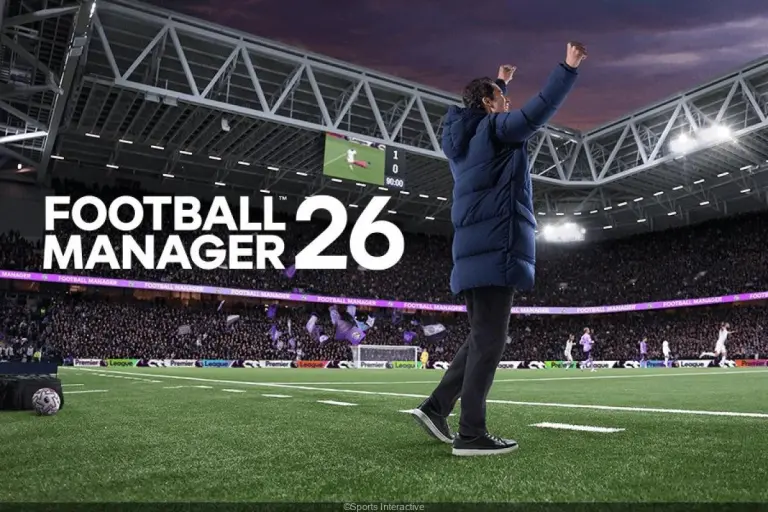
| The official integration of FIFA competitions in FM26 makes the experience more credible and exploitable. |
The stage is set: an international tournament expanded, three host countries, and a living database disrupting the established order. At the scale of Football Manager 2026, this XXL football simulation gives birth to unexpected heroes, sometimes against intuition. The ten replayed journeys draw an atlas of possibilities, where the domination of headliners coexists with crazy breakthroughs of outsiders. Between the cold logic of figures and the touch of madness of the match engine, virtual football reminds that chance is something to be worked on.
In this exploration, the heart beats to the rhythm of FM26. The mechanics are simple to describe, yet devilishly complex to master: tactical preparation, player form, sequence of movements, everything interlocks. Out of 48 nations, the difference often plays out in a detail, sometimes on a blocked shot. And, because the World Cup remains the event that changes careers, the smallest streak becomes a story. The lessons that follow do not promise truth, they offer landmarks to better read chaos.
FM26 deciphers the 2026 World Cup: simulation protocol and competitive framework
The working framework was structured around a clear principle: multiply iterations to smooth out jolts. Ten complete World Cups were rerun in FM26, without editor, based on the official calendar and the 48-team structure. Each run respected the initial draw simulated by the game, automatic suspensions, and an injury model close to realistic trends. This protocol favors statistical robustness, even if the sample remains modest.
The expanded format creates edge effects. With more high-intensity matches, energy management becomes decisive. Team management thus takes on another dimension: targeted rotations, managed minutes, recovery sessions. Tactically, the simulation game engine of Football Manager 2026 rewards compact blocks capable of striking in transition. This choice is not dogmatic; it stems from the tempo of the final phases and the trips to North America.
Controlled variables and assumed hazards
Three axes were stabilized: moderate training intensity, optimized role of coaches, and a substitution plan predefined from the 60th minute. These safeguards limit micro-management biases. Conversely, draws, climate, and morale dynamics are left to the engine. This mix allows observing the structural part and the chaotic part that make the charm of a football simulation.
A technical point deserves highlighting. The FM26 match engine significantly values the quality of wingers and density at the drop on set pieces. Teams that line up elite finishers and two effective set-piece takers show a premium on efficiency. This is reflected further in individual awards, heavily marked by the influence of wide attackers.
Why ten iterations are not enough, but illuminate a lot
Ten competitions do not make the law, yet they reveal constants. The repetition of recurring semi-finalists and the stability of finalists give depth to trends. Meanwhile, the emergence of unlikely runs signals the importance of micro-events. A red card, a late penalty, a deflected shot suffice to overturn an entire tree. The modeling does not cancel variance, it makes it readable.
In the end, this protocol installs a useful reading framework to move from isolated stories to robust patterns. The following builds on it to measure strengths and weaknesses of the world pack.
World Cup 2026 match simulator: results, surprises and constants
The cumulative verdict offers a sharp snapshot. France and Portugal share the spotlight with three titles each. Mexico creates sensation by winning twice, benefiting from a favorable host context. Brazil and England follow with one title each, while nations like Algeria sign series of semifinals. The field confirms that in FM26, the elite keeps the edge, but outsiders are never offside.
These podiums come with singular episodes. Unexpected scorers emerge, goalkeepers deliver masterclasses, and favorites fall in quarters. The whole composes a credible drama, even plausible for most scenarios. The recurrence of certain names shows that success is not just an accident.
Champions, finalists and lines of force
France dominates several charts by alternating mastery and flashes, often carried by Kylian Mbappé. Portugal also regularly reaches the top, driven by a balanced collective. Brazil often reaches the semifinals, although it converts fewer title chances. As for Mexico, it capitalizes on crowd momentum and familiar surroundings, a variable rarely well measured in predictions.
| Nation | Titles | Finals played | Recurring tactical signal |
|---|---|---|---|
| France | 3 | 4 | Quick transition, wing width |
| Portugal | 3 | 3 | Compact mid-block, axial creativity |
| Mexico | 2 | 2 | Controlled high pressing, verticality |
| England | 1 | 1 | Deadly set pieces |
| Brazil | 1 | 3 | One-on-one on wings, half-space overload |
Outsiders and bright anomalies
Algeria’s path to three semifinals symbolizes the opportunity window created by the format. On an open board, a disciplined block and sharp transitions overturn giants. Similarly, incursions from Austria, Nigeria, Canada or Ukraine show that mental resources and moment management weigh heavily. That is the heart of an international tournament: survive today to dream tomorrow.
Individual distinctions amplify these trends. Vinícius Jr multiplies decisive contributions in the final third. Mbappé and Bellingham collect best player trophies. Against the grain, Scott McTominay, Mohamed Amoura, Nico Williams, Danny Namaso, Andy Robertson or Romelu Lukaku claim unexpected spotlight. The engine values repetition of high-value actions, not just statuses.
- Mexico back-to-back: host country double title, symbol of a supportive environment.
- Algeria: three semifinal appearances, recurring outsider profile.
- Vinícius Jr: almost systematic Golden Boot in virtual football.
- Recurring France–Portugal finals: defining rivalry of the decade.
These elements form a credible basis for reasoned match prediction in FM26: favor consistency of elites and the rise of one or two spoilers per edition.
To go deeper, video breakdowns of winning tactics help connect models and field. Observing visual patterns speeds up live adjustments.
Football strategy in FM26: turning team management into titles
Winning a World Cup on Football Manager 2026 requires surgical execution. The key word holds in three axes: keep legs fresh, threaten the flanks, dominate set pieces. These levers respond to the condensed calendar intensity. They also explain why certain nations, richly stocked on wings, impose their law over several runs.
The staggered midfield block appeals for its compromise. It invites the opponent to play, but recovers in exploitable zones. The idea is to activate, at the right moment, pressure triggered by cues: pass to the line, lateral return, oriented control. On the exit, a double winger–full-back threat quickly projects danger. This logic has supported several champions in the football simulation.
Principles that pay off in tournaments
Four principles dominate. First, measured intensity, to preserve top speed in knockout phase. Then, a rotation of 14-15 players, predefined around micro-recovery cycles. Then, extreme specialization of free kicks and corners, with two offensive routines and one defensive. Finally, strict management of warnings to avoid key sending offs at worst moments.
Role choices matter. A left inside forward and a right support inside create complementary angles. In the center, a defensive midfielder directs opponent pressure. Up front, a complete forward attacks the ball and frees marking delays. Simple on paper, decisive in practice.
Match plan by opponent
Against a very creative side, reducing axial density sometimes suffices. Closing the half-space on the strong side reduces the influence of the mobile playmaker. Against a team of crosses, the defensive line drops back a notch, but full-backs quickly step out on the ball carrier. Against a low block, patience becomes a weapon: U-shape circulation, side changes, and triggering on an inside run.
Typical champion host example. Mexico often simulates a flexible 4-3-3, wave pressing and immediate projection on the strong winger. Half of clear attacks start from recovery in the corridor. Another case: Algeria validates three semifinals thanks to a compact 4-1-4-1, with an inverted winger finishing second line. These patterns are observed run after run.
Decisive micro-details
Two tricks weigh heavily. Programming a unique penalty taker limits randomness in shootouts. And setting a fast relay from the attacking throw-in forces unfavorable duels. On management, substituting the tired winger around 65’ statistically changes the volume of useful sprints. Each adjustment brings the title closer in FM26.
In short, team management makes full sense when it aligns freshness, discipline and complementary threats. It is the most reliable shortcut to a trophy in an international tournament.
These tactical principles gain clarity through video breakdowns and studies of key sequences. Framing routines speeds up the gain of invisible points.
Virtual football and field realities: predictive value and limits of Football Manager 2026
There is a strong temptation to build an oracle from these results. Yet their value mainly resides in identifying trends. FM26 represents technical skills, collective, and physical wear with growing accuracy. It still has blind spots. Current form, psychological adjustments and some synergies cannot be fully coded.
Why believe in patterns anyway? Because constants repeat cause-and-effect relationships. Wing power correlates with creating clear chances. Champions show a clear hierarchy of shooters, an involved bench, and well-oiled set piece routines. Even if names change, these foundations will survive several real iterations.
Data versus chance
The method resembles a mini Monte Carlo. Ten runs remain modest but shift the spotlight. We do not seek certainty, we target conditional probability. For example, the repetition of France–Portugal finals indicates an average quality differential. Conversely, Mexico’s titles signal the impact of environment on the thin margins deciding one night.
Fine reading combines talent rating, bench depth and match geography. This mix turns a serious outsider into a finalist. Variance makes noise in preliminaries but rarefies miracles in the long run. Hence the interest in aggregating several indicators rather than a single ranking.
Transferability to the real world
On the field, several points converge. The density of trips between Canada, USA and Mexico favors rotation. The importance of elite wingers is already confirmed, carried by profiles like Mbappé or Vinícius Jr. Set pieces matter everywhere, especially when fatigue compresses reaction time. These parallels do not guarantee the winner’s identity, but guide plausible scenarios.
Remains the human factor. A team that lives well together, a goalkeeper in form, a leader who accepts a substitute role can reverse hierarchies. Match prediction must incorporate this qualitative layer. For the analyst, the interest of Football Manager 2026 lies in its ability to simulate realistic frictions without freezing everything.
Indicators to watch
Three benchmarks guide sober reading: net chances differential, ability to repeat sprint effort beyond 75’, and set piece effectiveness. When these sliders turn green, title probability climbs noticeably. This holds in databases and is observed week after week in the game.
To go further, official updates from Football Manager refine squads and dynamics. The gradual integration of FIFA competitions in FM26 further strengthens the credibility of the exercise. Tools evolve, method remains.
User guide: replaying and analyzing the 2026 World Cup in FM26
Getting hands-on illuminates better than all charts. Replaying the event in FM26 develops tactical intuition, besides offering a replicable framework. The goal is twofold: produce clean runs and capitalize on comparable feedback. This operational guide facilitates the learning curve.
Prepare the base
Start by activating all qualified nations and those at the World Cup gates. Loading a wide player pool guarantees credible benches. Set training intensity to a balanced profile, then assign set piece routines. Finally, lock a rotation plan by position even before the opening match. This method standardizes comparison between runs.
- Create a new dedicated save for the 2026 World Cup in Football Manager 2026.
- Load extended databases and the three host zones.
- Define two ready-to-use tactical models (midfield block and high pressing).
- Program typical substitutions and set piece takers.
- Start the football simulation while keeping a logbook of key matches.
This skeleton speeds reproductibility. Less noise, more signal.
Launch the simulation and exploit it
Use the scheduling tab to isolate rest windows and adjust loads. In tense matches, switch to cautious mentality in the last quarter to reduce suffered transitions. In case of late equalizer, a fresh winger change adds extra explosiveness. These micro-levers generate invisible points over time.
For analysis, keep three metrics: xG for/against, sprints beyond 7 m/s, and set piece efficiency. A simple spreadsheet helps match these values with results. Useful correlations appear quickly, especially after five runs. It is here that a trend turns into a competitive advantage.
Share, compare, progress
Publishing saves and data sheets on community hubs helps validate patterns. Crossing results from other players smooths biases inherent to one save. As FM26 updates integrate FIFA competitions after qualifying phases, the environment gains even more fidelity. The iterative loop improves the quality of each match prediction.
At the end of this process, mastery doesn’t come from a magic formula. It stems from a sum of good practices, disciplined team management, and clear-headed adjustments. It is the safest way to tilt an international tournament in your favor.
How to reproduce consistent results in FM26?
Standardize preparation: same database, same set piece routines, predefined rotation plan and stable training management. Run multiple simulations and track xG, sprints and set pieces to limit random noise.
Why do France and Portugal dominate the simulation so much?
Their squad depth and winger quality fit well with the match engine. They combine axial creativity, quick transitions and elite shooters, which influence many scenarios.
Is Mexico’s back-to-back title credible?
Home advantage, familiarity with conditions, and group dynamics can create leverage. In simulation, these factors aggregate and can produce a window of exceptional performance.
Which tactical settings offer the best return on investment?
Flexible midfield block, two offensive set piece routines and one defensive, 14-15 player rotation, and preprogrammed substitutions around 60-70’. Gains add up match after match.
Can the simulation faithfully predict the real World Cup?
It illuminates robust trends but does not replace the uncertainty of sport. Use it to frame scenarios, not to set certainties.