
| Key learnings |
|---|
| FM26 illustrates a contrasted impact of the integration of the Scottish giants Celtic and Rangers into the English league. |
| Celtic championship winners of the Championship in 25/26 (88 pts), then immediate relegation the following season. |
| Rangers promoted in 26/27, remain in the Premier League and become a mid-table team. |
| Rangers win the FA Cup in 29/30 and reach the Europa League final in 30/31. |
| Celtic suffer relegation in 33/34, then dominate the Championship in 34/35. |
| OPTA initially places Celtic 131st and Rangers 139th, below English mid-table clubs. |
| The rivalry transforms into an endurance duel: managerial stability at Rangers, volatility at Celtic. |
| The FM26 model, rich in data, demonstrates a ruthless English competition but permeable to well-conducted projects. |
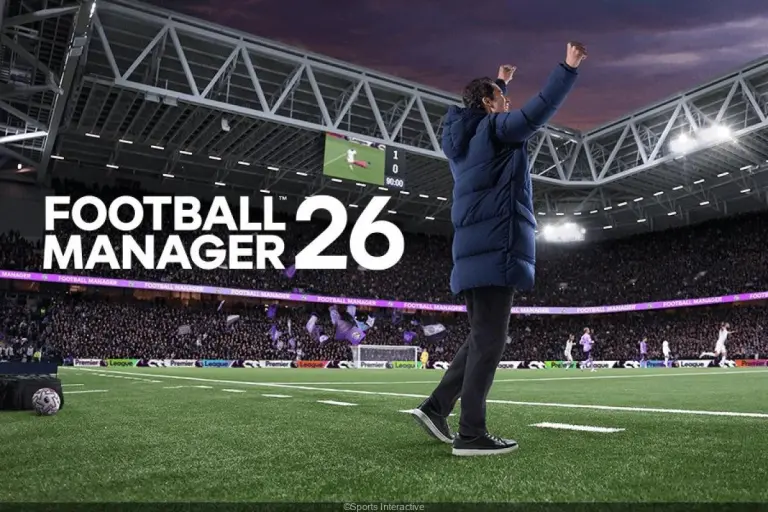
When Football Manager 26 reshuffles the cards, the projection takes the form of a giant laboratory. The two Scottish giants, Celtic and Rangers, plunge into the English league via a passage through the Championship, and the entire football ecosystem is reshaped. The simulator, often criticized but recognized for its closely realistic player tracking, tests here the integration of historic institutions into Europe’s most profitable and exposed environment. Sporting, economic, and cultural balances are disrupted.
The statistical database matters. According to OPTA power benchmarks, Celtic and Rangers start below the median level of the Premier League, close to English clubs settled in the shadows of the top teams. Yet, the competitive DNA of these global brands offers a counter-narrative. With FM26, licensed for the Premier League and its official elements, the competition gains in structural realism. And a question guides each season: does the Old Firm rivalry intensify, or does it turn into an endurance test against English demands?
FM26 imagines the impact: complete timeline of Celtic and Rangers integration into the English league
The scenario starts in 25/26, with Celtic and Rangers in the Championship. The entry benchmarks are clear: squads above average for the level, but game systems and depth to be tested over 46 rounds. Thus, the first season immediately validates Parkhead’s stature. The Hoops lead with 88 points and secure direct promotion. The Light Blues fail in the playoffs against a clinical Sheffield United side, confirming a very high but not yet irresistible level.
The next season reverses the roles. In 26/27, Rangers win the Championship ahead of Wolverhampton and join the Premier League. Meanwhile, Celtic discover that the English elite offers no respite. Relegation falls by two points, despite a total of 34 points that would have saved other promoted teams in more lenient seasons. This first up-and-down exposes a fragility: tactical adaptation and transfer window management weigh more than aura.
FM26: simulation parameters and OPTA benchmarks
The FM26 engine relies on detailed databases and an advanced IRL tracking. As a result, the learning dynamic settles in. In 27/28, Rangers finish 12th with 43 points, after a three-way battle to avoid the drop. Celtic, meanwhile, immediately bounce back in the Championship, beaten only for the title by Leeds but promoted. The 28/29 season confirms a trend: two survivals, 45 points for the Greens, and a tighter escape for the Blues, with a favorable goal difference nonetheless.
Next, 29/30 shifts the story to Ibrox’s side. Rangers lift the FA Cup final against Manchester City, English champions. This feat opens Europe and legitimizes the project. Consistency sets in 30/31: mid-table, above 40 points, far from cold sweats. Especially, the Europa League campaign pushes to the final, lost against Atlético. The European experience broadens notoriety and strengthens matchday revenue.
Timeline 29/30 → 34/35: cups, Europe, and divergent trajectories
Stability continues in 31/32. The Premier League becomes the natural habitat of Rangers, while Celtic hold on with a fair margin. The Light Blues return to the FA Cup final in 31/32, this time beaten by Arsenal by one goal. Then, 32/33 introduces a productive lull: the Parkhead club climbs to 52 points and almost touches the top 8, while Ibrox is around 12th place. It looks like a plateau before possible acceleration.
But 33/34 recalls the harshness of the competition. Celtic fall and drop back to the Championship after a dark season. Rangers complement this with their best total, eighth with 62 points, close to European spots. The year 34/35 locks the gap: another top 10 for Ibrox, and Championship title for Parkhead, arch-dominant on the second tier. The story reveals a contrast: the Govanites settle permanently, while the Bhoys alternate peaks and troughs.
This ten-season film answers the initial question. Brand size helps, but the English ecosystem sets the pace. In FM26, the sum of good decisions outweighs history, and the rivalry shifts from spectacular to sustainable.
FM26 and football economy: transfers, budgets and infrastructure after integration
The financial aspect shapes trajectories. With the Premier League officially licensed in FM26, rights, ticketing, and merchandising modeled reinforce the impact of promotion. Rangers rely on this influx to secure key starters and target complementary profiles. Celtic, meanwhile, reinvest to climb back, but managerial volatility sometimes dilutes market coherence. Yet, competitive advantage requires stable recruitment cycles.
The simulator also refocuses the idea of infrastructure. Training centers and the academy, valued by the database, weigh on development. A club combining youth and scouting reduces acquisition costs. This is the path Ibrox follows after the FA Cup, opening up to young targets from the Balkans and Ireland. In practice, this strategy lowers the relative wage bill and energizes rotation.
Budgets, recruitments and squad depth effects
Endurance trumps glamour. The Premier League imposes 38 intense matches, and the League Cup or FA Cup add to the load. A poorly targeted budget can therefore doom a survival mission. In contrast, a cautious investment in a goalkeeper above average, two polyglot defenders, and a box-to-box midfielder raises the safety line. Rangers embody this pragmatism over three successive transfer windows.
Referring to critical analyses in the specialized press, FM26 refines recruitment processes. Data centers better identify performance contexts. For instance, a winger with 0.30 xA/90 in Eredivisie is a less risky gamble than a striker overperforming his finishing. This statistical sorting, combined with nuanced scout reports, explains Ibrox’s slow climb toward the top 10.
- Focus the budget on 4 premium positions before expanding rotation.
- Sign U23s with high progression margins to amortize costs.
- Avoid toxic salaries via minutes or survival clauses.
- Capitalize on the FA Cup and Europe to attract mid-level profiles.
- Invest in performance staff to limit absences.
This roadmap would have also benefited Celtic. Nevertheless, the succession of coaches changed targets and wage structure. The pivotal seasons, 26/27 then 33/34, penalize this lack of continuity. The promotion in 34/35, achieved authoritatively, nevertheless proves the sporting base remains too strong for the second tier.
Wonderkids, official licenses, and competitive immersion
Thanks to Premier League licenses and the depth of young profiles, FM26 amplifies operational realism. “Wonderkids” are not magic shortcuts. Without a clear integration plan, their value decreases. Moreover, the pressure of an English schedule devours poorly protected talents. The contrast between Ibrox and Parkhead’s handling of prospects fuels the gap observed between 30/31 and 34/35.
Ultimately, economy and squad respond to each other. Without a stable budget matrix, the competition catches up with everyone. Conversely, a clear numeric framework makes sparks repeatable, even against supposedly superior squads on paper.
Old Firm rivalry transplanted to England: culture, safety and schedule under FM26
Transposing the Old Firm to England is not just moving a derby. The historic rivalry carries identities, chants, rituals, and tensions. In FM26, high-risk matches synchronize with a complex schedule. Authorities would impose specific slots, during the day, to reduce risks. Clubs must then adapt preparation and recovery, under penalty of losing freshness in the sprint.
The English schedule weighs doubly. In winter, density reduces tactical work windows. However, smart rotation and prioritization of cups ease the effort. Rangers have precisely converted this micro-management science in 29/30. It results in an FA Cup title, despite adversity from an English champion.
Attendances, audiences and commercial exposure
Moving to England enlarges the stage. The Premier League’s international broadcast expands the Old Firm’s audience further. Global sponsors, already sensitive to both brands, reinforce their presence. Consequently, the gap in means with the Championship becomes structuring. The 34/35 season of Celtic illustrates this step: budget and attractiveness raised, domination at second level.
On derby days, safety management takes a national dimension. English clubs know this type of organization, but the Old Firm adds an identity layer. The simulator shows no incidents, yet integrates fatigue effect. On a three-week cycle, a derby placed between two Premier League clashes imposes strong arbitrations.
A governance project: “Blue-Green 2030” as a guiding thread
To illustrate these choices, a fictional duo of analysts, “Blue-Green 2030”, benchmarks risks. First, it assigns priorities in blocks of five matches. Then, it proposes mandatory rotation thresholds before and after high-intensity matches. Finally, it sets realistic points goals by segment, rather than global promises.
This simple framework limits emotion in decision-making. In 31/32, Rangers reach the FA Cup final with a controlled minutes matrix. The team holds energy until May, while solidifying its safest place in the league. Lessons to remember: routine reform, micro-planning, and fluid internal communication.
The Old Firm culture survives the change of scenery, but expresses itself differently. The show unfolds over the long term, and the capacity to absorb pressure defines the real hierarchy.
Game plans and group management: what FM26 reveals about Celtic and Rangers
Tactical clarity blocks the doors of relegation. In FM26, surviving clubs first structure their corridors and axis. Rangers deploy a flexible 4-3-3: strategic pressing on the sides, clear defensive pivot, and disciplined wingers. This scheme switches to 4-2-3-1 in weak phases. It protects the 14 zone and opens clean counterattacks.
Celtic have alternated more ambitious principles. At times, a 4-1-4-1 possession stretched blocks. Other times, a 3-4-2-1 produced strong wings but exposed axis. The sequences 26/27 and 33/34 revealed these flaws. Conversely, the 34/35 promotion aligned a more rational structure, with a central block and quick transitions.
Micro-details that change everything: set pieces and managing weak phases
Set pieces weigh in a tight Premier League. Optimizing corner routines with a second aggressive line yields 6 to 8 points per season. Rangers capitalized on this lever, often decisive against direct rivals. Moreover, targeted use of a super-sub striker with high leap reversed two key matches in 29/30.
Managing weak phases also makes the difference. Pulling the press line back ten meters for ten minutes breaks opponent momentum without panicking. This contextual coaching avoids waves. In FM26, the granularity of instructions smooths these moments. A team that does not collapse during its five critical minutes gains one step in the standings.
Practical cases: FA Cup win and Europa League final
The 29/30 FA Cup win against City can be explained by three complementary levers. First, specific preparation on second ball, with launches to the weak side. Then, a dense central block to channel drop-offs. Finally, early changes at the hour mark, anticipating a high final intensity. The plan materialized on the scoreboard.
In 30/31, the route to the European final relied on an opponent-adapted pressing matrix. The team changed height every 15 minutes according to momentum. This flexibility, rare at this level, shaped perfect away trips. The final step, against Atlético, lacked bench depth. This highlights a recurrent lesson: without a reliable third option in midfield, transitions crumble.
Overall, Rangers validated the recipe for durability: clear plan, planned rotations, and margins on set pieces. Celtic showed high potential but structural volatility hindered European qualification.
Crossover consequences for Scottish and English football: regulations, training and 2026+ perspectives
The integration of Celtic and Rangers in England redistributes stakes for the SPFL side. The competitive void at the top forces Scottish clubs to reinvent themselves. Hearts, already author of a strategic renewal, establishes itself as a national alternative. FM26 mechanics reflect this: the European coefficient first weakens, then rebuilds if the ecosystem values training and smart sales.
In England, the Premier League gains a cultural hub and two powerful market places. This stimulates the international fan base and rights negotiation. However, registration rules, homegrown requirements, and sporting fairness come into play. FM26, by its logic, reminds that a firm regulatory framework protects the integrity of the competition. Registration quotas then steer academy policies.
Legal questions and calendar harmonization
Such a reconfiguration would require multilateral agreements. Historic rights, revenue sharing, and promotion-relegation balances play a decisive role. In the simulation, these locks do not appear, but their spirit translates into selection constraints. European lists constrain, for example, heterogeneous squads. Clubs anticipating these ceilings profit from local youth formats.
The calendar remains a point of friction. High-risk derbies demand fine logistical policing. At the same time, the multiplication of televised matches requires specific windows. Clubs integrating performance cells and planning staff gain a head start. This is where the “Blue-Green 2030” approach takes organizational dimension.
Three prospective scenarios for 2026 and beyond
In the short term, the balance looks like the last snapshot of the simulation. Rangers settle in the top 10, with cup peaks. Celtic alternate quick rebuilds and ambitions limited by English density. In the medium term, a top 7 becomes achievable for Ibrox, if sales fund two elite starters. In the long term, the Old Firm could produce a durable upper middle class in the Premier League.
For Scotland, the opportunity lies in maximizing training. The English market values ready-to-play players. Scottish clubs, specializing in intensive profiles, capture regular sales. FM26 suggests: youth pathways can compensate the loss of an annual domestic title duel. Provided technical management is stabilized.
Ultimately, the clearest impact is on project quality. An ultra-competitive English league does not crush ideas. It tests them without leniency. The simulator repeats it: managerial consistency, data-driven recruitment, and load management decide the true ceiling of the reinvented Old Firm.
Why is FM26 relevant for measuring the integration of Celtic and Rangers in England?
FM26 combines a rich database, advanced IRL tracking, and management mechanics close to real constraints. The simulator does not replicate everything identically, but models schedule wear, transfer economics, and tactical adjustment, making it useful to test impact and rivalry in the English league.
What was the highlight for Rangers in the simulation?
Rangers established themselves in the Premier League, won the 29/30 FA Cup against the English champion, and reached the 30/31 Europa League final. They then multiplied seasons above 50 points, becoming a solid mid-table club.
Why did Celtic experience more irregularity?
Coach changes fragmented recruitment strategy and tactical coherence. Despite a sufficient level to dominate the Championship, the team struggled to convert assets into continuity within the elite, leading to relegation in 33/34 then an immediate comeback in 34/35.
What levers does FM26 highlight to succeed in Premier League integration?
Three main levers: managerial stability, data-driven recruitment with salary control, and tactical optimization (corridors, set pieces, managing weak phases). Add planned rotation and performance staff to navigate the dense English schedule.
Can this simulation predict the real situation in 2026?
It does not predict, but it sheds light on plausible trajectories. The observed trends — rewarding consistency, competition severity, and cup value — frame credible scenarios if the Scottish giants joined England.