
| To remember |
|---|
| Football Manager 26 returns after two years of waiting with a Unity engine and a clearer philosophy. |
| The new interface is confusing at first, but proves logical with the right instincts. |
| The match engine enhances animation, movement, and duels, with real tactical consequences. |
| Bugs exist, but several corrective updates have already been deployed. |
| The immersion is different: the game favors speed, at the risk of masking the overall ecosystem. |
| The team management gains granularity with the in/out of possession phases. |
| The football simulation maintains its depth, but some analysis tools are still missing. |
| The verdict depends on the time accepted to master the new landmarks and the strategy approach. |
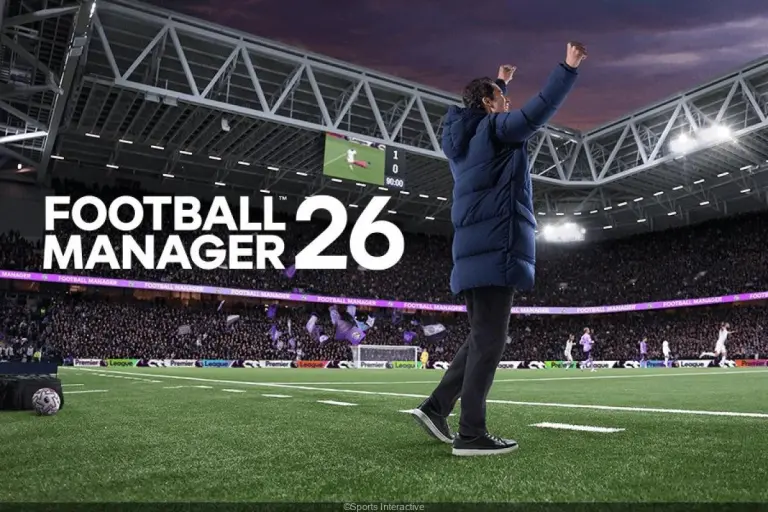
After a sabbatical year and a sacrificed edition, the cult video game license takes back control. Football Manager 26 arrives with a new engine, a redesigned interface, and a project announced as structuring for the future. The wait was long. So were the promises. Between technical revelations and mixed feedback on the early access beta, the evaluation must be concrete, precise, and free from ambient noise. Players first look at the pitch, then everything attached to it: recruitment, data, immersion, stability.
The discussion here is part of a cold, documented reading. The official release in early November confirmed several shifts: a more nuanced tactical focus, a different screen hierarchy, and a finally modernized match engine. The development cycle pace, deliberately slowed, was meant to deliver a renewal. The result fulfills some of the promises, while imposing a real learning curve. For The Athletic and its readers, the question is therefore not binary. It opposes public demand to the trajectory of a studio that redraws its backbone step by step.
Football Manager 26 and the bet on renewal: promises versus reality
At the heart of this new edition, a strong choice emerges: migrating to Unity. The engine modernizes rendering, smooths animations, and opens tooling opportunities. This technical base doesn’t upend everything, but it changes the potential. It stabilizes the roadmap for the coming years. Above all, it enhances the match sensation.
Context matters. The previous installment was simplified to reach a broader audience. Many experienced it as a compromise. This time, the compass aims at expertise. The studio embraces a more strategic turn. The objective is clear: anchoring the series in an era where football simulation serves analysis and tactical pleasure.
What did the community expect? More credible transfers, fewer offensive automatisms, and a more coherent AI in pressing and block management. On these points, progress is visible. Teams defend the half-spaces better. Transitions are easier to read. Role profiles express more personality.
The promise of a more lively ecosystem remained central. The game displays stories, but the flow pushes to move forward. The famous “continue” button hypnotizes. It is a pacing choice. Curious players now must click more to explore leagues and parallel stories. This is not content removal. It is a shift in habits.
Team management fans welcome the clear split between phases with and without the ball. It clarifies the game plan. It invites building micro-adjustments based on the opponent, weather, or form state. It is a real conceptual leap. It rewards patient and methodical managers.
One imperative remains: support this overhaul with regular updates. The launch had interface flaws and several bugs. Successive patches show tangible responsiveness. The foundation is solid. Polishing continues. The renewal is not cosmetic; it is structural. That is the main lesson.
Contextual benchmarks for The Athletic
The editorial treatment emphasizes facts. Release date, priority areas, and user feedback shape the analysis. This is not an emotional narrative. It aims to measure the gap between announcements and delivery, with evidence.
Underlying this, the question remains: does the game fulfill its promises? Yes on tactics, yes on animation, partially on ergonomics, and still incomplete on advanced analysis. The picture is nuanced. It brightens patch after patch.
Ultimately, this first observation launches the debate: ambition is visible, method is affirmed, and the contours of the experience change. The rest will detail ergonomics, then the pitch, before entering the chapter on stability and overall immersion. It is the right entryway.
New interface and ergonomics: quick learning or lasting friction?
The first contact surprises. The historic side tabs disappear in favor of a top bar. Dropdown menus multiply indirect accesses. The eye must rewire itself. After an hour, the logic emerges. Major sections remain within reach, but their hierarchy changes.
A fictional manager, Émile, takes charge of a League 2 club. He looks for “staff responsibilities”. He thinks it’s a bug. He discovers submenus via contextual clicks. A two-click path replaces the old reflex. Information is not lacking. The route differs. The gain? Airier screens. The loss? Landmarks accumulated over years.
Navigation then requires strategy. Favorites must be set, critical screens pinned, and detours reduced. The hurried risk frustration. The methodical gain clarity. The proposal targets the latter, without abandoning the former. Community skins already bring the interface closer to past habits.
Where have the old license’s landmarks gone?
Several players regret the feeling of a “living world” at first glance. News from other leagues no longer pop up on screen. They still exist. You have to seek them out. The consultation reflex reverses: you explore instead of being “pushed.” This choice accelerates club-centered careers. It weakens spontaneous narrative wandering.
Ergonomics also influence training. To personalize a session, you must click directly on the desired module. A contextual panel then offers detailed options. This contextual logic is coherent. It deserves a more visible tutorial. Beginners would save time.
Some gaps remain. Passing networks have disappeared from default match screens. Heatmaps are less immediate. It is possible to do without them. Yet, these tools facilitated on-the-fly decisions. Their absence is felt when tactical pressure intensifies.
To avoid wandering, a plan is required. Establish a daily routine: inbox, squad, training, recruitment, financial health, calendar, then monitoring followed leagues. This loop reduces friction. It reinstates a rhythm close to previous editions.
In conclusion of this section, the Football Manager 26 interface does not fail. It shakes things up. It requires time to tame. It will become an asset if the studio strengthens “world” exploration and reintegrates shortcuts to key data. This is the main point of attention.
Match engine and tactics: the pitch settles the discussion
The new match engine raises visual and behavioral levels. Feints, supports, and stop-and-go improve one-on-ones. Wingers gain more realistic attack angles. Goalkeepers better handle driven shots. It’s not perfect, but credible.
The real revolution lies elsewhere. The in/out of possession phases modify the very construction of a plan. You now configure a structure with the ball, then a second without it. Distances between lines adjust more finely. Roles evolve from one phase to another. This granularity changes tight matches.
A case study illuminates the point. In a test save, Arsenal Women face Manchester City. The right flank becomes vulnerable when the winger stays high. The fix involves a more protective midfield role on the weak ball side. Defensive recovery immediately limits opponent runs into the half-space. The score shifts over time.
Another striking example, a duel against Chelsea. Trailing at the end, the team modifies its structure with the ball. Fullbacks push up, width increases, and inside runs draw diagonals. Within three minutes, two clear chances emerge. The “phase by phase” reading explains the inflection. The engine doesn’t cheat. It reflects intent.
Roles and interactions: concrete effects on team management
A wide winger can become a late inverted foot. A shuttler can act as a pressing pivot out of possession. A withdrawn striker offers a clean outlet point. Every choice has a cost. Every setting creates a gap elsewhere. Overall coherence matters more than ever.
How to exploit this framework? First, define three plans: control, transition, score pursuit. Then, assign symmetrical but non-mirrored roles. Finally, prepare variants for the last five minutes. The game rewards managers who anticipate, not those who improvise blindly.
Some will regret the disappearance of live passing networks. They helped spot clogged circuits. You must compensate with observation and some aggregated indicators. This compromise remains debatable. It could evolve with patches. The engine itself holds up.
In the end, the big question becomes simple. Is the pitch richer? Yes. Roles are easier to read. Animations aid understanding. Differentiated phases develop the strategy. This is the foundation that justifies the turn of this new edition.
Stability, bugs, and hotfixes: how is the launch going?
The start was not without bumps. Several anomalies circulated during early access. Texts overlapped in the manager setup. Action buttons were unresponsive. Occasional crashes occurred on closing. Substitute shirts remained visible in warm-up. Nothing blocking for most, but the list was impressive.
The studio responded with a series of fixes. Five hotfixes over days eliminated many hiccups. The pace reassures. The community follows patch notes and measures problem erosion. Work continues. Stability improves version after version.
To play calmly, some habits help. Check graphic drivers. Temporarily disable outdated mods. Alternate automatic and manual saves. These practices save hours of career time.
Useful checklist after installation
- Update GPU drivers and Windows/MacOS.
- Verify integrity of files in the distribution platform.
- Disable skins and packs not compatible with FM26.
- Activate an auto save every 3 in-game days.
- Reduce shadow quality if framerate drops during matches.
Analysis bugs between matches have also been reported. A report could show the previous match instead of the last one. Patch notes indicate a fix is being deployed. Official, transparent follow-up improves trust.
Overall, Football Manager 26 settles into a healthy dynamic. The technical foundation is new. It logically calls for a break-in phase. The updates responsiveness mitigates risk. The signal is positive for the midterm.
Immersion, careers, and licenses: the depth of a rethought football simulation
Immersion changes nature. It becomes active. The manager who explores other championships rediscovers the magic of a “living world.” The one who rushes days sees mostly their own club. The game does not prevent curiosity. It no longer forces it. This shift influences the overall perception.
Mixed careers benefit from a discreet bridge between male and female sections. In two clicks, you switch from one to the other. Stats and summaries follow. Those who prefer a focused experience can load only one part of the game. This flexibility respects all profiles.
Analysis tools deserve a separate chapter. The absence of passing networks and the reduction of some detailed views surprise veterans. They do not condemn tactical reading. They make it less immediate. Several skin creators are already working on denser displays. The studio could reintegrate key modules.
Strategies to rekindle the save game universe
A guiding thread helps. Let’s take the fictional club AC Marennes, promoted to D3. The inaugural objective is survival. The recipe rests on four levers. First, scout a precise zone, like Belgium and Scandinavia. Then, define a basic but clear style: midfield block, quick transitions, well-worked set pieces. Then, monitor two foreign leagues weekly to spot trends. Finally, ritualize staff report reviews.
Recruitment benefits from clarity in comparisons, even if initially limited to the internal squad. Scouts, better briefed, produce more relevant lists. Team management gains from clearer pre-match briefings. Staff message alignment can still be improved. Some alerts repeat. A patch might refine filtering.
Licenses progress but remain partial depending on markets. This factor does not hinder the mechanics. It mainly affects presentation. The essential remains database coherence and AI behavior. On these axes, the game holds up. It fits well within the horizon defined by the studio.
To conclude this part, immersion involves a deliberate stance. The game offers a lot. It requires seeking the rest. Managers who like to investigate will be rewarded. “Plug and play” fans will have to activate some visual aids or adopt a more familiar skin. Freedom is real. The direction is assumed.
Is Football Manager 26 more demanding than previous installments?
Yes, the interface and separation of phases with and without the ball require learning. In return, tactics gain precision and team management becomes clearer once routines are established.
Does the new match engine really change the experience?
Yes. Improved animations, defensive placements, and more credible aerial duels modify the way of attacking and defending. Role choices have visible consequences over 90 minutes.
Are the bugs reported at launch blocking?
Most are minor and have been addressed by several hotfixes. Good hygiene (updated drivers, compatible mods, frequent saves) ensures a stable experience for most setups.
Can you regain the feeling of a “living world”?
Yes, by adopting exploration routines: active monitoring of other leagues, favorites lists, and weekly review of international news. Community skins also enhance this dimension.
Is this new edition suitable for beginners?
It remains accessible, but is better appreciated with time to assimilate the interface and strategy mechanics. Video guides and built-in aids facilitate the introduction.