
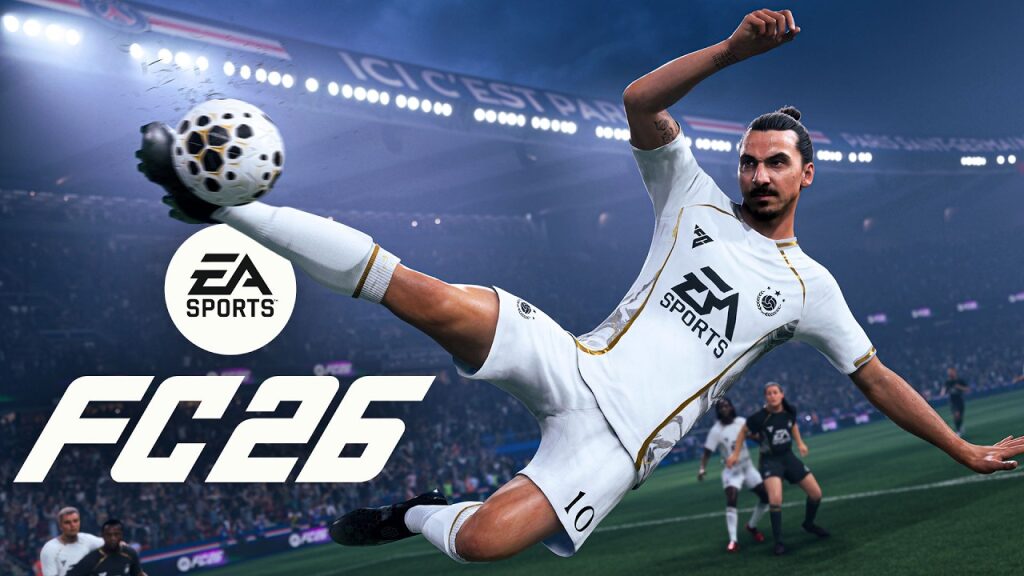
EA Sports FC 26 has transformed video game football accessibility into an industry standard. Released on September 26, 2025, the installment was nominated at the Game Awards (Innovation in Accessibility) and by IGN, then awarded at the Game Accessibility Conference. This outcome is neither due to chance nor simple box ticking. It results from methodical work combining research, co‑design with players with disabilities, and courageous technical decisions. Above all, the studio avoided the trap of the textbook case by making options that were long confined to solo play competitive, without unbalancing online gaming. The High Contrast Mode (HCM) in multiplayer illustrates this leap. On the product scale, the user interface, ergonomics, and inclusive design were rethought to improve the user experience for everyone. This dossier sheds light on key choices, risks taken, and lessons to retain for sustainable inclusion.
- Competitive accessibility: a PvP-playable HCM, calibrated for readability without unfair advantage.
- Co‑design: an accessibility council mobilizing expert football players.
- Systemic ergonomics: audio, visual, and control options integrated into the user interface.
- Evidence before speculation: real data prioritized over theoretical fears of “advantage.”
- Transferability: a reproducible framework for other studios, avoiding the trap of the textbook case.
EA Sports FC 26 and exemplary accessibility: avoiding the trap of the textbook case
The project consolidated advances already visible in the Electronic Arts ecosystem, from contextual pings to content warnings. However, the FC team took a step forward by aligning options, ergonomics, and competitive gameplay. The late 2025 nominations and specialized awards confirmed this shift. Behind the showcase, a sports titles analysis grid allowed assessing EA Sports FC 26’s positioning against best practices. Thus, priorities were decided by impact, not by “catalog effect.” Result: more players play better, longer, and especially together.
Benchmark, community, and inclusive design: the method that changes everything
The approach combined internal benchmarking, feedback from other studios, and continuous exchanges with an accessibility council composed of disabled players, referees, and coaches. This loop prioritized concrete needs: Text-to-Speech for messages and menus, various colorblind filters, shot, pass, and goalkeeper assists, plus fine command customization. Then, each option was tested in real situations, with controller or hardware adaptation in hand.
Concrete example: Lucas, a virtual midfielder with low vision, combines TTS, specific filters, and pressing assistance. He navigates the user interface smoothly and gains consistency in online divisions. Here, inclusive design goes beyond menu access; it impacts match performance. In short, the user experience improves because the system respects heterogeneous needs.
Competitive High Contrast Mode: when accessibility meets PvP
The High Contrast Mode was born simple: modified hues and desaturated grass. Then, iterations followed: removing shadows, eliminating mowing patterns, targeted shading of jerseys, and a configurable palette for home team, away team, goals, and ball. In the end, readability improved significantly for blind and visually impaired players. Above all, HCM works offline and in PvP without breaking fairness.
Why this bet? Fears of an “advantage” remained theoretical. Conversely, measured benefits were tangible: faster spotting of visual markers, fewer reading errors, less eye strain. Simultaneously, rendering, stadiums, and UI worked together to integrate HCM into the engine and front-end. This choice allowed EA Sports FC 26 to avoid the trap of the textbook case: innovating without creating a negative precedent.
- Adjustable colors for teams, goals, and ball, with modifiable saturation.
- Cleaned grass without patterns or parasitic shadows for immediate reading.
- Adjustable assists on key gestures to limit motor load.
- Text-to-Speech and audio cues to follow menus and match events.
- Consistent shortcuts and full remapping to adapt the handling.
These bricks complement each other. Together, they strengthen ergonomics and user experience without overloading screen reading. PvP becomes more readable, not “easier.”
User interface, ergonomics, and performance: the winning triptych
An accessible user interface requires strict rules: high contrasts, visible focus zones, clear hierarchy, and audio labeling. Furthermore, ergonomics demands consistent inputs, breaks to avoid painful sequences, and stable latency. Thus, audio becomes a compass: priority mixing for critical commentary, informative haptic feedback, and TTS without overlap. Each adjustment serves the user experience, including for those who activate no option.
A useful case: loaded menus, multiple leagues, cards, and seasonal modes. Here, persistent filters, clear pagination, and choice memorization reduce micro‑frictions. Then, the team monitored rendering budgets to prevent HCM from inducing a performance cost. The message is simple: inclusive design does not exist alongside the game; it is the game.
Measuring impact in 2026: adoption, retention, and game fairness
The metrics speak. First, the activation rate of accessibility options increases in competitive modes, indicating a real need. Then, early dropouts fall among visually impaired and colorblind profiles. Finally, balancing analyses detect no unfair advantage linked to HCM. These results support the distinctions obtained and validate the “evidence first” strategy.
On the community side, feedback highlights fewer marking errors and better readability of attack/defense transitions. At the industry scale, the studio shares methods, tools, and standards, reminding that no company “owns” inclusion. The final insight is clear: cooperation accelerates innovation without falling into the trap of the textbook case.
Industry roadmap: innovating fearlessly in multiplayer
Solo games already have many levers. However, multiplayer remains the next fertile ground. To move forward, three principles stand out: framing the user experience early, integrating continuous feedback from disabled players, and prioritizing facts over assumptions. Thus, competitive options and fairness can coexist. The EA Sports FC 26 case shows that targeted investment in user interface, rendering, and ergonomics rules unlocks new room for maneuver in gaming.
In practice, accessibility “gates” in the pipeline, A/B tests on readability, and in‑game surveys allow quick and effective iteration. Ultimately, an inclusion that addresses all audiences without compromising competition. This framework precisely avoids the trap of the textbook case: the fear of doing wrong no longer paralyzes creation.
What makes the High Contrast Mode of EA Sports FC 26 unique in PvP?
It combines customizable palettes (teams, goals, ball), removal of visual artifacts, and engine/UI integration, while maintaining competitive fairness. The benefits are measured, not assumed.
Which accessibility options improve readability the most during matches?
HCM, colorblind filters, Text-to-Speech for menus and key messages, priority audio cues, and a UI with high contrasts form a robust foundation.
How did the team avoid the “trap of the textbook case”?
By testing with disabled players, prioritizing evidence over advantage fears, and delivering a calibrated competitive HCM. Innovation did not break game balance.
Do these advances also benefit players without disabilities?
Yes. Better ergonomics, clear contrasts, hierarchical sounds, and more readable navigation improve everyone’s experience, especially in fast-paced game conditions.
What can the industry do to accelerate inclusion?
Share standards and tools, integrate co‑design from the start, and evaluate impact with real data. Multiplayer is the next zone of innovation.