
| To Remember |
|---|
| A solo developer launches a spin-off focused on the youth team and training. |
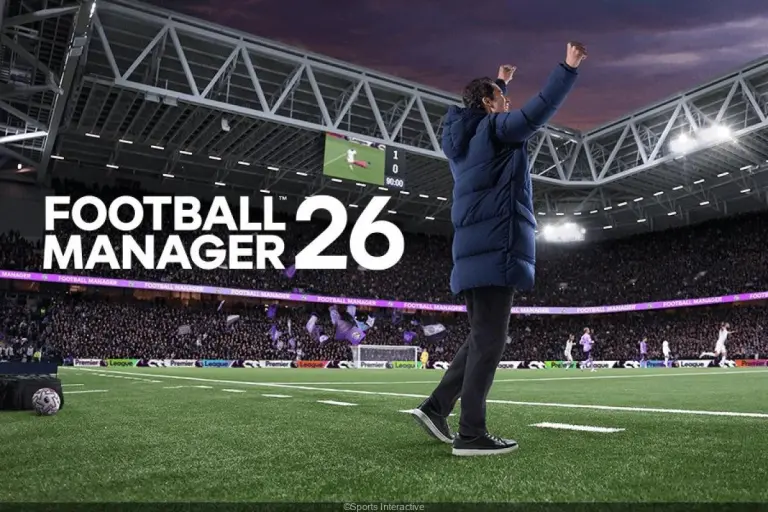
| The project relies on the legacy of Football Manager and the advances of FM26 under Unity. |
| The gameplay loop centers on detection, education, and development of young talents. |
| A sports simulation dedicated to ethics, data, and academy pedagogy. |
| AI tools for management gameplay, scouting, and individual progression. |
| Modest monetization, independent development, and openness to the modding community. |
| Objective: become the reference in football management from grassroots to elite. |
Modern football resonates as much for Sunday goals as for the emergence of a shy cadet. A lone creator wants to make this the heart of a complete video game. His Football Manager spin-off abandons the pros’ sidelines to explore training from A to Z. It stages the bridges between U13 and U21, school constraints, and family pressure. The ambition is clear: transform a club’s pedagogy into a playground without diluting the complexity of reality.
This independent development project comes at the right time. The FM franchise is migrating to Unity and opens an era of more agile tools, inspiring agile creators. Here, the promise lies in granularity and ethics. The impact of a U17 coach is measured, growth tests are orchestrated, and game minutes are managed with finesse. The result is a sports simulation where the youth team no longer serves as a prop but becomes a strategic saga in its own right.
Youth spin-off of Football Manager: concept, promise, and key differences
A solo developer designs a standalone experience, respectful of the Football Manager DNA but centered on educating young talents. The idea is not to simplify training. It is to make it playable, readable, and rewarding. Every decision made at U16 influences progress margins, injuries, or mental balance.
The promise is structured around a concrete tripod. First, targeted detection with morphological, biomechanical, and school data. Next, individualized training and workload cycles. Finally, bridging to seniors through controlled steps. This approach fits with the real ecosystem of academies while remaining accessible.
Why isolate youth training?
In a global management game, training often suffers from short-term rules. Here, the horizon stretches out. Value is created through entire cohorts, not just an isolated prodigy. Players learn, fail, and mature at a tangible pace.
This focus also allows modeling of overlooked details. School internships, growth shifts, or cognitive fatigue enter the equation. The player-coach must arbitrate between ambition and health.
Gameplay loop: detect, train, promote
The loop opens with a nuanced scouting phase. Local tournaments feed a pool of prospects rated by observers with varied profiles. Reports include strong signals and uncertainties, as in real life.
Then, training takes over with technical workshops, micro-objectives, and quarterly assessments. Clear feedback highlights visible progress. Promotion to reserves or seniors is piloted with safeguards to avoid mishaps.
An example illustrates the approach. A 15-year-old winger shows exceptional speed but fragile endurance. The staff works on running economy and dribbling technique under fatigue. Three months later, his sprints are less chaotic and decisions calmer.
Finally, narration emerges from trajectories. A player passes his diploma, misses a key match, then succeeds in his comeback. This dramaturgy supports engagement. It encourages long-term thinking.
This concept restores academies to their rightful place. It installs a comprehensive vision where every gesture forms a solid stone of the sports project.
Technologies and architecture: Unity, scouting AI, and progression models
The Unity engine is chosen for its versatility and ecosystem. The FM series already uses it, which facilitates integration of modern UX and sharper rendering. The creator thus capitalizes on these gains while keeping code focused on performance.
The tool manages lightweight scenes for youth matches. Simulations run fast and remain readable. Consequently, testing cycles speed up, a crucial asset for a solo-driven project.
Unity engine and FM26 legacy
FM26 showed smoother animations and a redesigned interface. The spin-off takes up this clarity for visualizing training loads and growth trajectories. Graphs animate but don’t saturate the screen.
“ID card” style profiles detail psychosocial traits. Resilience, curiosity, or autonomy are observed without caricature. These traits feed decision AI during matches and exam periods.
Scouting AI and personalized progression
A recommendation AI prioritizes useful observations. It weighs opposition quality, score consistency, and weather context. False positives decrease, protecting a modest academy’s budget.
Progression models combine growth curves and learning windows. A late defender can catch up if benefiting from targeted minutes. The algorithm doesn’t impose a fixed destiny.
Calibration relies on cohorts simulated over several seasons. Load isochrones indicate when to slow down or speed up. Avoidable injuries drop if instructions are followed.
The accessible analytics layer avoids fetishizing numbers. Dashboards speak clearly. They suggest concrete actions instead of a flood of opaque metrics.
This technical foundation supports the pedagogical ambition. It promises a sports simulation as credible as it is readable.
These choices set a high bar for any independent development. They prepare the future: more human systems and finer rules.
Management mechanics: recruitment U14-U21, academy, and social environment
Recruitment spans U14 to U21 windows. Each age group imposes sports and school limits. The game encodes these constraints, requiring planning over multiple cycles.
Local agreements allow partnerships with schools. Aptitude tests mix coordination, game memory, and spatial reading. The staff obtains clues rather than verdicts.
Rules, schools, and timing
Timing rules protect bodies. They impose load caps and recovery delays. Sessions mix technique, small-sided games, and prevention.
School reports influence availability. An important exam postpones a match or an intense session. The managing player must anticipate these hazards to keep the roadmap.
Parents, agents, and micro-negotiations
The narrative is enriched by family interactions. A cautious parent refuses an early signing. A hurried agent demands an international showcase. Balance is found with guarantees and a clear plan.
Scripted meetings offer credible branches. A successful interview can revive fragile trust. Conversely, a vague promise undermines the clan’s adherence.
Workshops and rituals of a high-performing academy
The game encourages stable and adaptable routines. Thematic workshops target micro-skills. Progress is visible over time, not over a weekend.
To structure action, rituals mark the season. Cycles breathe and limit mental wear. This framework reduces form gaps and relapses.
- Individualized training plan: measurable and adjustable monthly goals.
- Themed matches: tactical constraints to enrich game reading.
- Prevention: strength, mobility, sleep, and nutrition monitored without burden.
- Tutoring: doubling with a U21 staff member to accelerate autonomy.
- Quarterly review: cross-check between staff-player-family with clear leads.
A case study illustrates the interest. A U17 defensive midfielder reads the game well but fades after halftime. The staff introduces block training, then reduces foolish sprints. In four weeks, second-half impact climbs significantly.
These mechanics enrich football management without losing pace. They turn the youth team into a narrative and strategic engine.
Economy, licenses, and ethics: how to stay on track independently
Funding conditions ambition. A solo developer must keep scope under control. A reasonable premium model, without loot boxes, is enough to support the roadmap.
Modest DLCs can expand the tournament map or scenarios. The community pays for value, not for gimmicks. This sobriety fits the spirit of training.
Licenses, data, and compliance
Obtaining full licenses remains costly. The game thus avoids sensitive logos at first. Generic databases and integrated editors offer a credible alternative. Later, targeted agreements can enrich the offer.
Youth data requires strict framing. Anonymized profiles and aggregates dominate. Parental consents apply when fiction is inspired by real cases.
Clear monetization and respect for players
The commercial offer remains simple. One-time purchase, free stability updates, and optional expansions. It’s explained in one page. It’s readable and reassuring.
Server costs are limited to leaderboards, cloud saves, and private leagues. Global tournaments come later once balance is achieved. Caution protects viability.
An academic partnership can finance educational modules. Coaches find ready-to-use supports. Players discover an academy’s rigor without moralizing.
Ethics becomes a competitive advantage. It frames expectations and strengthens the brand. Thus, the video game gains credibility outside the gaming bubble.
This solid economic base makes a deep sports simulation possible. It prepares sustainable seasons and lasting competitions.
With these safeguards in place, the stage is set. The community can now push boundaries and test its ideas.
Community, training eSport, and roadmap of an ambitious spin-off
The project opens to creators from alpha. Editing tools allow adding regions, tournaments, and staff profiles. Bridges with FM databases already exist, easing adoption.
Asynchronous competitions put academies in competition. Players share development plans, then compare curves over a season. The format reduces cheating and rewards strategy.
Competitions, roles, and community content
Private leagues launch “U17 challenges.” Budget and recruitment constraints are set. Winners aren’t always those with the most trophies, but those who better value internal promotion.
Content creators produce documented series. They detail use cases and publish training files. Word of mouth relies on concrete results.
Roadmap: milestones and adoption metrics
A clear roadmap guides the effort. Milestones prioritize stability, then features. Player feedback influences priority order.
| Phase | Key objectives | Status |
|---|---|---|
| Closed alpha | Stable scouting, training, U17 matches | In progress |
| Open beta | Complete editor, regional tournaments, leaderboards | Upcoming |
| 1.0 | Academy campaigns, narration, and U18 contracts | Planned |
| 1.x | Light multiplayer, educational modules, modding API | Planned |
Simple metrics guide progress. Retention at day 7, number of edits, and season completion rate. If these numbers rise, the promise holds. Otherwise, priorities are readjusted.
The FM community has already brought independents into the light. It recognizes the value of well-thought systems. A serious independent development can thus shine beyond the purist circle.
This dynamic naturally extends Football Manager’s philosophy. It pushes the boundary of management gameplay where careers are built: in training centers.
How does this spin-off differ from a classic Football Manager?
It isolates training to make it the heart of gameplay. The player controls U14-U21 scouting, training load, school bridges, and family negotiations. Pros remain in the background; value is born from young talents’ progression and their gradual integration.
What risks are managed by the system?
Growth injuries, mental overload, school failures, and agent pressures are modeled. The game offers safeguards: load caps, medical assessments, tutoring, and structured dialogues with families to stay the course without breaking trajectories.
Does monetization include in-game purchases?
No. The model is premium, with free stability updates. Optional extensions can add tournaments, regions, or scenarios, without intrusive mechanics or lottery.
Can the game be easily modded?
Yes. An integrated editor exposes databases, tournaments, and visual packs. A light API arrives after 1.0 to automate data imports and share content with the community.
Does the AI replace human decisions?
No. The AI prioritizes information and proposes options, but the player decides. Strategic choices, training rhythms, and promotions remain in the manager’s hands.