
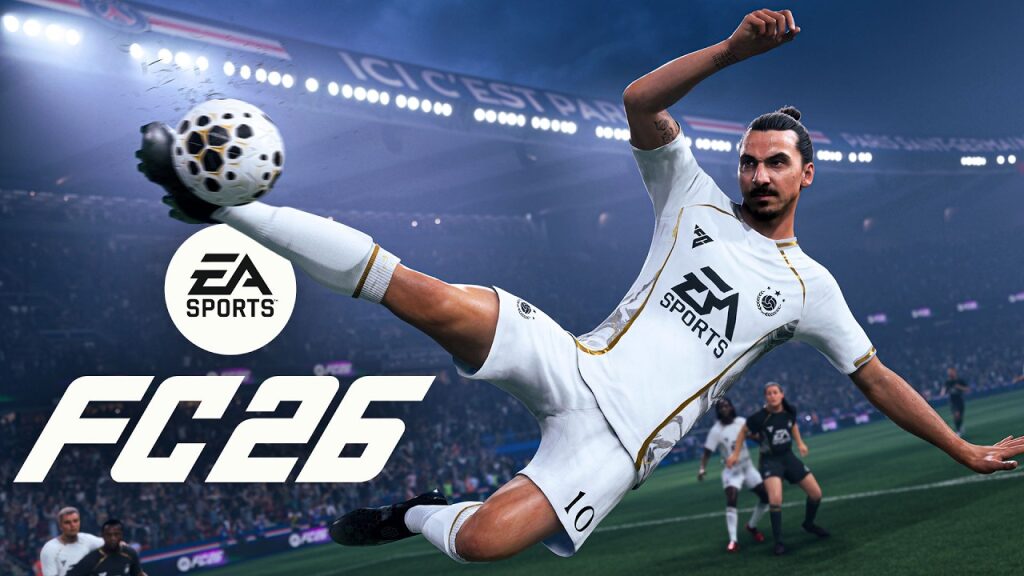
The Final of the FC Pro Open 26 confirmed the rise of esports Football with a clear narrative: fierce competition, tactical precision, and clinical execution. From the global qualifiers to the lights of the Television Centre in London, the event brought together the best players on the circuit. After eight intense days, twelve survivors reached a final bracket contested in eleven matches, culminating in the crowning of a champion. At the center stage, Anders Vejrgang captured attention with his composure and an almost faultless reading of the game. Facing Emre Yilmaz, his current rival, the battle for the title offered key lessons: mastering low moments, controlled vertical transitions, and surgical management of hot moments. Beyond the trophy, the impact is also measured in Championship points, prize money, and automatic qualifications that reshape the power dynamics before the rest of the season.
This event started online with more than 75,000 aspirants, reduced to 250 during the Global Qualifiers, then to 24 for the regular phase. The Highlights were numerous: a last-second goal by Danipitbull in the quarterfinals, a memorable attacking duel between Emre and HhezerS, and confirmation of an elite where every ball loss is costly. In this environment, tactics is not a luxury: it is the key. Flexible game plans, pressing variations, and surgical exploitation of half-spaces distinguished the contenders. The conclusion boils down to a simple idea: at FC Pro Open 26, only a stable game framework allows creative boldness. Vejrgang’s victorious trajectory provides striking proof.
FC Pro Open 26 Final: Analysis and Decisive Highlights
The clash Vejrgang 4-1 Emre Yilmaz opposed two well-documented styles. Emre struck first, but the Dane replied immediately and then reversed the trend before halftime. The fourth goal, scored on the hour mark, sealed the gap. The tempo was then controlled, line by line, with exemplary management of transitions.
This victory gives Vejrgang a historic double on the Open, a check for $100,000, and a symbolic milestone reached: over $1 million career earnings. Above all, it closes a series against Team Liquid representatives: ManuBachoore, Levi de Weerd, then Emre. An assertion of authority that weighs heavily in the Championship race.
From grinding to the summit: from 75,000 entrants to the London stage
The circuit reduced the enormous initial pool to 24 players for the Open, then to 12 qualifiers for the final phase. Group winners advanced directly to the quarterfinals, while second and third places had to go through elimination. This structure rewarded consistency and the ability to close a match under pressure.
With a loud crowd at the Television Centre, the setting recalled great nights. The talent density compressed error margins: a central ball loss, and the opponent punished. This constraint put tactics front and center from the first balls.
Knockout stage: four matchups, four stories
The test of group runners-up and thirds revealed clear scenarios. HhezerS’s performance against Yaskow (10-3) illustrated rewarding aggressiveness. Conversely, ManuBachoore controlled the money time against AnasBadr (5-4). Umut halted the momentum of nicolas99fc (5-2), while Nassada imposed his rhythm against Tuga810 (7-3).
- AnasBadr 4-5 ManuBachoore: late finishing and cold time management.
- Umut 5-2 nicolas99fc: superiority in ball exits.
- Yaskow 3-10 HhezerS: offensive fullness, high tempo.
- Nassada 7-3 Tuga810: assumed verticality and high pressing.
Direct consequence: the four winners earned their ticket to the upcoming FC Pro World Championship. A major advance in the calendar.
Quarterfinals: number one duel and buzzer-beater thrill
Vejrgang 6-5 ManuBachoore lived up to expectations. Tie score at the end of regulation time, decision in overtime at the 109th minute. The final defensive intensity locked the access to opponent shots. Likewise, Levi de Weerd took the early lead against Umut (5-3), confirming the value of the initial advantage.
Emre Yilmaz 8-7 HhezerS offered an offensive fireworks display. Successive deficit reductions, then a late decisive strike by Emre. Finally, Danipitbull 7-6 Nassada closed the round on a last converted chance in the ultimate action. Accuracy in the box made the difference.
Semi-finals: narrow margin and flood
The remake against Levi de Weerd smiled on Vejrgang (6-5). Early lead taken, Levi’s comeback, decisive overtime with millimetric management of the midfield block. Three consecutive Final appearances for the Dane: rare consistency at this level.
Meanwhile, Emre Yilmaz closed the duel against Danipitbull (9-5). Quick break, acceleration before halftime, then control. When momentum reversed, the gap was already too wide. A warning sent to the entire field.
Vejrgang–Emre Final: game plan, adjustments, and control
The scenario was written around three levers: immediate responses after the opponent’s opening goal, pressing variation, and managing the strong period before halftime. The quick equalizer broke Emre’s momentum. The goal before the break changed the geometry of the match.
In the second half, the tactics froze on a compact 4-3-2-1, locked wings, and sober relaunches. The fourth goal set the bar too high. The whole illustrates a simple principle: advantage is only lasting if protected by the tempo.
Tactical Reading of FC Pro Open 26: What the Final Reveals
The competition confirmed key meta trends. Compact blocks dominate, but the best players trigger contextual pressing, not continuous. Rapid switches to the weak-side winger opened high-value shooting angles. Is it a coincidence that these switches often preceded decisive goals?
- Mixed ball exits: inverted full-back to fix, dropped pivot to offer the third line.
- Pressing timing: triggered after slow horizontal pass, targeted high recovery.
- Prioritized finishing: green-timed on crossed shots, low mid-distance shot rate.
- Lead management: low tempo, assumed laterality, pauses to break rhythm.
- Set-piece variations: varied short corners, targeting the far post.
The Final illustrated the importance of emotional control. Without nerves, micro-adjustments (depth and width sliders) become levers for lasting gaps.
Major Players and Championship Stakes After the Final
The winners of the elimination round (ManuBachoore, Umut, HhezerS, Nassada) secured qualification for the World Championship. The semi-finalists (Vejrgang, Levi, Emre, Danipitbull) earned an automatic ticket for the next Open. The end-of-Open table thus influences two competition cycles.
The financial footprint also weighs in. With an added $100,000, Vejrgang passes the million career threshold. This status strengthens an already strong sporting and media influence. The recurring duel with Emre now structures the top tier.
Rewatch FC Pro Open 26 Highlights and Follow the Championship
The best moments are available on VOD. The summaries condense the tension of knockout rounds and the decisive choices in tactics. To deepen the analysis, the Final replays provide clues on positioning and ball exits.
For schedules, live results, and rankings, official channels remain the most reliable source. FC Pro networks on X, Instagram, TikTok, Twitch, and YouTube also share key announcements.
Useful resources: FC Pro – results and schedule | Liquipedia – FC Pro 26 Open | YouTube FC Pro. Upcoming Partner League events will clarify the hierarchy before the World Championship.
Who won the Final of the FC Pro Open 26?
Anders Vejrgang won the Final 4-1 against Emre Yilmaz, achieving a back-to-back double on the Open and surpassing the one million dollar career threshold.
Which players qualified for the World Championship?
The winners of the knockout round – ManuBachoore, Umut, HhezerS, and Nassada – obtained automatic qualification for the FC Pro World Championship.
What tactical trends marked the Final?
A compact 4-3-2-1 block, contextual pressing triggered on a slow lateral pass, and rapid switches to the weak side were decisive, with prioritized finishing on crossed shots.
Where to rewatch highlights and check results?
On official FC Pro channels (YouTube, Twitch) and the EA FC Pro page dedicated to results and schedule. Liquipedia sheets also provide an event-by-event summary.
What are the implications for the rest of the Championship?
Semi-finalists are automatically qualified for the next Open, and point distribution plus prizes reshuffle the hierarchy before the Partner Leagues and the World Championship.