
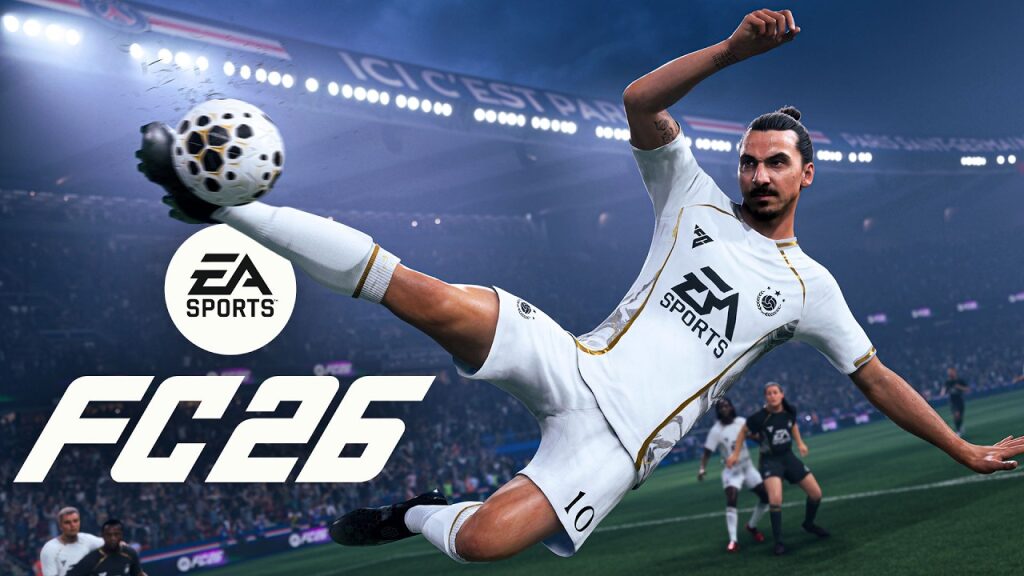
Latest installment of a historic license, EA SPORTS FC 26 presents itself as a competitive game designed for high standards. The promise is clear: to preserve the spirit of modern football while crafting tools tailored for e-sport. The studios focus on a readable, sharp, and measured sports simulation, capable of differentiating the best in multiplayer. In team scrims like the fictional Atlas North, every micro-decision already counts: tempo, pressing timings, and mastery of spaces. From there, the question arises: can the new edition become the central axis of leagues and qualifiers this season?
The verdict will be decided on sometimes invisible fundamentals. First, the stability of the netcode and servers, since online competition requires constant responsiveness. Then, the coherence of gameplay: ball physics, inertia, and calibrated error windows. Finally, the game’s ability to serve professional players: practice tools, tournament formats, and visual clarity. If these levers align, realistic graphics will cease to be just an aesthetic asset to become a performance gain. It is on this ground that a sustainable competitive circuit is won.
EA SPORTS FC 26 and the ambition of a reference competitive game
EA SPORTS FC 26 aims to consolidate a robust competitive base. The challenge: to offer a smooth power progression between casual matches and high-stakes brackets. Thus, progress must connect ladder, weekly events, and official circuits without friction.
From a product standpoint, a stable multiplayer matters as much as animation. Clear ranked queues, understandable MMR, and uniform rules create trust. In time, this logic promotes retention and media readability.
Technical e-sport foundation: network responsiveness, matchmaking, and anti-cheat
The competitive foundation rests first on low and stable latency. Consequently, geographical pairing, jitter control, and packet handling during peak loads become essential. Clear monitoring of ping and losses reassures participants.
Next, matchmaking must reduce smurfing and better balance confrontations. A coherent evaluation system limits skill gaps and refines the competitive gameplay. On the integrity side, active detection and swift sanctions protect the leagues.
Atlas North, a fictional yet realistic organization, trains during low-traffic time windows to solidify its timings. Result: cleaner sequences and more reliable reading of pressing.
Broadcasters and TOs (tournament organizers) also gain clarity. Integrated network indicators facilitate refereeing and reduce disputes, which enhances the credibility of the e-sport scene daily.
Sports simulation gameplay: game reading and decisive execution
The success of a competitive sports simulation is measured by the risk/reward curve. Losing a dribble must be punished; a sharp pass, rewarded. Thus, ball physics, sprint inertia, and aerial duels form a triptych that hierarchizes choices.
During a scrim, the fictional player Lina “Nova” Karim dictates the tempo with laser passes toward the half-space. The short execution window forces the opponent to decide quickly: slide fast or concede the inside. Here, the game validates decision, not approximation.
Realistic graphics serving readability
Realistic graphics only matter if they improve perception. Clean lighting, contrasted kits, and a streamlined HUD accelerate reading of runs. Camera choice also influences anticipation of game reversals.
For a new edition, the goal is to reduce visual clutter. Fewer effects, more useful information: readable cursor, clear gauges, and soberly indicated timings. Immersion then becomes performative.
Key indicators to monitor during the first meta weeks:
- Conversion rate of clear chances by shooting zone.
- Pressing efficiency after loss and fatigue management.
- Dribble/pass balance in one-on-one and half-spaces.
- Variety of goals on CPAs, crosses, quick transitions.
- Impact of balancing patches on the competitive ladder.
If these metrics converge, the meta will favor creativity rather than exploitation of overly stable patterns, which nourishes the pro scene.
Multiplayer modes and online competition: scales, formats, and calendar
A competitive ecosystem thrives on its architecture. Clear ranked divisions, weekly cups, and regional qualifiers map a route to the top. In parallel, 1v1 and co-op modes give breathing space to the schedule.
Online competition demands formats readable for the audience: cumulative BO2, overtime, and intelligible tie rules. The reward is a sports narrative that builds loyalty week after week.
Tools for professional players and staff
Professional players require precise tools. A rich training mode allows repetition of CPAs, pressing triggers, and ball exits under pressure. Drills playlists speed up gesture automation.
For staff, a viewing theater with channel-specific replays (carrier, defensive line, zones) streamlines analysis. A spectator-coach with non-intrusive feedback better frames scrims without disturbing the rhythm.
The fictional club Rive-Droite eFC documents every session: minute-by-minute annotation, capture of estimated xThreats, and sprint load reports. This granularity turns practice into a lasting advantage.
Economy, fair play, and accessibility: fairness at the heart of the project
The backbone of a solid circuit remains fairness. Restricted assistance settings in tournaments, controller parity, and displayed latency rules guarantee a fair framework. Additionally, identity checks and anti-dodging rules strengthen trust.
Regarding economy, cosmetic content must not impact performance. Clear separation between aesthetics and efficiency protects the competitive base. In the long run, rule stability attracts more organizers and broadcasters.
Licenses, stadiums, and football culture: useful immersion, never overwhelming
Authenticity feeds the emotion of football. However, in high-stakes matches, immersion must give way to clarity. Modular commentary, streamlined broadcast overlays, and bright stadiums aid performance.
For fans, licenses and ceremonies remain precious. For pros, the “competitive” option must prevail, with a standardized HUD that facilitates broadcasting and refereeing. This compromise serves the whole ecosystem.
To discover the standard regulations applied on official circuits, EA’s dedicated page remains a useful reference: rules and competitions. The normalization of settings is detailed there.
E-sport trends 2026 and EA SPORTS FC 26’s potential place
In 2026, e-sport seeks shorter and more TV-friendly formats. Segmented matches, clear stories, and weekly rendezvous dominate. EA SPORTS FC 26 fits ideally in this framework thanks to its readable matches.
Mobile growth and co-streaming culture demand flexible broadcasting tools. With modern broadcast production and adaptive overlays, the new edition can unite a broad audience without diluting competitive rigor.
Is EA SPORTS FC 26 calibrated for e-sport from launch?
The competitive foundation rests on online stability, match readability, and coherent formats. If these points align from the first weeks, leagues and qualifiers can quickly structure around the game.
Which settings should be favored for optimal competitive gameplay?
Wide camera and sharp contrasts for readability, streamlined HUD, limited assists according to regulations, and display of network indicators. These choices improve decision-making and execution under stress.
How to progress quickly in ranked multiplayer?
Alternate targeted drill sessions (CPAs, ball exits, switches) and VOD reviews. Setting numerical objectives per block of 10 matches (conversion rate, successful pressing) allows measuring the real impact of adjustments.
Does the pro scene require specific equipment?
A 120 Hz display, stable wired connection, and reliable controller constitute the base. In tournaments, respecting standardized configurations guarantees fairness and reduces extraneous variables.