
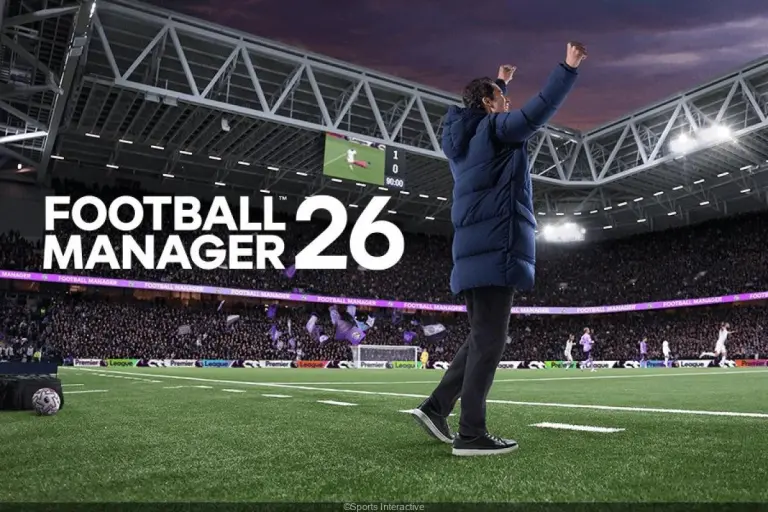
| Key Takeaways on Football Manager 26 |
|---|
| Official trailer with 72 seconds of gameplay and a first look at the new engine based on Unity. |
| Improved graphics: varied stadiums, dynamic crowds, refined animations and revised lighting for match nights. |
| Enhanced strategy and team management: revamped manager creator, modernized startup flow, deeper match statistics. |
| Native integration of women’s football, within a unified ecosystem alongside men’s competitions. |
| Clear PC configuration: support for Intel iGPUs, recommendations starting from an RTX 2060/RX 5600 XT. |
| Availability: the new version now accessible on relevant platforms. |
| Ambition: to reconcile fans after the cancellation of FM25 and relaunch the benchmark football simulation. |
After months of waiting and a turbulent development cycle, the trailer for Football Manager 26 finally offers a clear window onto the gameplay. In seventy-two seconds, the video highlights the shift to the Unity engine, more believable animations, as well as a more tense stadium atmosphere. This first sequence also confirms the stated ambition: refining the simulation and modernizing the experience without diluting the tactical depth. The context gives weight to these images, since FM25 had been postponed several times before being cancelled, leaving a frustrated community. Today, the focus is on the relaunch, clear strategy, and visual quality, while keeping at the center what defines the series: the finesse of team management and sporting decisions. Early feedback praises the density of details, crowd reactions, and variety of stadiums. The usability over a full season remains to be tested, but the foundation seems solid for a football video game that aims to be comprehensive.
SEGA unveils a new video for Football Manager 26: the first gameplay glimpse that changes everything
The official video released by SEGA and Sports Interactive sets the framework for this new version. The editing opens with a tunnel sequence, moves to close-ups of warm-ups, then shifts to match phases where ball circulation appears more fluid. This narrative progression serves a clear message: the gameplay gains readability without giving up tactical richness.
We first observe more natural orientation control animations, better softened tackles, and shots that seem to deliver a sharper visual impact. Then, the crowd reacts in good tempo to key moments: shouts, stands waving, flags moving. This subtle realism enhances immersion without saturating the screen.
A short but dense trailer
Seventy-two seconds impose choices. The creators thus relied on close-up shots, then wide views to highlight the variety of stadiums. The pitches show believable wear nuances, and the evening lighting appears better calibrated, with less aggressive shadows. The ball maintains a clear trajectory, useful for following fast phases.
The absence of a detailed user interface is not an accidental omission. It signals precise teasing: prioritizing the impact of the Unity engine and reserving match and navigation ergonomics for a dedicated presentation. Thus, the interest remains focused on the feel of the pitch and the atmosphere.
After the cancellation of FM25, a strong signal
The context weighs heavily. The abandonment of the previous release had shaken trust. In response, this trailer avoids any superfluous content and sticks to tangible proof: sharp runs, better timed aerial duels, and more coordinated pressing. The community sees in this a commitment to bridge the credibility gap that threatened the brand.
Behind the scenes, the migration to Unity required technical trade-offs. The studios chose to optimize rendering and match engine stability first, rather than delivering everything at once. This gradual strategy is reassuring, as it avoids piling up poorly polished features.
What we don’t see yet
The trailer reveals neither the tactics screen nor the data center. This raises a legitimate question: what place for statistical granularity and training session routines? Official information nevertheless confirms a redesigned manager creator and a simplified startup flow, with more options to express an identity and career path.
Furthermore, the integration of women’s football is confirmed within a unified universe. This structural choice avoids the compartmentalization often criticized in the past with other licenses. Mixed careers thus promise sporting and narrative continuity.
Beyond the emotion of the comeback, this video lays the foundation for a promise: a more immersive FM on the pitch, and equally demanding in decisions. The real test will come with hours of gameplay, but the base seems in place.
Unity and matchday: how the new engine transforms the football experience
The leap to Unity is not just aesthetic. It changes the way an action reads and is understood in a simulation. Running paths cross with more naturalness, and distances between lines are better perceived. This changes live diagnosis, key for correcting strategy in a match.
A simple example illustrates this impact. When a winger dives into the half-space, the passing angle of his playmaker becomes more obvious. The decision seems faster, as the eye better distinguishes the markers. This clarity reduces interpretation errors.
Animations, collisions, and ball physics
Sliding tackles show better materialized contact points, and shoulder charges avoid the “magnet” effect. The ball retains a more plausible speed when exiting a dribble, with visible rotations on curled shots. These details compose a movement grammar.
Goalkeepers also benefit from this physical layer. Dives show a cleaner first dragged step, and leaps seem indexed to the run. On screen, a mid-height save reads as a pre-activation, which enhances action understanding.
Stadiums, pitches, and sound atmosphere
The trailer reveals differentiated speakers: two-tier stands, small tight arenas, European cathedrals. The pitches show a variety of grasses, sometimes marked by maintenance lines. The sound atmosphere follows the match dynamics with finer levels, without breaking concentration.
This diversity is not cosmetic. It influences tactical reading. A tighter stadium makes pressing more readable. A large arena accentuates the emotional swing effect after a goal. The user then adapts instructions.
Cameras and tactical readability
Camera angles gain in stability. An elevated side view helps gauge block heights, while a dynamic camera on the axis highlights interior circuits. This visual comfort serves team management, as spaces appear earlier in the phase.
Visual markers, like softer shadows and controlled contrasts, reduce eye strain. Over a long session, this sobriety weighs on decision quality. It is a direct benefit for match strategy.
The whole combines immersion and clarity. The Unity engine brings concrete gains that translate into finer choices at the sideline.
Strategy and team management: redesigned tools for a clearer new version
Modernization is not limited to rendering. The startup flow introduces more flexible paths to start a career. The manager creator, deeply revised, allows a more precise customization of technical profile and career path. This entry point guides the club’s goals and expectations.
Continuing on, match preparation weaves a clearer link between training, game plan, and data feedback. The promise is to avoid labyrinthine menus, while maintaining the depth expected from a football video game focused on team management.
Manager creator and game identity
The model announces more ways to express personality, style, and history. Choosing a block-based play philosophy (intensity, width, height, pressing) conditions automatic but modifiable recommendations. This flexibility helps newcomers without locking in experts.
An example career illustrates this framework. A fictional club like US Montrevil entrusts the survival project. In two clicks, the philosophy “quick transition, medium pressing” suggests markers. The user then adjusts triggers and management of weak phases.
Deeper statistics and clearer decisions
Match statistics gain in contextualization, with more meaningful influence zones and dynamic comparisons. Reading becomes actionable: a winger too isolated? The tool suggests advancing a fullback and an interior reinforcement. Nothing is imposed, everything remains controllable.
Women’s football integrates without interface breaks. Reports and indicators follow the same logic, speeding up learning. Transfer markets coexist, enabling realistic bridges between sporting projects.
Practical tools: from theory to the bench
For this redesign to serve victory, certain key points deserve attention from the first hours. They address preparation, live reading, and squad adjustment.
- Load planning: alternate intensity days and guided recovery sessions.
- Complementary roles: link 8/10 to a false inside winger to create a passing lane.
- Set pieces: distribute blocks to secure defensive transition.
- Targeted rotation: manage high-intensity profiles during weeks with three matches.
- Useful data: monitor distances between lines rather than only passing percentages.
This framework adapts to profiles. An athletic squad favors directional pressing. A technical team aims to master zone 14 and half-spaces. The choice is finely steered, without a decision tunnel.
In the end, the tool redesign reinforces usage intelligence. Strategy gains pace, and the player keeps control over the club’s identity.
PC configuration and performance: what it takes to run Football Manager 26
Technical specifications clarify access to the game. Modest desktop PCs remain compatible, while beefy configurations benefit from visual surplus. This granularity avoids bad surprises and frames the experience according to the hardware.
On Windows, minimum requirements and recommendations are displayed distinctly. Laptop players also have precise markers, useful for mobile sessions.
Desktop PC: minimum and recommended
The minimum mentioned includes an Intel Core i3-530 or AMD FX 4100 processor, with 4 GB RAM. For graphics, a GeForce GTX 960 or Radeon R9 380 is sufficient to launch the gameplay under basic good conditions. Intel iGPUs are supported, which broadens access.
For clear comfort, the recommendation is based around an Intel Core i5-9600 or AMD Ryzen 5 2600, supported by 12 GB RAM. Recommended graphics cards start at the GeForce RTX 2060 or Radeon RX 5600 XT, to unleash lighting effects and advanced animations.
Laptops: option readability
On the go, an Intel Core i3-330M or AMD A6-5200 represents the entry point. Minimum graphics chips like the GeForce GTX 960M or Radeon R9 M375 remain viable for modest rendering. Intel HD 530 chips are tolerated, with lowered settings.
The recommended step sets the bar at an Intel Core i5-1035G7 or AMD Ryzen 7 3750H. On mobile GPU side, references GeForce RTX 2060 Mobile or Radeon RX 6600M deploy the best balance between fluidity and visual finesse on match day.
| Platform | Minimum | Recommended |
|---|---|---|
| Windows (Desktop) | CPU i3-530 / FX 4100, 4 GB RAM, GTX 960 / R9 380, Intel iGPU OK | CPU i5-9600 / Ryzen 5 2600, 12 GB RAM, RTX 2060 / RX 5600 XT |
| Windows (Laptop) | CPU i3-330M / A6-5200, GTX 960M / R9 M375, Intel HD 530 | CPU i5-1035G7 / Ryzen 7 3750H, RTX 2060 Mobile / RX 6600M |
Optimization: settings and best practices
Graphic profiles offer quick calibration. On entry-level hardware, lowering crowd density and anti-aliasing frees up frames per second. On laptops, activating full performance mode and plugging in the power supply stabilizes GPU frequency.
For long careers, the number of active championships weighs more than textures. An effective compromise is to activate a wide player pool while limiting unplayed lower divisions. This recipe preserves the depth of the transfer market.
With these keys, everyone can adjust the experience to their hardware. The goal remains constant: maintain a clean and responsive match reading.
Release, platforms and women’s football: focusing on a unified and available experience
The studio confirms that Football Manager 26 is available on the relevant platforms. This shift marks the true return of the series after a blank year. The usual channels, including Steam, highlight technical notices and useful patch notes.
Marketing coordination aligns with the gameplay trailer. The idea is to install major new features, then open up on deeper dives dedicated to career modes and match ergonomics.
Editions and career startup
The startup flow has been reworked to smooth the first screens. The manager creator, redesigned, broadens the profile spectrum. Management styles influence initial recommendations, without locking progression.
This entry is coupled with discreet guidance, which remains disable-able. Veterans save time, newcomers find landmarks. In all cases, the strategy remains personal.
A unified ecosystem with women’s football
The integration of women’s football into the main ecosystem avoids silos. Competitions, transfers, and training centers coexist within coherent calendars. Analytical reports share the same structure, which reduces cognitive load.
A mixed career thus becomes credible. A club can set a common policy, while respecting tactical and physiological specificities. This approach reflects the evolution of global football and broadens the scope of stories to tell.
Tips for first steps
To capitalize on the novelties, it is useful to set a simple framework. Three axes suffice: clear play philosophy, development of two offensive circuits, and weekly data routine. Then, refine little by little.
A typical routine works well. Monday is for video feedback, Wednesday for automations, Friday for set pieces. During the match, keeping two predefined quick adjustments speeds up responses.
With established availability and a broadened content spectrum, this new version aims to become once again the reference for football simulation. The stage is set, the pitch too.
What are the main new features of Football Manager 26?
The switch to the Unity engine, reworked graphics and animations, a redesigned manager creator, a modernized startup flow, deeper match statistics, and the native integration of women’s football in a unified ecosystem.
Is the game available and on which platforms?
Yes, the new version is available on the relevant platforms, notably PC via the usual stores. Official pages detail configurations and patch notes.
What PC configuration is required to enjoy the gameplay?
The minimum on desktop PC includes an i3-530/FX 4100, 4 GB RAM, and GTX 960/R9 380, with support for Intel iGPUs. The recommendation starts from an i5-9600/Ryzen 5 2600, 12 GB RAM, and a RTX 2060/RX 5600 XT. On laptops, aim for at least an i5-1035G7 or a Ryzen 7 3750H paired with a RTX 2060 Mobile or RX 6600M.
Does women’s football change the way of playing?
It expands the sporting perimeter without complicating the interface. Women’s competitions coexist with men’s, with connected data and markets. Tactical tools remain common and modifiable according to the project.
Does the trailer show the full match interface?
No, the trailer focuses on the pitch, stadiums, and animations. Detailed presentations of the interface and management screens are planned separately to preserve the visual impact of this first preview.