
| Main takeaways |
|---|
| Football Manager 26 improves technically thanks to Unity, but disappointing aesthetics weaken immersion. |
| The user interface prioritizes accessibility, at the cost of less readable depth for veterans. |
| The Match Day gameplay shines: duality of roles, camera, and animations enhance football strategy. |
| Manager creation tells a better story, but removes historic control levers. |
| Women’s football is fully integrated, with equivalent attributes and distinct budget dynamics. |
| Enjoyment remains, despite navigation frictions and the loss of appreciated analytical tools. |
Two years after the 2024 installment and the notable cancellation of an intermediate episode, Football Manager 26 arrives with the ambition to open a new cycle. The Unity engine promises a solid base and a more credible Match Day. Yet, a paradox arises from the first hours: a disappointing aesthetic and user interface choices that dilute the depth cherished by enthusiasts. Between assumed modernization and loss of landmarks, the balance is still seeking itself.
This cult management game remains a football simulation that rewards patience, method, and anticipation. However, the user experience suffers from choices designed for platform convergence. Newcomers will benefit from a cleaner veneer and improved match gameplay. Veterans, meanwhile, will regret the former density made of tables, filters, and instant comparisons. The conclusion is clear: the product’s architecture progresses, but the comfort of navigation becomes more complicated.
Football Manager 26 and Unity: technical progress, disappointing aesthetics, and immersion put to the test
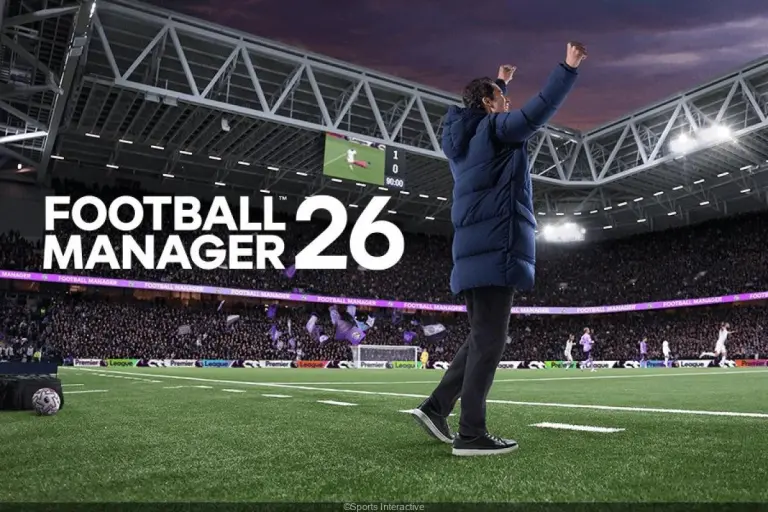
The shift to Unity marks a new era. Stadiums gain in lighting, camera angles vary better, and the overall rendering seems sharper. On the pitch, trajectories are more readable and tactical reading is facilitated. Yet, a pitfall persists: off-pitch graphics. The 3D models of managers and players retain an angular look. Texture detail struggles, especially on faces and hair.
This visual weakness harms immersion. In a management game where every detail nurtures attachment to a career, the coach’s representation counts. Hairstyles and customization options remain limited. Several hairstyles seem generic, with few credible variations according to body types. This also applies to female avatars, too often confined to similar styles. A broadened creation tool would have breathed the expected touch of modernity.
However, useful advances must be acknowledged. The presentation of Match Day gains in pace. Replays are better framed and the pitch displays more natural shades. During simulated sequences, the 2D option allows clear visualization of passing lanes. Thus, the reading of key moments becomes clearer. This quality increase directly serves football strategy, which relies on more reliable indicators.
A use case illuminates the stakes. A fictional coach, Rami Cho, takes charge of Cheonan. He builds his identity through the visual feel of pressing and overlapping runs. Watching highlights from multiple angles, he adjusts the height of his defensive line. The engine better translates intent, even if collisions sometimes remain abrupt. Animation coherence improves, but clashes persist in duels.
Implicitly, the disappointing aesthetic outside matches creates a gap with the good pitch quality. The paradox is clear: the technical base lays solid foundations, while the cosmetic layer and avatar variety stagnate. Overall, competition on this segment does not rely on photorealism. It aims rather for functional credibility, where readability and visual personality must converge. Here, only half the journey is completed.
Football Manager 26 user interface: asserted accessibility, depth compromised
The new user interface assumes a clear ambition: to bring PC, console, and mobile closer together. The general aesthetic evokes a tablet app. Modular windows, generous spacing, and compact typography dominate. On a large screen, information density recedes. Eyes tire faster, as blocks require more scrolling.
This orientation favors newcomers. First steps seem smoother. Conversely, exploration weighs more on veterans. Several historical shortcuts disappear. Some sections hide behind successive portals. Simple access to a higher division sometimes demands a cascade of menus. The sensation of “death by dropdowns” sets in, directly harming the enjoyment of play.
Navigating fast or well: the eternal compromise
An experienced coach, Clara Mendes, manages a second division club. She wants to check the neighboring top-tier standings, then return to the scouting tab. In former interfaces, two clicks sufficed. Now, navigation requires a detour through a regional hub, then filtering by gender, then a “Stages” view. The guiding thread breaks, and tactical attention scatters. The user experience loses pace.
Data-driven practitioners note other removals. Player comparisons, role highlights, or certain passing maps become rare. Attribute graphs or customizable color options have been removed or buried. For a football simulation where micro-gains decide a season, these absences weigh heavily. Quick decisions now require more manipulations.
- Competition access: longer process, fewer contextual actions.
- Analysis tools: some visualizations hidden or missing.
- Customization: fine skin and color settings reduced.
- Message flow: readable messaging style but loss of density.
- Match shortcuts: replay filters and live details less accessible.
This setback calls for nuance. The strategic intention remains defendable. Unifying usages lowers the entry barrier, broadening the player base. In the long term, a common foundation can accelerate quality-of-life projects. Provided “pro” layers are progressively reintroduced. Without this, the historical audience will feel dispossessed of their analyst workshop.
On PC, temporary solutions exist. These include personal routines: systematic favorites, pinned notes, and saved search scenarios. Moreover, menu hierarchy would benefit from being configurable. A configurable “quick access bar” option would restore execution speed. A measured UX project can reconcile accessibility and mastery. There lies the opportunity.
Gameplay and football strategy: a Match Day that saves the season
Thankfully, the heart beats strongly during matches. The tactical gameplay evolves with a clear separation of phases. In and out of possession, instructions become dual. An attacking fullback can turn into a harasser when retreating. A central midfielder can shift to close a line. This granularity gives a lively sensation. The formation adapts to the tempo, enriching the reading.
On the green rectangle, clarity improves. Animations are not perfect, but ball circulation seems more credible. Deep runs stand out better. Coordinated pressing is felt in impact zones. Thus, adjustments become more concrete. In return, football strategy gains precision. Coaches set up finer tactical mirrors.
Example: securing the wings without losing the channel
Clara Mendes lines up a forward-leaning 4-3-3. In attack, her fullbacks push high. Out of possession, she shifts her central trio into defensive midfielders. The channels remain covered, even if the team retains width with the weak-side winger. This setting, simple to describe, becomes clear on screen. Opponent interceptions jump out thanks to the new camera angle.
A novelty also deserves praise: Instant Result. The option, once reserved for modified skins, is now properly integrated. It respects the coach’s responsibility. No more artificial “holidays” credited to the assistant. For a busy schedule, the feature lightens the pace. It allows speeding routine periods while stopping at key fixtures.
Beyond that, the 2D rendering compensates for persistent 3D collision limits. When duels become confusing, the schematic plan reveals the collective framework. The eye better spots clumsy density or an isolated pivot. Thanks to this alternation, the coach gains a double view. In the long term, the tactical performance indicator advances with more reliability.
Ultimately, matches reconcile part of the community with the product. Enjoyment of play is reborn on the pitch. The engine makes ideas visible. Dead times fall away via Instant Result. The whole forms a rewarding loop. As AI and angles refine, the promise of an expressive season strengthens.
Coach creation and progression: enriched story, control levers reduced
Manager creation changes spirit. The system no longer freely distributes attribute points. It relies on reputation tiers, past experiences, and tendencies. The story gains depth. The avatar comes from a credible background, whether a former top-level player or a technician from scouting. This narrative coherence is immediately appealing.
The downside is clear. Fine adjustments disappear. Formerly, a 1–20 distribution sculpted a profile precisely: authority, motivation, attacking movement, individual management. Today, circular gauges replace granularity. Some historic dimensions fade or are renamed, like “discipline” becoming “authority.” The manager loses part of their “crafting.”
How to regain mastery without the old attribute editor
A targeted staff can fill the gap. Hiring an assistant focused on development brings precision to progressions. A data manager compensates for the absence of direct comparisons. Weekly training serves as an adjustment lever. Micro-sessions like “pressing and drive” sharpen off-ball behaviors. This DIY approach restores some control.
Clara Mendes illustrates this approach. Her background places her as an attacking technician. To balance, she hires an assistant coach oriented towards defensive organization. In parallel, she defines tendencies for youth management, as her club bets on post-academy training. Quarterly progress reviews replace old numeric bars. The framework changes, but the goal remains accessible.
On a daily basis, the new matrix demands a different perspective. Decisions flow through the story, less through raw statistics. Over time, this logic can be appealing, if the peripheral toolset is enriched. Synthetic tracking screens, compatible with the “lore” spirit, would provide clarity. Without this, the manager feels like navigating by compass rather than by map.
Women’s football in Football Manager 26: attribute coherence, contrasting budgets, and new dynamics
The integration of women’s football marks a milestone. Women’s leagues load alongside men’s, without technical hierarchy. Attributes share the same scale. A 20 means excellence, regardless of gender. This decision sends a clear message: talent evaluation aligns with the same standards. Football simulation gains credibility.
On the market, dynamics differ. Wages are more modest. Contracts are shorter, with more frequent movements. Rosters renew quickly. Salary management requires constant vigilance. This context creates windows of opportunity to build competitive teams quickly. Cycles shorten, and optimization mindset takes over.
Another realistic point emerges: injury types. Ligament risks, especially knee, are better reflected. Medical staff planning becomes crucial. Prevention, muscle strengthening, and periodization limit hazards. A performance unit attentive to workloads reduces long unavailabilities. This scientific approach fits well at the heart of the management game.
Concrete example. Élise Laurent, an ambitious technician, accepts a position in the women’s elite. She targets underrated talents at contract end, then secures a core of leaders. In parallel, she establishes biomechanical monitoring with weekly load points. Long-term injured players benefit from a gradual return. Over three transfer windows, the squad gains stability and financial leeway.
For the player, the coexistence of databases enriches the calendar. Expertise pathways, scouting, and match methodologies transpose well. The user experience finds fresh exploration ground. With distinct budgets and career rhythms, scenario variety increases. The key now is maintaining analysis tools at a high level. This requirement conditions the feature’s sustainable growth.
Is Football Manager 26 worth the investment for a series veteran?
Yes, if the core practice remains tactics and Match Day. The phase separation, better cameras, and Instant Result support enjoyment. However, the user interface removes analysis conveniences. Veterans will need to adapt routines to regain their rhythm.
What does Unity change in the daily experience?
The engine brings cleaner rendering, more dynamic camera angles, and more readable highlights. Overall stability improves. However, 3D models of managers and some visual details remain improvable. The most tangible impact is seen during matches.
How to compensate for the loss of comparisons and analysis tools?
It is advised to strengthen data staff, create targeted favorites, and save searches. Observation routines and alternating 2D/3D views help maintain clear vision. Also, centralizing pinned notes recreates a custom dashboard.
Does women’s football bring a true gameplay novelty?
Yes. Attributes are evaluated identically, but markets, budgets, and contracts differ. Squad building cycles are shorter. Medical management and prevention gain importance. These parameters renew recruitment and rotation approaches.
Does the disappointing aesthetic really weigh on immersion?
It does not cancel Match Day quality but cuts momentum between matches. Limited avatars and a very tablet-style UI reduce information density on PC. With fixes and customization options, the impact could quickly lessen.