
| To Remember |
|---|
| 44 countries for 44 different scenarios: each unique save of Football Manager 26 maximizes learning and enjoyment. |
| FM26 on Unity elevates the immersive experience of management gaming and sports simulation. |
| Clubs in crisis offer incredible adventures and measurable rebuilding cycles. |
| Identity, budget, and geography constraints stimulate strategy and creativity. |
| Taking off in Europe from small European countries requires method, patience, and detail. |
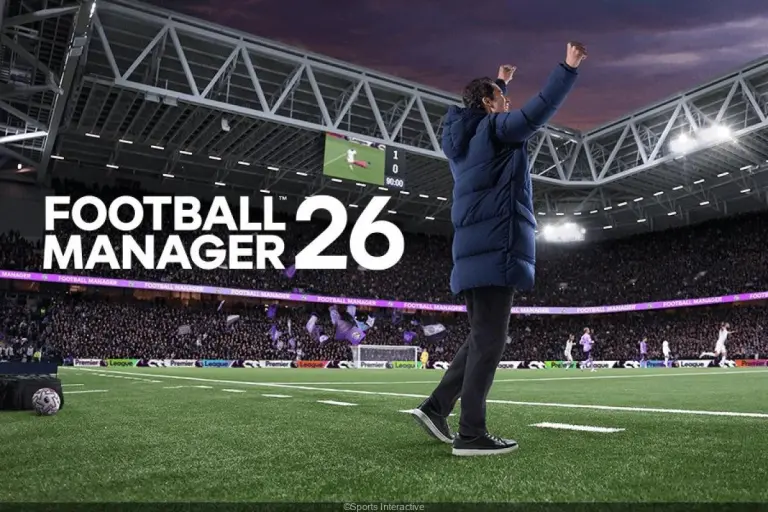
The world of football enters a pivotal year, with a World Cup hosted by the United States while Europe remains the most demanding stage. In this context, Football Manager 26 establishes itself as a living laboratory of modern gaming. Powered by Unity, the installment enhances matches, makes movements more natural, and integrates clearer narrative layers. The promise is clear: an immersive experience where 44 European countries reveal 44 ways to learn, fail, then win.
This selection condenses the richest challenges of the continent. Some clubs bear visible scars, others experience painful rebirth, several defy geography or push a radical identity. The common thread remains the same: turning a unique save into a tactical and human lever. Each adventure relies on concrete choices: wage structure, youth policy, transfer strategy, and management of the European calendar. The sports simulation then becomes a series of case studies, calibrated for a methodical, curious manager willing to take measured risks.
Football Manager 26 – 44 European countries, 44 incredible adventures: challenging fallen giants
Historic clubs in difficulty concentrate all that Football Manager 26 has most captivating. Their past serves as an anchor, but today’s reality demands a process. Torpedo Moscow illustrates this contrast. Excluded from the elite after match-fixing suspicions during 2024-25, the club restarts in the second division. The name remains powerful, as does the mission: restore credibility and impose a firm line of conduct.
The German 3. Liga reinforces this observation with TSV 1860 Munich. The club lives under the shadow of its neighbor, with an immense identity nonetheless. The schedule is tight, budgets strained, and public pressure does not ease. A controlled wage model, targeted bonuses, and a strict rotation plan become essential. The balance between ambitions and constraints often decides the outcome.
In France, Sochaux reminds us of the fragility of an institution. Youth development remains a national asset, but the financial deficit has broken momentum. In FM26, rebuilding Sochaux requires a bottom-up approach: stabilize cash flow, regenerate local scouting, then revive intelligent sales. The brand still exists, it must regain its role as guarantor of a clear style.
Italy offers a symbolic shock with Sampdoria fallen to Serie C. Hostile travels and the expectation of an immediate return create a tense environment. Each match becomes an exam. Recruitments with high technical profiles, capable of imposing the tempo, reduce the uncertainty typical of lower divisions.
In Spain, Deportivo La Coruña lives a paradox: a stadium and audience calibrated for La Liga, but the reality of Segunda. The goal is not limited to promotion. It is about halting value erosion. A reactive data unit, targeted loans, and coordinated pressing restore a framework. The memory of AC Milan remains a landmark, not a plan.
In the East, Dynamo Kyiv can no longer rely on automatic dominance. Instability and talent exodus have narrowed the gap. In FM26, the core of the project revolves around youth and European rotation. Minutes must be secured for prospects without sacrificing points. The velvet glove is imposed on the iron of tradition.
Belgium finally offers a demanding Standard Liège. The title has been missing since 2009 and the club slides between ambition and reality. Returning to the top involves clear governance, a modernized backroom staff, and a three-season roadmap. The race is not won by sprint but by repetition of good decisions.
Tested and measurable reconstruction procedure
The method counts as much as the idea. Successful managers set a simple, documented, and iterative framework. They rely on quarterly milestones, clear indicators, and coherent internal communication.
- Wage structure: role caps, bonuses per appearance rather than per goal.
- Market: sign early, sell with resale percentages, avoid toxic agents.
- Youth development: progressive playing time, mentoring, monthly individual plan.
- Playing style: stable principles, contextual adaptations, short post-match analyses.
- Europe: alternating Starting XI A/XI B, clear competition hierarchy.
Targeted case studies
1860 Munich benefits from structuring around a dominant defensive pivot and high-volume flanks. The club absorbs the density of matches this way. Deportivo, in contrast, must create asset value: home-grown fullbacks and premium loaned wingers. The financial gap with the elite is reduced by rotating sellable profiles.
These projects confirm a simple rule. The past feeds the narrative, but daily rigor decides the ranking.
Football Manager 26 – Extreme reconstructions and phoenix clubs: from Craiova to Austria Salzburg
Extreme scenarios give sports simulation an incomparable intensity. FC U Craiova 1948, hit by a 94-point penalty and administratively relegated to D3, symbolizes this abyss. Restarting from the bottom involves a full audit. Debts, licenses, transparency, and dialogue with the public become pillars. The field follows, never the other way around.
Austria Salzburg tells a different story. The club had to be reborn after a brutal reconfiguration of its identity. Now in the second division, it dreams of sporting challenge to Red Bull Salzburg. The ascent will not be made by the badge but by a value chain: local scouting, compact analysis staff, and participatory governance. Results follow when the framework is credible.
The case of Valmiera in Latvia reminds us of the fragility of structures. One title, then the fall: licensing issues, exclusion from elite core, and operational urgency. In FM26, this is a red flag. Fixed costs must remain proportionate, release clauses tightly controlled, and risk exposure limited. Foresight always pays off.
Vitesse in the Netherlands experienced rapid collapse: points deducted, shareholder uncertainties, existential doubt. The stadium, city, and name remain. A plan is missing. Priority concerns cash flow cleanup and rebuilding a united locker room. Young players, if supported, become a collective force again.
In the United Kingdom, several trajectories illuminate the art of reconstruction. Oldham seeks to stabilize its return to the EFL and regain local trust via a clear playing identity. Queen’s Park, Scotland’s oldest club, modernizes a unique heritage to last in D2. Hereford, an alternative story to the star neighbor, proves that a patient strategy can overshadow media noise. Linfield, a Northern Irish title machine, sets a standard: success is also measured by Europe.
Governance, finances, credibility
Governance crises bleed performances. It is therefore essential to formalize relations between executives, staff, and dressing room. A sports committee reduces decision volatility. At the FM scale, this means clear responsibilities: recruitment, data, training methodology, and external communication. A phoenix club must speak with one voice.
FM26 tools useful on mined ground
The development center guides individual trajectories. Load reports prevent injuries. Team meetings set the rhythm for adherence to principles. With Unity, match immersion fosters fine reading: pressing triggers, dead zones, support distances. The manager gains precision, thus control.
These reconstructions teach a truth. Every project is reborn when governance, method, and pitch align on the same compass.
Football Manager 26 – Geographic and identity challenges: islands, recruitment policies, and micro-states
Certain countries impose constraints that only a fine strategy can tame. OFI Crete plays far from Greek economic hubs. Travel weighs, salary attractiveness remains limited, and continental competition is tough. An island model prospers by betting on internal coherence and intelligent loan cycles, notably from the continent.
Paks in Hungary presents a strong identity policy: 100% national squad. The ceiling becomes a driver of inventiveness. Video analysis, local development, and early scouting create a robust pipeline. The constraint reduces the range but not ambition. Dislodging Ferencváros requires an optimal decision chain and exemplary fatigue management.
Up north, Bodø/Glimt has transformed a peripheral position into a competitive advantage. Clear playing culture, scientific preparation, and targeted talent. Recent European results no longer seem like a fairy tale. In FM26, this model translates into non-negotiable principles and micro-adaptation to opponents.
HJK Helsinki, Finnish standard-bearer, carries the hope of an improving coefficient. Preliminary rounds set the tempo. The club must calibrate form peaks, secure two European match plans, and smooth rotation. Small leagues win with mastered details.
Micro-states intensify the demand. FC Andorra plays in the Spanish pyramid and benefits from above-average Andorran revenues. The challenge goes beyond the club: developing the local base and influencing the selection. FC Vaduz embodies the stepwise quest: progressing from national cup to Europe, then climbing continental tiers, step by step.
San Giovanni in San Marino, and the “create a club” experience for the Vatican, push the idea to the maximum. Infrastructure is tiny, visibility low. Yet, an 8 to 10 season cycle can reverse the hierarchy. The first years are won through daily methodology, search for versatile profiles, and surgical staff planning.
The case of Victoria Hotspurs, the only Gozo representative in the Maltese pyramid, illustrates the fragility of a rapid rise. The perfect season did not guarantee what followed. Defense must be stabilized, reliable profiles signed, and non-matchday revenues structured. Sustainability becomes the primary goal.
Principles to overcome distance and impose identity
Three main axes dominate these projects. First, create a virtuous local circle: academy, partner clubs, reciprocal loans. Second, optimize travel time by adapting training intensities. Finally, choose a clear identity that attracts compatible profiles. Recruited players must embrace the context, not fight it.
These challenges recall a central idea. The framework imposes limits, but a firm method eventually redefines them.
Football Manager 26 – Data, Moneyball, and methodical outsiders: from NK Istra 1961 to Mjällby
The continent is full of rigorous outsiders betting on numbers. NK Istra 1961 embodies this modern “Moneyball”: small town, reduced budget, constant arbitration between potential and resale. Signings must generate net yield, sporting and financial. Data staff become skill multipliers.
NK Celje in Slovenia shows the way by clean execution: domestic progress, squad liquidity, and asset revaluation. The key lies in the art of selling well to buy better. Each window consolidates the model, not just the starting eleven.
Mjällby AIF, 2025 champion with 75 points, proves that data-to-pitch alignment can move mountains. A squad with local DNA, measured pressing, complementary profiles. Victory is no accident if the structure is robust. FM26 allows reproducing this framework by combining analyst reports, targeted training, and contextual recruitment.
Recent successes of Maxline Vitebsk in Belarus, Kauno Žalgiris in Lithuania, and Swift Hesperange in Luxembourg go in the same direction. The common denominator: a short scouting cycle, contractual responsiveness, and a clear understanding of the performance window. This rhythm protects margin despite a volatile market.
FC Petrocub Hîncești attempts to shake the long reign of Sheriff. Obsession becomes detail: set pieces, distance management between lines, and variety of ball exits. Struga in North Macedonia lives according to European summers. A good run changes the club, an early elimination forces reconsideration of the season. Paide, with 768 stadium seats, underlines the feat that each round passed represents.
Data pipeline and key metrics
A simple dashboard makes the model operational. Key metrics are integrated daily and guide short decisions.
- Age/value: minutes curve, bonus for progression from 18-23 years old.
- Pressure: PPDA and high recoveries to quantify aggression.
- Creation: key passes per 90, xG assist, and effective crosses.
- Transitions: average distance between lines, losses in zone 2.
- Resilience: minutes post conceded goals, workload, and avoidable injury.
A rule is confirmed. Data only has value if animation makes it visible on the pitch.
Football Manager 26 – Europe, coefficients, and timing: turning each unique save into a national engine
The European stage becomes the ultimate reveal. Clubs from modest leagues must cope with early rounds and a compressed schedule. HJK works its seeded status while keeping margin in the league. Swift Hesperange lives each round as a coefficient exam. Décic Tuzi dreams of reaching a league phase, which no Montenegrin club has yet achieved.
FC Thun, returned to the Super League after a Challenge League title, illustrates the strength of cycles. The momentum of a promotion can carry to the top, then waver. The key lies in depth, rotation minutes, and readable internal hierarchy. Rapid acclimations gain weeks.
FK Vojvodina, in Serbia’s second city, flirts with the idea of a sleeping giant. League reforms and relegation spots increase pressure. Methodical approach is necessary. European victories offer vital income, but the domestic race waits for no one. The dual front requires lucidity and pragmatism.
In Ireland, Dundalk starts over on more stable bases at the dawn of its hundredth season in 2026. The plan aims for a gradual return to Europe. Opportunistic recruitment, travel training optimization, and targeting key matches structure the path. Noise fades when the structure speaks.
In the Balkans and Eastern Europe, the obstacle is often systemic. Rudar Prijedor faces the harshness of a 10-team league where each plays four times. Tatran Prešov, Slovak oldest, first prioritizes survival. Petrocub dreams of breaking the domestic monopoly and establishing a European habit. Each seeks the same anchoring: a tolerant schedule and durable principles.
Saving time and points
The continental tempo is won before the draw. A clear microcycle, announced rotation, preplanned substitutions. Set pieces become a statistical accelerator. Wide areas dictate transitions and secure second balls. Is it spectacular? Not always. Is it decisive? Very often.
Building a coefficient, creating a margin
Each win counts double: finances and seedings. For small European countries, three levers dominate. First, an analysis staff anticipating opponents. Second, a proactive medical unit to keep the squad available. Finally, internal communication that protects confidence. The margin comes from invisible detail.
Ultimately, Europe offers what one comes looking for: a truth test where method and courage meet.
How to choose your club among the 44 options?
Prioritize learning. Select a context that forces a precise skill (financial reconstruction, recruitment identity, European management). Ideally, chain three arcs: a fallen giant, an identity club, then a coefficient challenge in a small country.
Which basic tactic works best at the start of a save?
A simple principles 4-2-3-1 or 4-3-3. Coordinated pressing, moderated width, worked set pieces. Then adjust to profiles and workloads. Stability takes precedence over originality at the start.
How to secure finances from the first season?
Sign early, limit fixed wages, favor appearance bonuses, negotiate resale percentages, and activate loan partnerships. Prepare a 12-month sales plan for 2 to 3 assets.
Which Football Manager 26 tools help progress faster?
The development center, load reports, team meetings, and Unity match video analysis. Use quarterly objectives to calibrate progress and avoid dispersion.
How to approach early European rounds?
Vary training intensity, target two compatible systems, anticipate rotation, and work on set pieces. Travel management and recovery time create the difference in two-legged ties.