
In Brief
- The fatigue around FIFA and FC 26 is mainly explained by the repetition of match sensations and very scripted progression logics.
- UFL establishes itself as a free alternative focused on PvP and progression designed to limit “pay-to-win,” with access requiring no initial purchase.
- EA also bets on partial free access with a trial version called “Showcase,” but the principle remains that of limited access to rotating modes.
- Other options exist to vary football video games: eFootball, Football Manager, or even more arcade and mobile experiences.
- For a real change, the clearest option remains a free-to-play designed as such from the start, rather than a disguised demo.
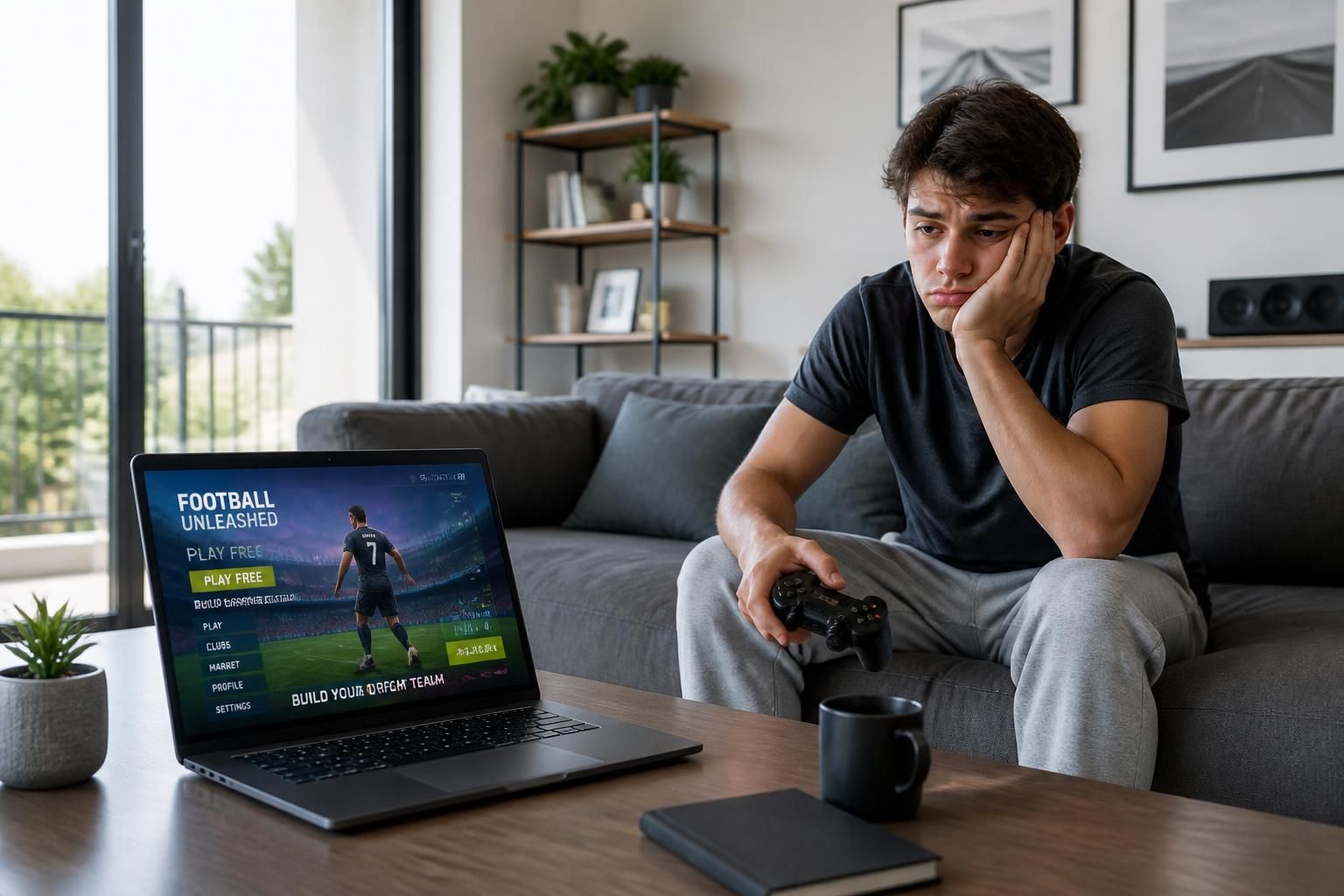
In 2026, weariness is growing among part of the football game audience, including those who follow every release like a ritual. FIFA has given way to the EA Sports FC brand, but the feeling of a formula that repeats itself often returns: same automatisms, same progression cycles, same debates about the balance between play time and spending. FC 26, even when offered through a free showcase-type formula, does not necessarily respond to the main need: to regain the sensation of discovery, with gameplay that requires relearning and a less suffocating economy.
In this context, a new free game is starting to attract the attention of players who want to keep playing football without reverting to yet another time-consuming “ultimate” mode. The idea is not to promise a revolution but to propose a different structure: immediate access, more readable competitive play, progression less dependent on the wallet. A free alternative may be enough to revive the desire, provided clear choices are assumed regarding match pace, squad management, and how performance is rewarded.
Why the fatigue around FIFA and FC 26 is settling in among players
Fatigue does not come only from results on the pitch, but from habits imposed by the design. Reward loops, daily challenges, and time-limited objectives often turn a sports game into an agenda. Football sometimes loses what makes it special: unpredictability, tactical experimentation, and the pleasure of playing “just one match.”
Another point: the gap between players investing time and those investing money fuels lasting frustration. The problem is not the presence of purchases but the feeling that progression is calculated as much in real currency as in controller mastery. Many end up dropping out, not for lack of love of the ball, but from system saturation.
FC 26’s “Showcase” free version: an entry door, not a real shift
Several French-language sites have relayed the existence of a free FC 26 formula in the form of a “Showcase,” described as limited access with rotating modes and restrictions. In this context, free access mainly serves to allow a trial, then to guide towards the full version. The idea can be appealing for quick judgment, but it does not change the nature of the product.
For already fatigued players, the issue is not only downloading without paying, it is getting out of a model that always brings you back to the same point: rebuilding a team, redoing objectives, accepting calendar constraints. A free trial does not replace a structural change, and the pitch quickly reminds you of that.
UFL: the free alternative to FIFA and FC 26 aiming for real renewal
UFL presents itself as a free alternative thought around free-to-play with the stated goal of putting performance at the center. In practice, the interest is clear for an audience seeking change: entry is immediate, matchmaking and competitive progression become the heart of the experience, and the game’s economy tries to avoid the most aggressive imbalances.
This positioning has a concrete effect: it encourages a different way to approach football video games. The desire to test formations, learn timings, and build a playing style returns to the forefront because the promise is not about stacking cards, but winning matches. For a player coming out of FIFA or FC 26, the difference is mostly felt in pace and in reading duels.
What changes with a free-to-play model designed from the start for PvP
A native free-to-play structures progression differently: it must give reasons to return without requiring permanent rebuilding. In a competitive football game, this translates into clearer objectives and rewards better aligned with results on the pitch. The interest is to limit the feeling of “work” that settles in when everything goes through checklists.
Another effect is social: players compare their performances more than their collections. Discussions shift towards pressing systems, runs, and tempo management. This does not guarantee perfect balance, but it shifts the center of gravity, and that is precisely what those speaking of fatigue are looking for.
Comparison table: what to download to change football games in 2026
For a quick discovery, the difference plays on three simple criteria: access cost, platforms, and nature of the experience (simulation, management, arcade). The table below allows sorting without wasting an evening installing at random.
| Game | Business Model | Platforms (main) | Experience Type | Access Without Paying |
|---|---|---|---|---|
| UFL | Free-to-play | Consoles (depending on availability), PC (depending on version) | Competitive PvP | Yes |
| EA Sports FC 26 (Showcase) | Limited free access | PS5, Xbox, PC (according to publisher and store announcements) | Trial / rotating modes | Yes (limited) |
| eFootball | Free-to-play | Consoles, PC, mobile | Competitive simulation | Yes |
| Football Manager (series) | Paid (generally) | PC (main), others depending on editions | Management / tactics | No |
6 concrete alternatives to FIFA and FC 26 to vary football sensations
Changing sport games does not necessarily mean leaving simulation. What matters is choosing an experience that breaks the routine: pace, physics, interface, team management. Here is a selection of known and active options, each with a different promise.
- UFL: free alternative focused on competition, designed to chain matches and progress through gameplay.
- eFootball: Konami’s free-to-play, more “pure pitch” in its approach, with a different feel in controls.
- Football Manager: management reference on PC, centered on tactics, recruitment, and club management rather than ball carrying.
- Rocket League: car soccer arcade, short matches, very readable team mechanics, perfect to break “simulation” reflexes.
- Captain Tsubasa: Rise of New Champions: anime and spectacular approach, more focused on scripted actions and special techniques.
- Sociable Soccer: more arcade game, heir to a “pick-up and play” philosophy, interesting for quick sessions.
For those looking for an immediate change, arcade titles have a simple advantage: they unlearn automatisms taken on FIFA or FC 26. The feeling of novelty comes faster, even if the goal is not the same realism.
Privacy and cookies: what consent screens change during download
When installing a new game or looking for gameplay videos, cookie consent screens systematically come back. Platforms generally explain that cookies serve to provide the service, measure audience, secure against fraud, and personalize certain content based on account or browser settings.
In the most common options, “accept all” also activates advertising and personalization uses, while “reject all” limits these processes to essential needs. A “more options” link often leads to privacy management tools, sometimes via a dedicated page like g.co/privacytools. Reading these screens takes a minute and avoids bad surprises on recommendation personalization.
What do we say about it?
To get out of fatigue linked to FIFA and FC 26, the most coherent choice is to try a free-to-play designed as a full game, not just an entry door. UFL ticks this need for change because it focuses on matches and competitive progression, with immediate accessibility. FC 26’s “Showcase” formula is useful for testing, but it looks more like a controlled demo than a sustainable alternative. For real renewal, the strongest option remains downloading UFL, then keeping eFootball as a plan B if the gameplay feeling doesn’t suit.
Is UFL really a credible free alternative to FIFA and FC 26?
UFL has the advantage of being designed from the start as a free alternative, with a core game oriented towards competitive play. For a fatigued player, the interest is to find a learning curve and a different pace, without an initial purchase. Credibility is mainly judged controller in hand: tempo, duels, and clarity of rewards.
Is the free “Showcase” version of FC 26 sufficient to play all year round?
A “Showcase” version generally corresponds to limited access: restricted modes, rotating content, partial progression. It is useful to discover FC 26 without paying, or for a few matches with friends. However, for regular and varied practice, the limitation quickly becomes a hindrance, especially if the goal is to change habits.
Which alternative to choose if the goal is solely gameplay on the pitch?
For a pitch-centered approach, eFootball remains a very played free-to-play option, with a different feel on controls and action construction. UFL also targets this public through PvP. The most effective approach is to test two games in one evening, with the same camera settings and difficulty, to compare rhythm and command response.
Can purchases be avoided in a free-to-play football game?
Yes, but it depends on the progression structure and matchmaking. A good indicator is the ability to win and progress by playing regularly, without feeling blocked by an economic wall. It remains useful to monitor the shop, packs, and time-limited events: these often create the pressure to spend.